
Holidaying Amidst Expensive Tickets: Negotiate with Your Wallet or Postpone?
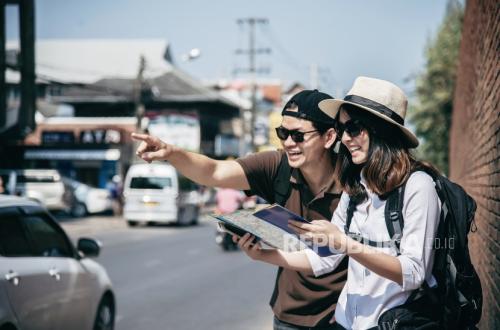
The surge in aircraft fuel prices, driven by the Middle East conflict, has become a significant challenge for those planning holidays. Financial planner and founder of Mitra Rencana Edukasi (MRE), Mike Rini Sutikno, stated that holidays can still be pursued if budgeting is done wisely and proportionately.
According to Mike, there are two approaches to planning a holiday budget. The first is to directly set aside a portion of income, for example, around 5 per cent of monthly earnings.
“So, with every payday, 5 per cent is allocated specifically for holidays. The destination or departure time can be arranged later; the important thing is to have the holiday funds ready first,” said Mike when contacted by Republika on Tuesday (7/4/2026).
The second approach is to first determine the destination and total holiday cost. After that, calculate the monthly savings needed. However, Mike noted that this method requires careful consideration to avoid burdening finances.
For example, if the holiday costs Rp 30 million and is to be realised in 10 months, savings of around Rp 3 million per month are required. If the income is Rp 15 million, that means about 20 per cent is allocated for holidays, which is considered quite substantial.
“If the portion is too large, the timeline should be adjusted. For instance, extend it to one or two years to lighten the monthly burden,” explained Mike.
She emphasised that there is no fixed percentage, as the holiday budget must be tailored to individual financial conditions. However, in general, Mike said, allocating 5 per cent of monthly income is already considered substantial.
“Well, an alternative could be to take the holiday budget from the savings and investment allocation, which is generally 30 per cent of income, by taking just a small portion,” she said.
Meanwhile, to counter the rising flight costs, Mike suggested being more flexible with transport options. If plane tickets are deemed too expensive, alternatives like trains or buses can be considered, although there are trade-offs in comfort and travel time.
Additionally, choosing closer destinations can help reduce travel expenses. “Travel costs are greatly influenced by distance and holiday duration. The farther and the longer, the higher the costs,” said Mike.
She also recommended planning holiday activities efficiently. For example, visiting multiple sites along a single route to save on local transport costs.
“In essence, I want to say that holidays are not primary needs but supplementary ones. Therefore, planning must still be adjusted to financial capability so as not to disrupt cash flow and other primary needs,” explained Mike.
For information, the government has permitted airlines to raise domestic flight ticket prices by 9 to 13 per cent. This decision follows the increase in avtur prices.