
Holding on to Ancestral Land, Making Peace with the Mud
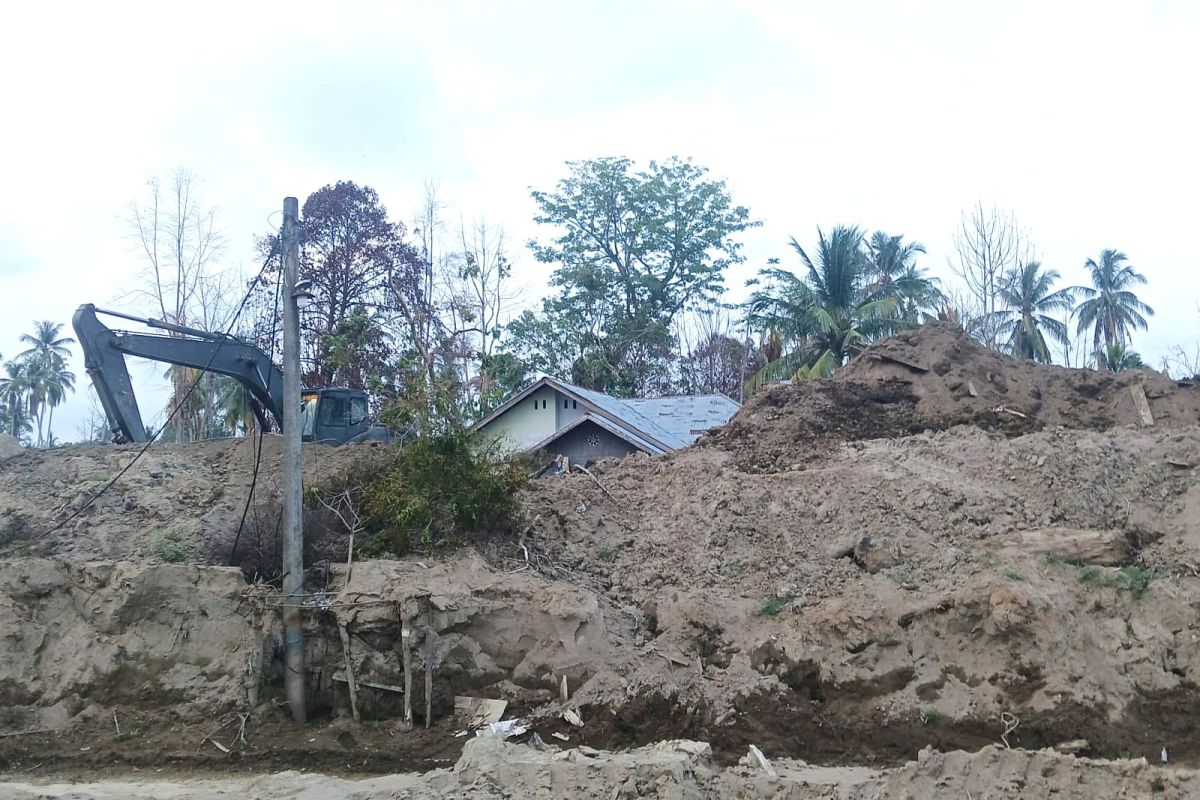
For Nurjannah, Mahdi, and thousands of residents in Pidie Jaya, the decision to reject relocation is the most bitter compromise between economic limitations and fears of losing a deeply rooted cultural identity.
Banda Aceh (ANTARA) - In Pidie Jaya Regency, the wrath of the Krueng Meureudu River has not only scarred the walls of dilapidated homes but also the increasingly exhausting routines of the residents. Life has never truly returned to normal.
Amid this vulnerability, tens of thousands of residents choose to stay. For them, remaining on ancestral land is an inevitability that is not easily abandoned, even as risks continue to loom.
This choice is reflected in the heavy steps of Cut Nurjannah (40), trudging through the remnants of mud from the flash flood. Her two children follow behind, navigating a neighbour’s garden that has been forced into use as a shortcut to their home.
The main access to her residence in Meunasah Raya Village, Meurah Dua Subdistrict, remains submerged. The only route now is to cross the former garden, stepping over mounds of earth, passing scattered wood, and jumping over ditches left by excavator scrapings.
“Brother, don’t bother your sibling, come on, hurry up, Maghrib is almost here,” Nurjannah said to her children on Saturday afternoon (4/4/2026).
Since the flash flood that devastated the area at the end of November 2025, Nurjannah and her family have had to take a detour behind the house. The yard of their stilt house with wooden floors, inherited from her parents, has nearly vanished under mud that they can no longer clean.
Despite the distressing conditions, this physical exhaustion does not make her leave. She and her family continue to refuse to move to temporary housing.
For Nurjannah, disasters are not unfamiliar. The overflow of the Krueng Meureudu River Basin has been a familiar experience since her childhood.
“Floods every year are usually just water. If it rises after Maghrib, it recedes and dries up by the next day. We’re used to it; after the flood, we resume activities as usual the next day,” she said.
However, she admits that this flood is different. The torrent did not just bring pooling water but also large floating logs and thick mud deposits.
Trauma once haunted her and her children, but it gradually faded due to the demands of continuing to live.
In the midst of the still chaotic village, the home remains the safest space. Even though the government has repeatedly offered relocation, Nurjannah and many residents still refuse. “Where else can we go? This is where we live,” she asserted firmly.
Moving is not just about relocating the body but uprooting the livelihoods that have sustained them for generations. Staying in the hometown means safeguarding the foundation of hope.
Nurjannah acknowledges that since childhood, she and the village residents have lived in a disaster-prone environment. Her village itself is very close to the flow of the Krueng Meureudu. For her, the residents have befriended the floods.
Even while living in a cycle of recurring disasters, the residents can only nurture hope that nature will not bring a calamity as severe as last year’s again.