
HNW Urges Revitalisation of OIC to Save Al-Aqsa Mosque
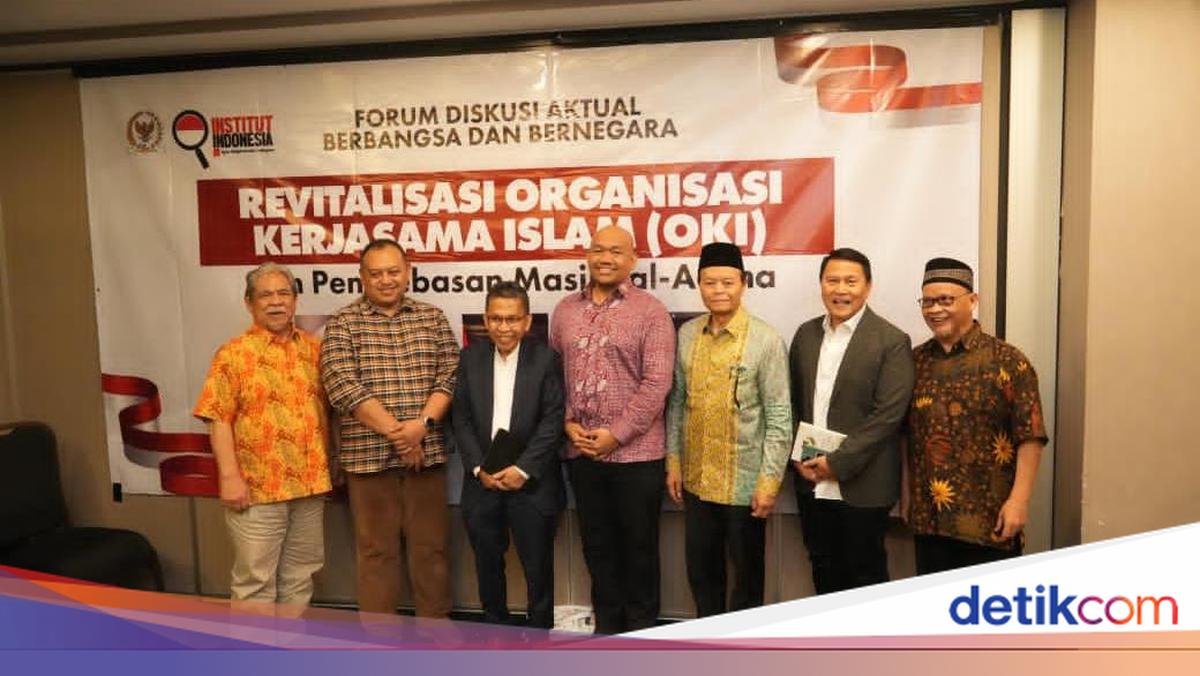
Deputy Speaker of the Indonesian People’s Consultative Assembly, Hidayat Nur Wahid (HNW), emphasised the importance of revitalising the Organisation of Islamic Cooperation (OIC) to strengthen Islamic solidarity worldwide. This step is deemed crucial to drive tangible contributions towards achieving global peace, particularly in defending Al-Aqsa Mosque and Palestinian independence.
HNW conveyed this during a speech at the Contemporary Nation and State Discussion Forum, a collaboration between the People’s Consultative Assembly and the Indonesian Institute in Jakarta on Friday (17/4). In the forum, he noted that the OIC’s existence from the outset has been inseparable from the struggle to defend Al-Aqsa and liberate Palestine.
According to HNW, the OIC’s founding in 1969 was a response by leaders of Muslim-majority countries to the burning of Al-Aqsa Mosque by Zionist Jewish extremists, making the Palestinian and Jerusalem issues the organisation’s primary foundation.
Thus, from the beginning, it was decided that Jerusalem would be the headquarters of the OIC Secretary-General, serving as the capital of an independent Palestine and the site of Al-Aqsa Mosque. Therefore, the revitalisation of the OIC should remain anchored in its original objectives.
“The OIC should not be detached from Al-Aqsa and Palestinian independence. This way, the second-largest international organisation after the UN, also known as the United Nations of Muslim Countries, will not lose its relevance,” stated HNW in his remarks on Monday (20/4/2026).
HNW acknowledged that, despite facing various dynamics, challenges, and even internal conflicts among member states throughout its history, the OIC has significant potential to resume an effective role. He cited several global dynamics demonstrating the OIC’s success in securing UN resolutions rejecting religious defamation and a 2022 UN resolution combating Islamophobia.
Moreover, OIC member states possess considerable military capabilities and solidarity to form military alliances, as well as superior geopolitical, economic, and strategic strengths, such as the strategic locations of some members at the Strait of Hormuz, Bab el-Mandeb, and the Malacca Strait.
Therefore, HNW highlighted Indonesia’s highly strategic position in driving the OIC’s revitalisation. As the country with the world’s largest Muslim population and one of the OIC’s founders, while being well-accepted in Western countries as a democratic and moderate nation, Indonesia is seen to have strong legitimacy to assume a leadership role in revitalising the OIC.
Moreover, in 2024, Indonesia signed the OIC Charter, the foundational document of the international organisation it helped establish in 1969. HNW understands this step, as previous concerns about its relevance have been addressed for three reasons.
From the start, OIC membership does not require an Islamic basis but is open to UN member states. Notably, eight majority non-Muslim OIC members have signed the OIC Charter, including Togo, Suriname, Nigeria, and Côte d’Ivoire.
“Following this signing, Indonesia should take a more active role to contribute more substantially in shaping the organisation’s direction, realising its founding ideals that also align with the Indonesian Constitution,” said HNW.
Thus, according to HNW, one of the key steps needed for revitalising the OIC is to revive the Jakarta Declaration, the outcome of the Extraordinary High-Level OIC Conference held in Jakarta in 2016. The declaration contains concrete commitments from member states to save Al-Aqsa Mosque and support an independent Palestine through political, economic, diplomatic, and international legal channels.
HNW believes that if the commitments in the declaration are consistently implemented by OIC countries, the OIC can become an effective global force in advancing its members’ interests and contributing to world peace.
“The numerous challenges faced, as highlighted by experts, should serve as a diagnosis to find effective solutions. Thus, the OIC’s revitalisation can be achieved, and liberating Al-Aqsa, now increasingly controlled by Zionist Israel, is not impossible if there is seriousness, strong leadership, and Indonesia’s contribution,” HNW concluded.