
HNW Urges Ministry of Hajj to Focus on 2026 Hajj and Ensure Additional Costs Do Not Burden Pilgrims
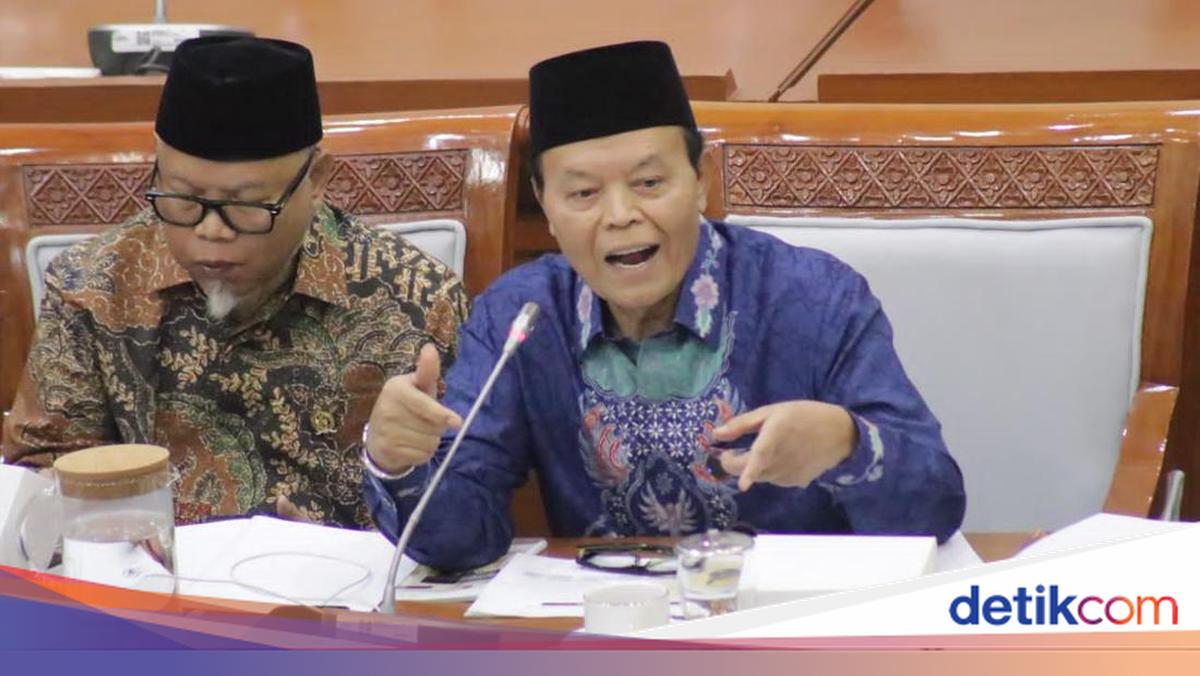
Deputy Chairman of the MPR RI and Member of DPR Commission VIII from the FPKS faction, Hidayat Nur Wahid (HNW), has emphasised that the Ministry of Hajj and Umrah (Kemenhaj) must prioritise the success of the 2026 Hajj organisation, in line with preparations for dispatching the first batch of prospective pilgrims.
In the working meeting of DPR Commission VIII, HNW also requested that the increase in flight costs due to the surge in aviation fuel (avtur) prices not be passed on to Indonesian Hajj pilgrims.
This emphasis was conveyed by HNW referring to the outcomes of the DPR Commission VIII working meeting with the Minister of Hajj and Umrah RI and the Head of the BPKH Executive Agency on Tuesday (14/4), where it was agreed that the additional cost of organising the Hajj worship amounting to Rp 1.7 trillion would not be borne by the pilgrims, but rather by state finances through a scheme in accordance with applicable laws and regulations.
“Alhamdulillah, in the Commission VIII working meeting on Tuesday, it has been agreed that the increase in Hajj flight costs, namely Rp 7.9 million to Rp 8.1 million per pilgrim or a total of Rp 1.7 trillion due to the rise in avtur prices, will not be passed on to prospective Hajj pilgrims, as per President Prabowo’s commitment, but will be covered by state finances. Therefore, with the dispatch of the first batch of prospective Hajj pilgrims just days away, Kemenhaj must immediately coordinate with relevant ministries so that this policy can be implemented while remaining within the framework of applicable laws and regulations,” said HNW in his statement on Thursday (16/4/2026).
He assessed that this step is crucial, given that the 2026 Hajj organisation is the first under Kemenhaj and is taking place amid a global conflict situation that directly impacts the rise in flight costs.
This DPR RI member, who is also Deputy Chairman of the MPR RI from the PKS Faction, also advocated for the government, both central and regional, to not only cover the increase in international flight costs but also to keep domestic flight costs for pilgrims from their home cities/regencies to embarkation cities from burdening prospective pilgrims.
“We are also advocating for the aspirations of Hajj pilgrims from eastern Indonesia, such as Maluku and Papua who must go to the Makassar embarkation, as well as pilgrims from Bali and NTT who must go to the Surabaya embarkation, so that they too are protected from the impact of rising domestic flight costs. Alhamdulillah, this aspiration has also been included in the meeting’s conclusions, requiring Kemenhaj to coordinate with regional governments to assist those prospective pilgrims,” emphasised HNW.
Furthermore, this DPR RI member from Electoral District Jakarta II (covering South Jakarta, Central Jakarta, and Overseas) also reminded that this should be Kemenhaj’s main focus at present: ensuring the 2026 Hajj runs successfully, including making sure that cost increases do not burden pilgrims as agreed.
He also requested that pilgrims’ luggage be distributed 100% before departure, checking the readiness of pilgrim accommodation in Saudi Arabia and its compliance with agreements with DPR Commission VIII, the delivery of Nusantara spices amid limited flights, and so on.
Therefore, continued HNW, Kemenhaj should not currently open discussions on new non-priority issues that could divide focus, such as plans to change the pilgrim departure system with ‘Hajj ticket war’. Because this discourse needs to be studied thoroughly, comprehensively, and for its compliance with existing legal rules first.
Because that new system, said HNW, cannot possibly be implemented now, it should not become a priority discussion that overshadows the maximisation of preparations for the Hajj that will begin to be dispatched in the near future, starting 22 April 2026.
“In the current situation, all the energy of Kemenhaj and Indonesians should be focused on maximising the success of the 2026 Hajj organisation. Other discourses that are not urgent and cannot be implemented now should be postponed first, with comprehensive studies, especially regarding their relation to laws, and also officially discussed with DPR Commission VIII,” he said.
HNW also emphasised that if the ‘ticket war’ Hajj without queues, as stated by the Deputy Minister of Hajj, is only applied to additional quota Hajj, then the mechanism for filling the additional quota is actually regulated in Article 9 of Law Number 14 of 2025.
He explained that the application of the additional quota was discussed with the DPR RI and follows the proportion of distribution between regular and special Hajj quotas. That should be the reference, to avoid repeating the case of the previous Minister of Religious Affairs. And if that policy is implemented, there is no need to introduce a new scheme that could potentially cause legal issues, anxiety, or injustice.
In addition, he reiterated his proposal that has been repeatedly conveyed in Commission VIII working meetings, that one key to reducing the long waiting list for prospective pilgrims is by increasing Indonesia’s Hajj quota, so it is very important to advocate for an increase in Indonesia’s Hajj quota through diplomatic channels with Saudi Arabia or the Organisation of Islamic Cooperation (OIC) forum if the OIC is indeed authorised in this matter.
With Indonesia’s Muslim population exceeding 248 million souls, Indonesia’s Hajj quota should ideally reach around 248,000 pilgrims if based on a 1:1000 ratio (1 pilgrim for 1,000 Muslim residents), and even considering the latest conditions in Saudi Arabia, Indonesia’s Hajj quota could potentially be proposed to be increased to 2:1000.
“Moreover, with quota diplomacy and optimisation of unabsorbed Hajj quotas from other countries, the Hajj waiting list can be accelerated well without causing anxiety or potentially violating legal rules,” he explained.
HNW also reminded that currently there are more than 5.6 million prospective Indonesian Hajj pilgrims who have been waiting in line for a very long time, even with an average waiting period of up to 26 years.
“It must also be ensured that a sense of justice is provided for millions of prospective pilgrims who have already”