
History of the Seulawah RI-001 Aircraft: The Origins of Garuda Indonesia
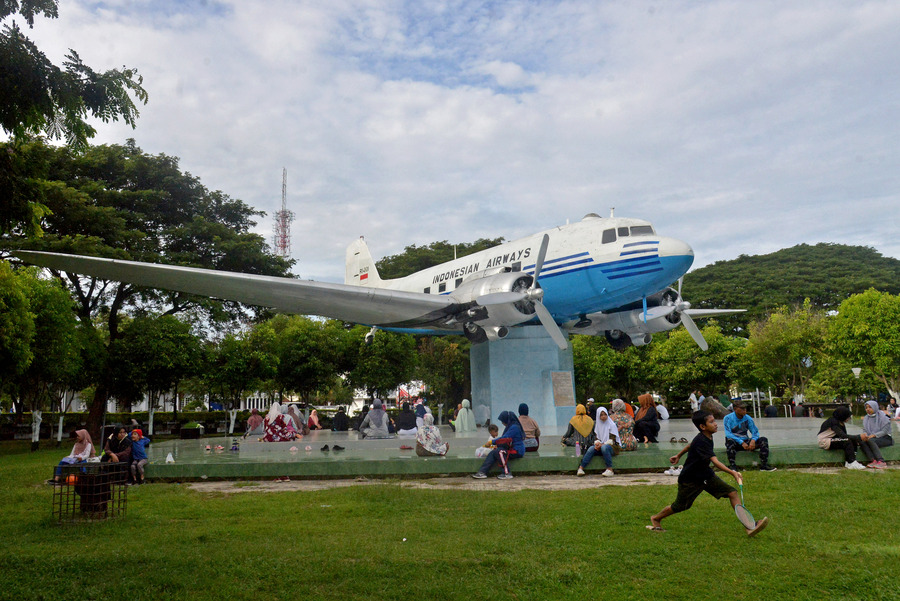
The history of Indonesian civil and military aviation is inseparable from a legendary name: Dakota RI-001 Seulawah. This aircraft was not merely a means of transport but a symbol of national solidarity and tangible proof of the sovereignty of the young Republic of Indonesia. Through a donation of gold from the people of Aceh, Indonesia succeeded in acquiring its first transport aircraft, which later became the precursor to the national airline, Garuda Indonesia.
In mid-1948, the Republic of Indonesia was beleaguered by the Dutch blockade. President Soekarno recognised that to defend independence, Indonesia needed “wings” to breach the diplomatic and military blockade. During his visit to the Aceh Hotel in Kutaraja (now Banda Aceh) on 16 June 1948, Bung Karno issued a challenge to the merchants and people of Aceh to donate funds to purchase an aeroplane.
The response from the people of Aceh was extraordinary. Under the coordination of the Aceh Regional Indonesian Merchants Association (GASIDA), funds amounting to 120,000 Malayan Dollars and 20 kilograms of gold were collected. This sum was phenomenal at the time and sufficient to buy a Douglas C-47 Skytrain (Dakota) transport aircraft from Singapore.
The purchased aircraft was named “Seulawah”, which in Acehnese means “Golden Mountain”. The aircraft had the following technical specifications:
When the Second Dutch Military Aggression erupted in December 1948, RI-001 Seulawah was in Calcutta, India, for routine maintenance. As airports in Indonesia were controlled by the Dutch, the aircraft could not return. Under the command of Wiweko Soepono, it was then operated in Burma (now Myanmar) under the name Indonesian Airways on 26 January 1949.
Indonesian Airways provided commercial and charter flights for the Burmese government. The profits from operations in Burma were used to finance the operations of Indonesian diplomatic representations abroad and to support the education of Indonesian pilot cadets. This demonstrated that RI-001 was the nation’s first strategic economic asset.
After the Round Table Conference (KMB) at the end of 1949, Indonesia’s sovereignty was fully recognised. Based on the KMB agreement, the Indonesian government established a new national airline. On 21 December 1949, negotiations took place between the Indonesian government and the Dutch airline KLM regarding the establishment of a national aviation company.
The name “Garuda Indonesian Airways” (GIA) was proposed by Bung Karno, inspired by a Dutch-language poem by Notosuroto: “Ik ben Garuda, Vishnoe’s vogel, die zijn vleugels uitslaat hoog boven uw eilanden” (I am Garuda, Vishnu’s bird, which spreads its wings high above your islands). All assets and personnel from Indonesian Airways (which began with RI-001) were then merged into the structure of Garuda Indonesia, making it the main foundation of the nation’s flag carrier.
Today, the great service of RI-001 Seulawah is immortalised in the form of a replica that can be visited by the general public as a means of historical education.
The history of RI-001 Seulawah is a narrative of self-reliance. It teaches that a nation’s sovereignty is not only fought for on the battlefield but also through air diplomacy and the strength of collective economic endeavour. The Garuda Indonesia we know today is the “spiritual child” of the spirit of the Acehnese people who gave their gold for the wings of the Republic.
In the pages of Indonesia’s independence history, the name Teungku Nyak Sandang holds a special position as a symbol of the generosity and patriotism of the Acehnese people.