
History of the Argo Bromo Anggrek Train, Renamed to Anggrek After 29 Years
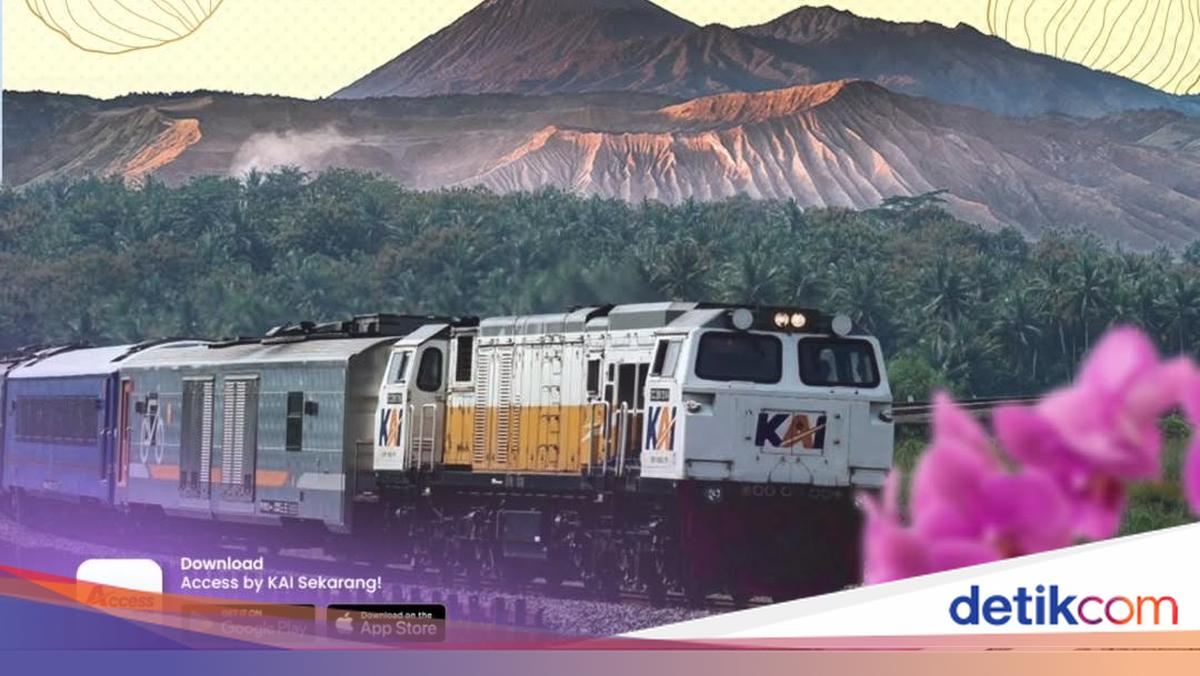
Following its involvement in an accident with a KRL at Bekasi Timur Station on Monday (27/4/2026), KA Argo Bromo Anggrek will change its name to KA Anggrek starting 9 May 2026. This announcement was made via the official Instagram of PT KAI.
“It’s not just a name change, but also a manifestation of our commitment to continuously provide the best service in every journey of yours,” stated PT KAI in an Instagram post by @kai121_, on Tuesday (5/5/2026).
This name change is the first since KA Argo Bromo Anggrek began operating in 1997. This transformation marks a new beginning for this legendary train.
To commemorate the journey of KA Argo Bromo Anggrek, here is its history and development, along with the series of accidents it has experienced.
History and Development of KA Argo Bromo Anggrek
Compiled from the PT Inka website and an article from the Journal of Economics and Entrepreneurship by Suprihatmi Sri Wardiningsih, PT Kereta Api (KAI) experienced quite rapid development in the 1990s after operating commercial executive-class trains, such as Argo Bromo and Argo Gede. Both trains were launched on 31 July 1995 to welcome the 50th anniversary of the Republic of Indonesia.
KA Argo Bromo, which became the precursor to KA Argo Bromo Anggrek, was known as JS-950 and served the Jakarta Gambir - Surabaya Pasar Turi route. The name was derived from the Jakarta-Surabaya route, the journey duration (9 hours), and Indonesia’s age that year (50 years). The journey duration of this train was quite fast and had never been achieved by any previous KAI train, making KA Argo Bromo a new achievement for PT KAI.
Following the success of Argo Bromo, PT KAI launched another new executive-class train named Argo Bromo Anggrek. This train was launched on 24 September 1997 and became a development of KA Argo Bromo.
KA Argo Bromo Anggrek was known by the name JS-852. Like KA Argo Bromo, this name also relates to the route, duration, and Indonesia’s age. JS means the Jakarta-Surabaya route, 8 means a journey duration of 8 hours, and 52 indicates Indonesia’s age that year (52 years).
KA Argo Bromo Anggrek (ABA) has a more elegant and comfortable appearance and facilities compared to its predecessor. The train’s jolts are smoother due to the use of air springs. In addition, this train also uses bogies of type K9 or Bolsterless Bogie with an ALSTOM licence.
This train also has a body that is slightly wider in the middle and dark-coloured windows. These elongated dark windows become one of the distinctive features of this train set. Another distinctive feature is the white paint colour with pink stripes and an orchid flower image.
The interior of KA ABA is also more elegant and futuristic compared to the previous generation trains. In addition, the seats used are equipped with footrests, making passengers more comfortable and relaxed during the journey.
In addition to the sleek body and interior design, KA ABA also has an advantage in ticket prices. As an executive train, KA ABA certainly targets middle to upper-class consumers. However, the ticket price of KA ABA at the time of its launch was relatively more affordable compared to air transportation, ranging from Rp 185,000 to 250,000. This fare was far below the Jakarta-Surabaya plane ticket price, which was generally Rp 700,000. This fare made KA ABA one of the premium transportation options with more affordable prices at the time.
After the launch of KA ABA, the Argo Bromo train set was reassigned to KA Bima with the same route but via the Jogja Purwokerto line. The KA ABA train set was also once used for KA Argo Lawu service on the Solo-Jakarta route. However, the train set often derailed, so it was eventually transferred to Semarang and used for KA Argo Sindoro or KA Argo Muria II on the Semarang-Jakarta route.
In 2010, repairs and retrofitting were carried out on the KA ABA train set. This process changed the train’s stripe colour to purple. The interior itself did not change significantly but was repaired to look like new.
In its development, KA ABA often experienced derailments. One of them was the derailment incident at Manggarai Station in 2010 which caused the train to overturn. The frequent derailment incidents led to the KA ABA train set being withdrawn and repaired. Changes were made to KA ABA several times, including changes to the bogies, seats, and several other train parts.
Despite having a bad record, KA ABA also has achievements as one of the fastest trains. Based on the Instagram post by @kai121_, acceleration of travel time was applied to several trains, including KA ABA. As a result, KA ABA recorded a Jakarta-Surabaya journey duration of 8 hours and 10 minutes.
List of Accidents Involving KA Argo Bromo Anggrek
As mentioned earlier, KA Argo Bromo Anggrek often experienced derailments. In addition, KA Argo Bromo Anggrek has also been involved in several accidents, including the accident at Bekasi Timur Station (27/4/2026).
Here is a series of accidents experienced by KA Argo Bromo Anggrek, compiled from the detiknews website.
19 June 2009: The power car of KA Argo Anggrek on the Gambir-Surabaya route caught fire while heading to Cikampek Station.
2 October 2010: Accident between KA Argo Anggrek and KA Senja Utama in Pemalang, Central Java. This incident caused the KA Senja Utama carriage to overturn, resulting in dozens of deaths and many injured passengers.
11 November 2015: KA Argo Bromo Anggrek derailed in Subang after hitting a stalled box truck in the middle of the crossing.
27 April 2026: KA Argo Bromo Anggrek collided with a KRL at Bekasi Timur Station.
1 May 2026: KA Argo Bromo Anggrek hit a Toyota Avanza car in Grobogan, Central Java.
This is a review of the history and development of KA Argo Bromo Anggrek along with its series of accidents. Hopefully useful!