
History of Lunar New Year Angpao: A Tradition Spanning Thousands of Years That Endures Today
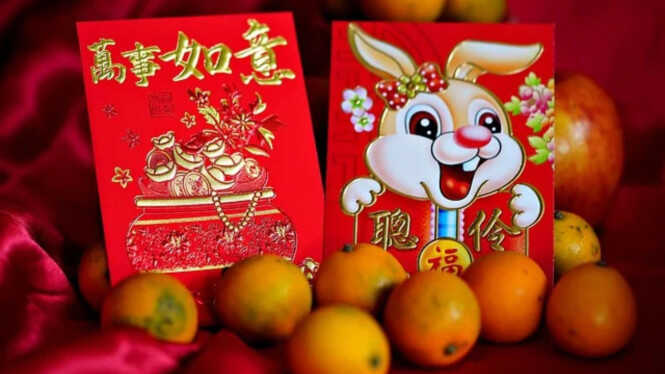
Jakarta, VIVA – The celebration of Lunar New Year is always synonymous with various traditions rich in meaning. From cleaning the house before the turn of the year, serving symbolic dishes, to making offerings to ancestors, everything is done to welcome good fortune and prosperity.
However, for many children in Asian families, there is one moment they look forward to the most: receiving an angpao, or red envelope containing money.
In Chinese culture, this red envelope is known as hóngbāo (Mandarin) or lai see (Cantonese). This tradition goes beyond simply giving money in attractive packaging. “The act of giving and receiving red envelopes transcends a mere financial transaction,” said Sarah Coleman, author of the book ‘Lunar New Year’, as quoted from History on Tuesday, 17 February 2026.
The angpao itself carries strong symbolic meaning. The colour red is chosen because it is considered the most auspicious colour, bringing happiness and protection from negative energy. Typically, the envelopes are adorned with gold lettering and lucky symbols such as dragons, phoenixes, and animals representing the zodiac sign of the current year.
The amount of money inside an angpao is not arbitrary either. Even numbers are considered lucky, except for the number four, as its pronunciation is similar to the word for “death” in Mandarin. Amounts containing the number six (symbolising smooth progress) and eight (a symbol of prosperity) are believed to bring even greater fortune.
As an illustration, if someone gives US$100, equivalent to Rp1,680,000 (at an exchange rate of Rp16,800 per US dollar), that figure may be chosen because it is easily divisible into even denominations. Regardless of the amount, the money given must be in new and crisp condition — it must not be crumpled or dirty.
History of Angpao
The history of the angpao during Lunar New Year has deep roots in ancient China. According to an article written by East Asian studies academic Ming Gao, the fundamental concept of hóngbāo can be traced back to the Han Dynasty (206 BC–220 AD). During that era, people wore coin-like objects as protective talismans.
The tradition evolved during the Tang Dynasty (618–907), when coins were scattered and collected during spring festivities. The practice of giving money to children on special occasions became popular during the Song and Yuan Dynasties (960–1279 and 1279–1368). Subsequently, during the Ming and Qing Dynasties (1368–1644 and 1644–1912), money was tied with red thread before being given to children.