
History of Hormuz: From the Persian God, Kingdom, Strait, Khalid bin Walid
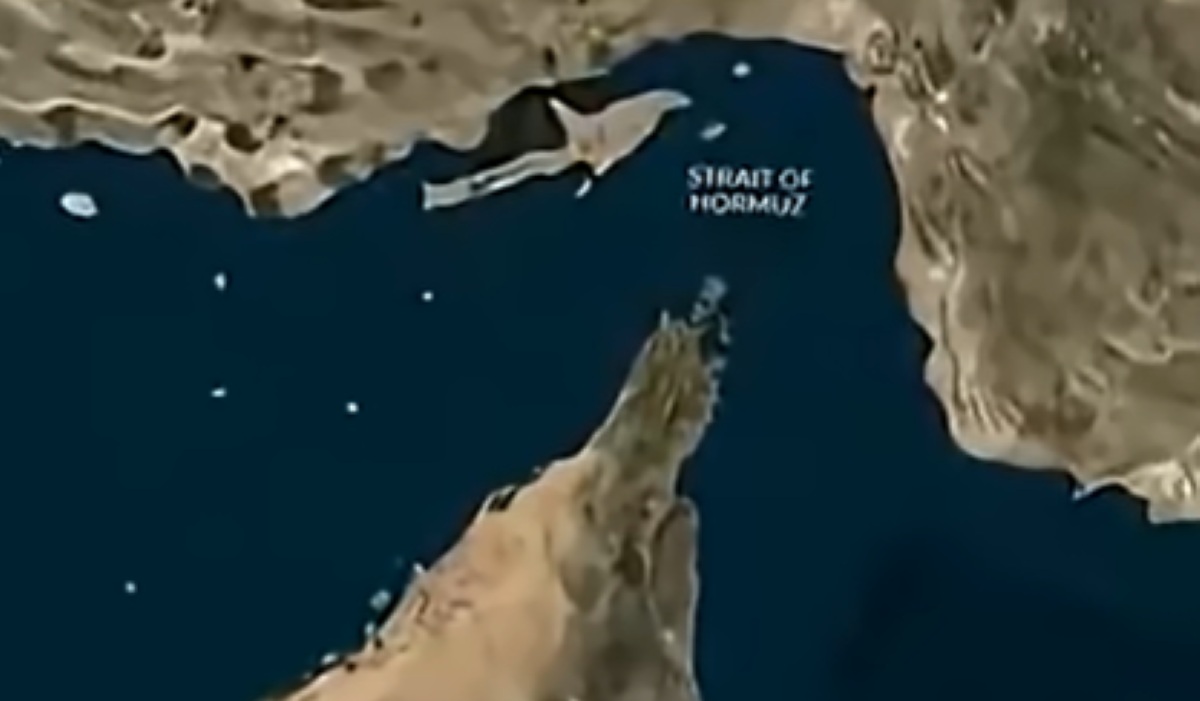
The Strait of Hormuz is not merely a narrow waterway separating the Arabian Peninsula from the Iranian mainland. It stands as a silent witness to clashes of civilisations, the grandeur of maritime kingdoms, and the profound spirituality of ancient Persia.
From a name derived from the supreme god to its status as the world’s energy lifeline, Hormuz remains the most crucial point on the global geopolitical map. Currently, the Strait of Hormuz is the talk of the world because it is the shipping route for about 20% of the world’s crude oil.
This is because Iran has blockaded the Strait of Hormuz in response to US-Israel attacks. So, what is the origin of the name Hormuz and the story of the Kingdom of Hormuz as well as the Commander of Hormuz who duelled against the Islamic commander Khalid bin Walid.
The name Hormuz has religious etymological roots. Historians agree that this name is a derivative of Hormizd, which in Old Persian refers to Ahura Mazda. In Zoroastrianism—the official religion of great Persian empires such as the Achaemenid and Sassanid—Ahura Mazda is the One Supreme God, the creator of the universe who symbolises wisdom, light, and truth (Asha).
The use of the god’s name for this region indicates how important the location was to Persian national identity. Besides Ahura Mazda, Persian mythology also recognises other gods such as:
The Kingdom of Hormuz (10th to 17th centuries) was a unique phenomenon in maritime history. Despite its arid territory and lack of fresh water, this kingdom became one of the richest ports in the world. “If the world is a gold ring, Hormuz is the gem in its centre,” goes an ancient proverb describing the prosperity of this region.
This name is also often associated with Sassanid kings who bore the name Hormizd (such as Hormizd I to IV). They viewed themselves as representatives of Ahura Mazda on earth, so the cities they built or developed often bore names reflecting the god’s glory.
Interestingly, the Kingdom of Hormuz was not originally located on the island we know today. The ancient city of Hormuz was on the Persian mainland (Minab region). However, due to continuous Mongol attacks in the 13th century, the inhabitants and rulers of Hormuz relocated their capital to the safer island of Jarun in the middle of the sea.
The name Hormuz was carried over to the island. From then on, this small but strategically important arid island became known as Hormuz Island, and its kingdom grew into one of the most prosperous thalassocracies (maritime kingdoms) in the world, controlling every ship entering the Persian Gulf.
Although the people of Hormuz later embraced Islam, remnants of Zoroastrian cultural influence attached to the name Hormuz are still evident in their reverence for natural elements, especially the sea and the sun. The name Hormuz became a symbol of Persian resilience in defending their maritime gateway for thousands of years.
Hormuz’s power lay in its control over the flow of goods in the Persian Gulf. It became the main intermediary for valuable commodities:
Hormuz’s prosperity attracted the attention of European nations. In 1507, the Portuguese explorer Afonso de Albuquerque conquered the island. The Portuguese built a massive fortress whose ruins can still be seen today. For over a century, Hormuz was under Portuguese control, making it a military base to dominate Indian Ocean trade routes.
Hormuz’s fall occurred in 1622, when Shah Abbas I of the Safavid Dynasty, aided by ships from the British East India Company, successfully expelled the Portuguese. However, instead of reviving the island’s glory, the trade centre was moved to the mainland, namely Bandar Abbas, marking the end of the golden era of the Kingdom of Hormuz as an independent maritime entity.
Today, the Strait of Hormuz is the world’s most strategic shipping lane. With a width of only about 33 kilometres at its narrowest point, this strait serves as the exit for crude oil from major producers such as Saudi Arabia, Iraq, Kuwait, and the United Arab Emirates to global markets in Asia, Europe, and America.
Technically, there is no alternative route capable of handling the volume of cargo like the Strait of Hormuz. Closing the strait, even temporarily, could trigger a drastic surge in global oil prices and disrupt world economic stability. This makes the Strait of Hormuz a very powerful political bargaining tool in international diplomacy.
In addition to the Kingdom of Hormuz, history also records a Commander of Hormuz as a Marzban (Border Governor) who ruled the coastal region. In the Persian hierarchy, he belonged to the upper class of nobility entitled to wear a crown worth 100,000 dirhams. He was known as a harsh figure towards the local population, especially Arab tribes on the border, and extremely loyal to Sassanid sovereignty.
After completing the Ridda Wars in the Arabian Peninsula, Caliph Abu Bakr Ash-Siddiq instructed Khalid bin Walid, the Drawn Sword of God, to advance towards Iraq (Persian territory). Khalid sent an iconic challenge letter to Hormuz, offering choices: embrace Islam, pay jizyah, or go to war.
Hormuz, feeling insulted by the challenge from desert dwellers, quickly assembled a large force. He chose the location at Kazima (now in Kuwait) to intercept the Muslim forces before they reached the heart of his territory.
This battle is known in Islamic history as Dhat al-Salasil or the Battle of the Chains. The name arises because Hormuz ordered his soldiers to chain themselves together in small groups. The aim was to provide mental resilience so that no soldier would retreat from the front line, while also creating a solid human wall against the enemy’s cavalry.
However,