
Hinca Questions Jokowi on KPK Bill: Why Suddenly Throw That Out?
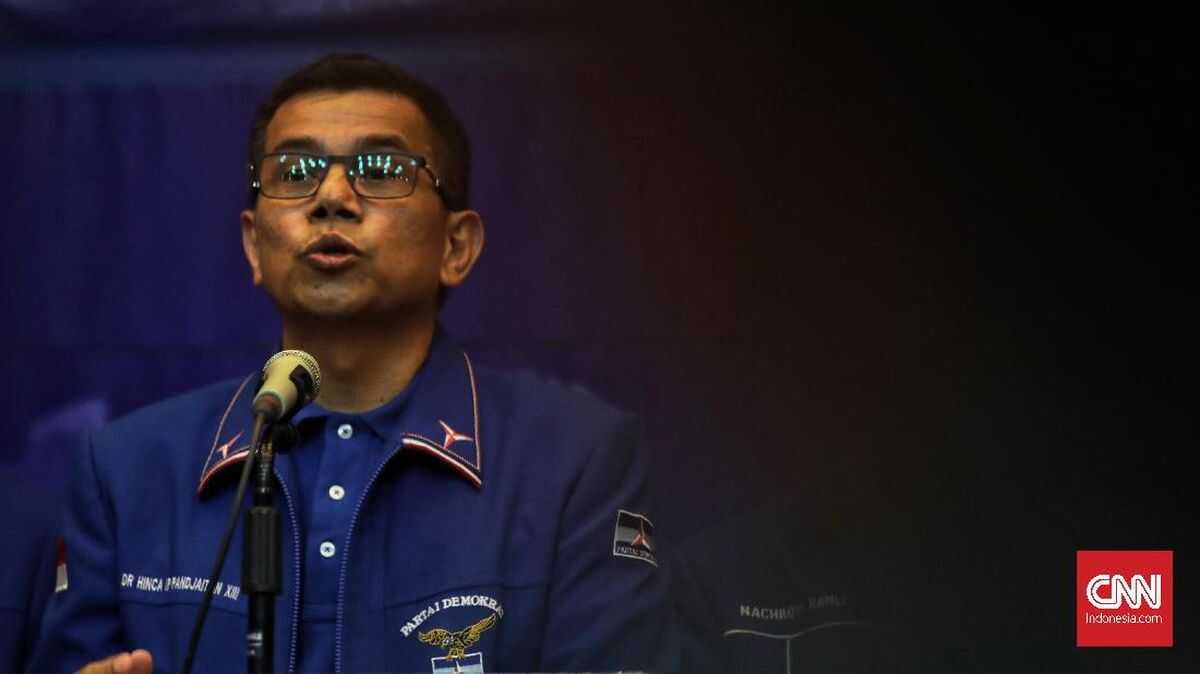
A member of the House of Representatives’ Commission III from the Democratic Party faction, Hinca Panjaitan, has questioned a statement by Indonesia’s seventh president, Joko Widodo (Jokowi), who claimed to have rejected the revision of the Corruption Eradication Commission (KPK) Law in 2019.
Hinca challenged Jokowi’s assertion that he did not co-sign the result of the legislative revision, stating that lawmakers unanimously disputed the former president’s claim.
“All of us in the House are asking the same thing. Why suddenly, out of nowhere, throw that out? We collectively refuted it — it is simply untrue,” Hinca said at the parliamentary complex on Monday (23 February).
He went on to reveal the government’s role throughout the deliberation process of the KPK Bill in 2019. Hinca was one of the Commission III members during the 2014–2019 term who was directly involved in the bill’s deliberation.
According to him, no law has ever been passed by the House without the involvement and approval of the government, including the KPK Bill.
Hinca said the government was in fact more proactive during the deliberation process. He therefore questioned Jokowi’s rationale for not signing the revised law, describing it as an ambiguous stance.
“In fact, it was the government that was proactive. Now, if President Jokowi’s excuse at the time was ‘I didn’t sign it, meaning I didn’t agree’ — that’s not true. Because even without a presidential signature, it automatically takes effect. That’s precisely where the ambiguity lies,” he said.
Hinca explained that the government’s involvement in legislative deliberations is based on formal assignment, as the president is required to appoint a representative for every stage of a bill’s discussion.
“At the plenary session where it was discussed, the government also conveyed its views and both sides agreed — the gavel came down,” he said.
Hinca added that if the government or Jokowi had been serious about rejecting the bill, they should have taken a stance during deliberations or at the ratification plenary. However, no such action was taken before the KPK Bill officially came into force.
“The government’s response was read out — they agreed. They even thanked the House for deliberating it. That’s how it went. We can debate the substance, but to claim non-involvement seems excessive,” Hinca said.
KPK Law No. 19 of 2019 has come under renewed scrutiny after Jokowi himself supported calls to revert it to the earlier version. Jokowi claimed he rejected the revision in 2019 on the grounds that he did not sign it.
“At that time, the revision was initiated by the House. But I never signed it,” Jokowi said after watching a Persis Solo versus Madura United match at Manahan Stadium in Solo on Friday (13 February).
The KPK Bill attracted significant attention at the time as it was deemed to contain a number of controversial provisions. The KPK identified at least 26 controversial points in the revised law that were considered to weaken anti-corruption efforts.
Among these were measures undermining the KPK’s independence by placing it as a state institution under the executive branch and making its employees civil servants.
Additionally, the provision designating KPK leaders as the highest authority was removed. In its place, the Supervisory Board was given greater powers than the KPK leadership, as stipulated in the third point.
Furthermore, wiretapping procedures were curtailed. At least six stages of approval were introduced for wiretapping — from investigator, task force head, director of investigation, deputy for enforcement, leadership, and supervisory board — before a case review could even take place. Wiretapping was considered to have become far more difficult due to the added layers of bureaucracy.