
HIMKI emphasises measured policies to maintain Indonesia's furniture competitiveness
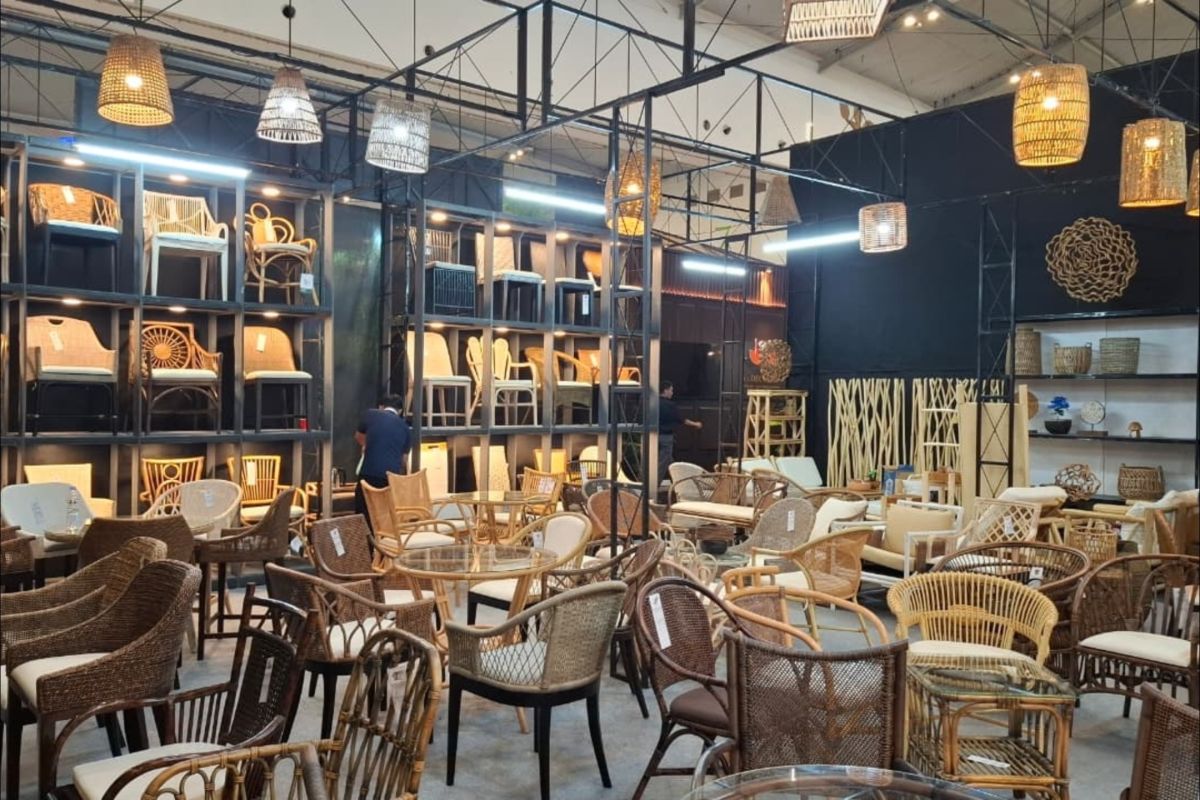
The downstream sector, such as furniture and handicrafts, has high sensitivity to cost changes.
Jakarta (ANTARA) - The General Chairman of the Indonesian Furniture and Handicraft Industries Association (HIMKI), Abdul Sobur, has emphasised the importance of measured policies to maintain the competitiveness of the national furniture and handicraft sector amid pressures from rising energy prices and global geopolitical dynamics.
In a statement confirmed in Jakarta on Wednesday, he conveyed that the association is facing a combination of challenges including rising energy costs, limited raw materials, operational obstacles, and export liquidity regulations that could impact the performance of the downstream sector, particularly labour-intensive industries.
“The downstream sector like furniture and handicrafts has high sensitivity to cost changes. On the other hand, there is very limited room to adjust prices in the global market,” said Abdul Sobur.
He added that the smooth supply of raw materials, as well as flexibility in cash flow management, are key factors in maintaining production continuity.
According to him, appropriate policies can help alleviate pressures on the downstream sector, which impacts value added and state foreign exchange.
Furthermore, HIMKI encourages future policy approaches to be formulated in a more measured manner, taking into account the characteristics of each industrial sector.
This step is considered important so that the national downstream industry, particularly furniture and handicrafts, can continue to grow, maintain competitiveness in the global market, and contribute optimally to the national economy.
Previously, the Ministry of Industry (Kemenperin) targeted Indonesia to become a global furniture manufacturing hub through strengthening sustainable wood downstreaming and enhancing national industry competitiveness.
This sector also absorbs hundreds of thousands of workers and is directly connected to the global market valued at more than US$736.21 billion.
Kemenperin assesses that in the next five years, Indonesia is projected not only to increase production capacity but also to lead in design and sustainability aspects.
The performance of this sector has even surpassed national economic growth. Based on data from the Central Statistics Agency (BPS), the processing industry growth in 2025 was recorded at 5.30 per cent, higher than the national economic growth of 5.11 per cent.
To increase productivity and strengthen this sector, Kemenperin is implementing a programme for restructuring machines/equipment in the wood processing industry. To date, the programme has facilitated 35 companies with a total reimbursement value of Rp26.1 billion.
The programme has proven to increase production efficiency by 10.70 per cent, product quality by 36.28 per cent, and productivity by up to 32.65 per cent.