
HIMKI confident that Indonesia's furniture industry can meet global market demand
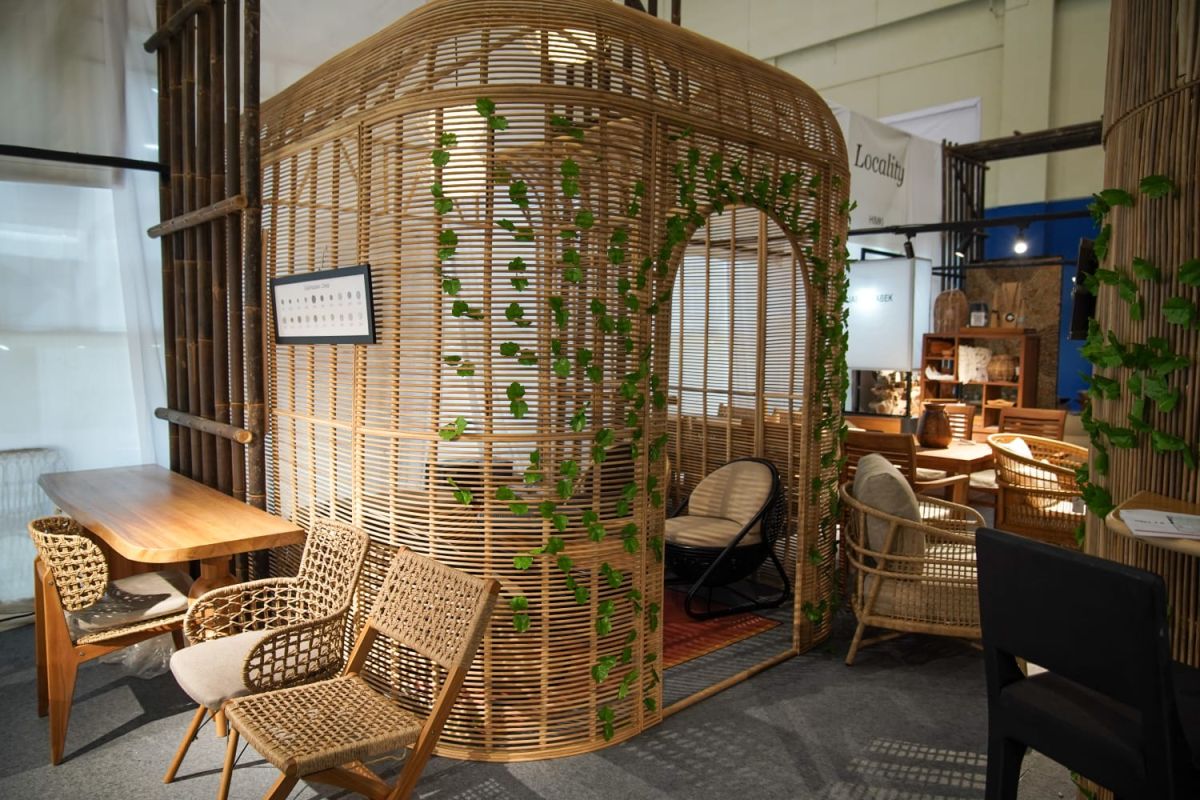
Jakarta (ANTARA) — The Indonesian Furniture and Craft Industry Association (HIMKI) is confident that the domestic furniture industry can meet the needs of the globally expanding market, with the sector’s market value currently estimated at $201 billion per year.
Chairman of HIMKI Abdul Sobur, in a statement confirmed in Jakarta on Saturday, said the size of the market shows that the furniture and handicraft industry is one of the largest sectors of creative manufacturing in international trade.
He said that with abundant tropical raw materials, culture-rooted design strength, and the support of international trading platforms such as the Indonesia International Furniture Expo (IFEX), Indonesia is seen as having great opportunities to strengthen its position while meeting world market demand.
‘Indonesia has no less potential. The broad industrial base, design richness rooted in culture, and growing global awareness of sustainable products provide Indonesia with the opportunity to accelerate furniture export growth,’ he said.
However, he noted that the global furniture market structure is still dominated by a number of large countries. He said China leads with exports valued at $130 billion, followed by Vietnam at $21 billion, and Germany at $18 billion.
Meanwhile, Indonesia recorded furniture and handicraft exports of about $2.44 billion in 2023, and by November 2024 reached $2.37 billion.
This demonstrates that Indonesia remains a relatively small player in the global market. Nevertheless, he said, growth opportunities are considered very large if industry development and trade strategies are executed properly.
‘Indonesian furniture and handicrafts not only deliver function, but also carry cultural identity, aesthetic value, and local wisdom that give them a distinctive appeal in the global market,’ he said.
He said IFEX acts as a strategic platform that brings together the strength of the national furniture industry with international markets. And, he said, the IFEX event from 5 to 8 March this year at the Indonesia Convention Exhibition (ICE) BSD, Tangerang, Banten, reflects the high level of confidence of the industry and international markets in Indonesia as one of the world’s important sources of furniture and crafts.
In his view, the strategy of attracting international buyers to Indonesia through a global-scale exhibition is considered an effective approach to strengthening exports.
Earlier, the Ministry of Industry (Kemenperin) targeted Indonesia to become a hub of global furniture manufacturing through strengthening sustainable downstream wood processing and increasing the competitiveness of the national industry.
Minister of Industry (Menperin) Agus Gumiwang Kartasasmita said the furniture industry is a model of downstream wood processing crucial because it is labour-intensive, capable of creating added value, and provides multiplier effects for domestic economic growth.
‘This sector also employs hundreds of thousands of workers and is directly connected to the global market valued at more than $736.21 billion. In the next five years, Indonesia is projected not only to increase production capacity but also to lead in design and sustainability,’ he said.
He added that the sector’s performance could even surpass national economic growth. According to data from Badan Pusat Statistik (BPS), the growth of the manufacturing sector in 2025 was recorded at 5.30 percent, higher than the national economy growth of 5.11 percent.
This achievement marks a historic moment as industrial growth again outpaced the economy after 14 years, since the last time in 2011.