
Highlighting Energy Crisis, Expert Warns Economy Could Grow Below 5%
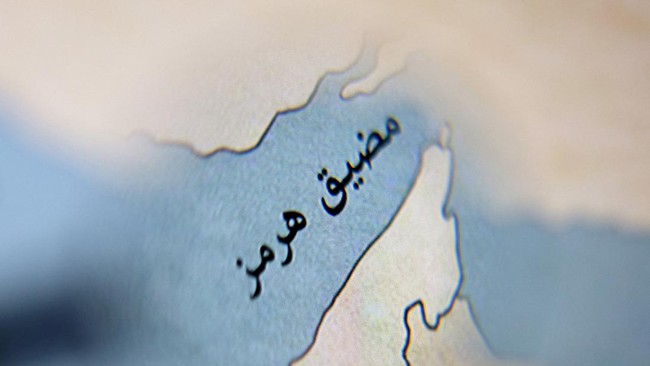
Geopolitical tensions in the Middle East stemming from the conflict in Iran could continue to drive up oil prices, posing a significant test for Indonesia’s economy.
Arcandra Tahar, a member of the Prasasti Board of Experts and an Indonesian energy specialist, explained that within the global energy industry structure, Indonesia lacks substantial leeway to independently set oil prices.
” Oil prices essentially follow market rates. Indonesia purchases on the open market. Domestic production, whether through K3S (Contract Work Cooperation Contractors) or Pertamina, is sold with reference to market prices,” he stated.
He assessed that the pressure is intensifying because global oil prices are now moving well above the assumptions in the state budget. The oil price assumption in the 2026 state budget is around US$70 per barrel, while current market prices are in the range of US$90-100 per barrel.
Arcandra stated that this indicates heightened geopolitical risks and tightening global energy supplies. He believes that with rising oil prices and a weakening rupiah exchange rate, the government faces increasingly complex policy dilemmas.
If domestic fuel prices are kept at current levels, the energy subsidy burden could rise significantly, placing pressure on the State Revenue and Expenditure Budget (APBN).
“However, if fuel prices are adjusted to market mechanisms, the impact could be immediately felt through rising inflation and a decline in public purchasing power,” he said.
Halim Alamsyah, another member of the Prasasti Board of Experts, calculated that in a scenario with oil prices around US$100 per barrel and the rupiah at around Rp17,000 per dollar, the fiscal deficit could widen to 3.3-3.5% of GDP.
“This clearly exceeds the 3% deficit limit that the government has maintained,” Halim remarked.
Based on previous experience data, fuel price adjustments can have a significant impact on inflation. Prasasti’s analysis shows that fuel price adjustments could add around 0.7 to 1.8 percentage points to inflation, depending on the magnitude and timing of the adjustment.
“In a scenario of prolonged high oil prices, Indonesia’s economic growth could also slow. We estimate that economic growth could drop to the 4.7-4.9% range, below the average growth of around 5% in recent years,” Halim said.
Prasasti assesses that the pressures facing Indonesia’s economy are not from a single factor but rather a convergence of various global and domestic economic dynamics.
Rising world oil prices due to geopolitical tensions, a weakening rupiah exchange rate, increasing fiscal pressures on the state, and changes in the external balance are simultaneously narrowing policy space. This situation requires the government to manage macroeconomic policies more cautiously.
Piter Abdullah, Policy and Program Director at Prasasti, views the current government policy as an effort to preserve public purchasing power by holding back fuel price increases. On the other hand, the sustainability of this policy depends on developments in global oil prices.
“If the oil price rise persists until the end of the year, it will become increasingly difficult to hold fuel prices steady. Therefore, the public and business actors need to understand that energy price adjustments in certain conditions are a normal part of policy responses, as long as they are accompanied by targeted compensation,” he stated.
Piter also warned that the combination of rising energy prices, a weakening exchange rate, and fiscal pressures needs to be anticipated from the perspective of financial system stability. In his view, amid increasing global uncertainty, policy coordination among economic authorities becomes even more important.
“In such conditions, coordination through the Financial System Stability Committee (KSSK) is crucial. The business world and market participants are certainly awaiting policy signals from authorities such as Bank Indonesia, OJK, and the Ministry of Finance regarding the direction of financial system stability moving forward,” he said.
Prasasti believes the government needs to respond quickly to various potential disruptions to industrial activities that could arise from global geopolitical escalation.
Disruptions to energy supplies or industrial raw materials could increase production costs and pressure manufacturing sector productivity.
Therefore, he considers policies to ensure energy availability for industry, including industrial gas, as well as measures to reduce production cost structures—such as evaluating import duties on raw materials and auxiliaries—to be important in maintaining national industrial efficiency and competitiveness amid global pressures.