
Higher Education, Science, and Technology Ministry Urges Campus Involvement to Accelerate Economic Development
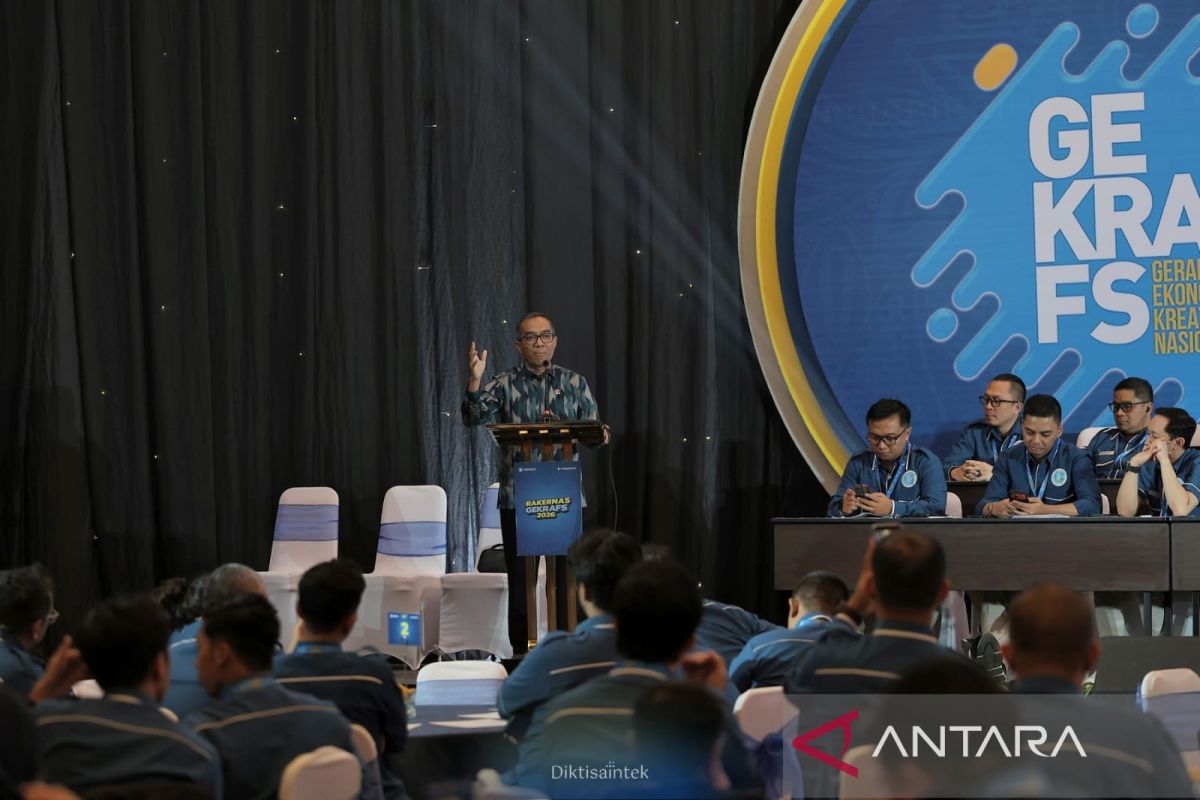
Jakarta (ANTARA) – The Minister for Higher Education, Science, and Technology (Mendiktisaintek), Brian Yuliarto, urged universities to engage in accelerating national economic development, arguing that campuses have a strategic role in driving growth of an innovation- and creativity-based economy.
Speaking in Jakarta on Sunday, Mendiktisaintek stressed that national development cannot be carried out by the government alone. Synergy among universities, communities, industry, and local governments is a crucial foundation for fostering innovation, strengthening talent, and developing a sustainable creative-economy ecosystem.
‘Indonesia is currently at a crucial phase toward becoming a developed country. To achieve high-income status, Indonesia needs to sustain more aggressive economic growth momentum, including targeting growth of up to eight percent through reinforcement of research, innovation, and knowledge-based entrepreneurship,’ he said.
Minister Brian assessed that this target aligns with the national development vision emphasised by President Prabowo Subianto as Indonesia marches toward Indonesia Emas 2045.
In this context, campuses are expected not only to be centres of education and research, but also engines driving the emergence of innovative solutions with direct benefits for society and the national economy.
‘The definition of a developed country is many things, but what can be measured is our per-capita income which must be above 15,500 US dollars. Indonesia is currently around 5,500 US dollars,’ he said.
Mendiktisaintek also compared this figure with per-capita income of other Asian countries, such as Singapore at around 80,000 US dollars, Japan and South Korea at around 60,000 US dollars, and China at 14,000 US dollars.
According to him, Indonesia needs to undertake a major leap in productivity and economic innovation.
Therefore, Brian emphasised that higher education institutions should act as innovation hubs that generate real solutions for economic development. Through basic and applied research, campuses are expected to produce technologies, new business models, and industrial innovations capable of enhancing national economic competitiveness.
In this regard, he added, the role of the academic community is important to ensure that the development of the creative economy runs in tandem with advances in science and technology.
Minister Brian emphasised that the Ministry of Education, Culture, Research, and Technology (Kemdiktisaintek) is ready to promote collaboration between higher education institutions and regional creative-economy communities to develop local, innovation-based economic potential.
‘The requirement for doubling economic growth is creativity and breakthrough innovation accompanied by a science- and technology-based foundation,’ said Brian Yuliarto.