
Higher Education Minister Urges Implementation of Integrated Waste Management Systems
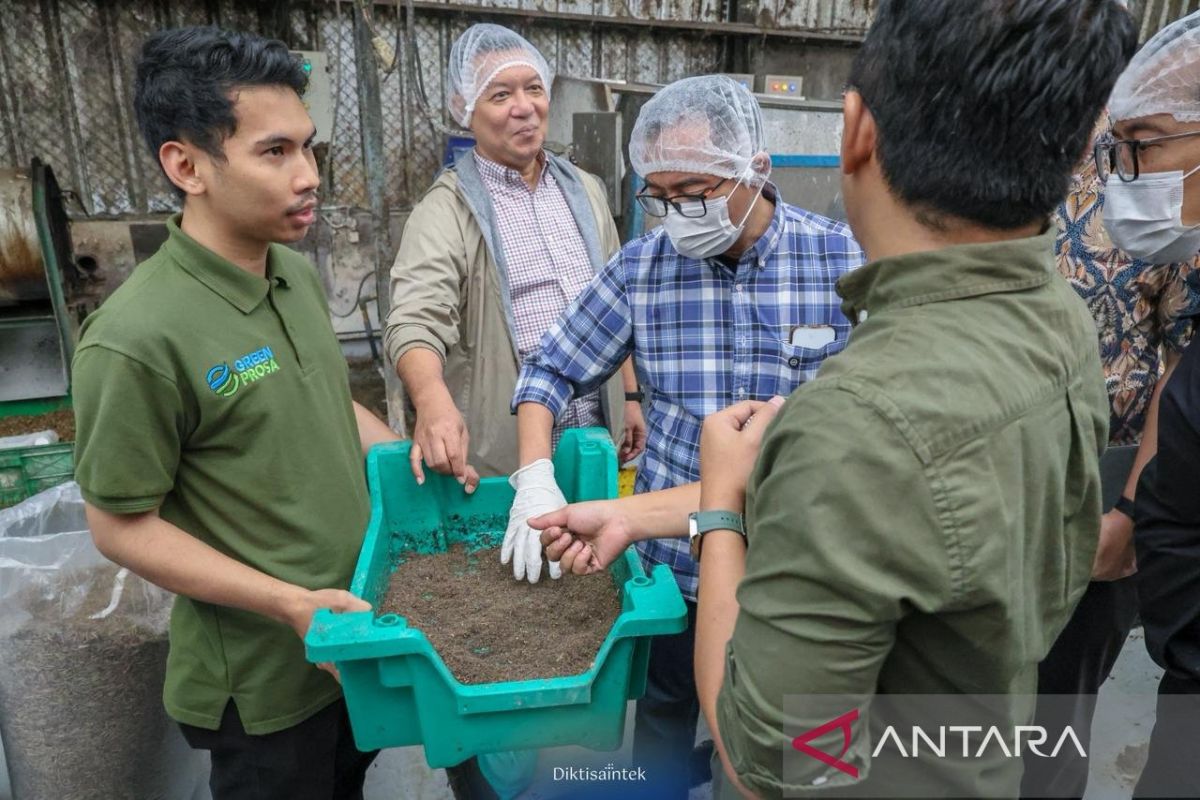
Jakarta — Indonesia’s Minister of Higher Education, Science, and Technology (Mendiktisaintek), Brian Yuliarto, is encouraging the implementation of integrated waste management utilising research-based waste processing technology.
“We need to establish an integrated waste management system, from community level to regional-scale processing facilities,” said the minister in a statement in Jakarta on Monday.
Minister Brian emphasised that waste management cannot be resolved through a fragmented approach. An integrated system is required, beginning with public awareness in waste sorting, technological processing support, and management of large-scale processing facilities, ensuring that innovations generated from higher education research can deliver tangible environmental and social benefits.
Conceptually, he explained, the system encompasses sorting at community level and waste banks, sorting stations at neighbourhood level, processing facilities at district level, and regional processing centres capable of handling residue more efficiently.
“Waste management is insufficient with only a government programme approach; it requires a sustainable business model. If managed properly, waste can also become a source of new industry based on innovation. With the right management system, most waste can be reused and residue becomes minimal,” he stated.
The minister highlighted various waste processing technology initiatives, including Black Soldier Fly for organic waste processing, Refuse Derived Fuel (RDF) as alternative industrial fuel, and technologies for sorting and recycling high-value materials.
He cited Taman Safari Indonesia’s Integrated Waste Management (IWM) facility as a potential reference model for integrated waste processing practice, ranging from sorting, processing organic waste into maggot feed, to utilising residue as alternative fuel.
Earlier, the minister had also stressed that universities hold a strategic role in accelerating waste management nationwide. He encouraged campuses to function as living laboratories for environmentally friendly technology innovation, spanning organic processing, recycling, and waste-to-energy conversion.
President Prabowo Subianto has directed all government officials at central and regional levels to maintain consistency in waste management. Concrete emergency waste management actions are being undertaken through the Indonesia Clean, Healthy, Neat, and Beautiful (ASRI) movement, a concrete step from the President’s directive instructing strengthened consistency in environmental cleaning and sustainable waste management across Indonesia.