
High Pressure and Volatility in Capital Inflows: Economist Consensus Projects Bank Indonesia to Hold Interest Rates
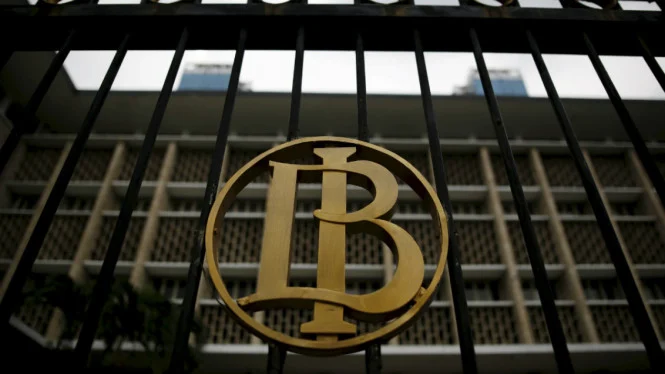
Jakarta — A consensus of economists believes that Bank Indonesia’s Board of Governors Meeting (RDG) will keep the benchmark interest rate (BI-Rate) on hold at 4.75 per cent this month, citing persistent pressure and volatility in capital flows over recent weeks.
BSI Chief Economist Banjaran Surya argued that the rupiah exchange rate continues to face potential downward pressure, making the decision to maintain the benchmark rate the appropriate course of action.
“Although inflation remains relatively contained, Bank Indonesia also needs to preserve the yield attractiveness of securities compared to alternatives. Meanwhile, MSCI’s influence has tended to restrain capital flows through the equity market,” Banjaran said in Jakarta on Thursday, 19 February 2026.
He explained that to safeguard rupiah stability, Indonesia’s central bank has increased the issuance of Bank Indonesia Rupiah Securities (SRBI) in February 2026, once again implementing contractionary monetary operations.
Separately, Faisal Rachman, Department Head of Macroeconomic and Financial Market Research at Permata Bank, noted that pressure following warnings from Morgan Stanley Capital International (MSCI) regarding free-float issues, combined with Moody’s revision of Indonesia’s outlook from stable to negative, has the potential to raise the risk premium and amplify capital flow volatility.
He assessed that Bank Indonesia will continue to prioritise rupiah exchange rate stability and investor confidence over pursuing monetary easing in the short term. In his view, room for interest rate cuts remains limited in the near term, at least until pressures subside and market sentiment becomes more conducive.
Meanwhile, Teuku Riefky, a macroeconomic and financial market economist at LPEM FEB UI, noted that since the MSCI announcement, Indonesia has experienced equity market capital outflows totalling US$1.01 billion.
Furthermore, Indonesia has also seen bond market capital outflows amounting to US$370 million since Moody’s revised its assessment of the country’s economic conditions. Cumulatively, Indonesia has recorded capital outflows of US$1.06 billion over the past 30 days.
As a result, the yield on 10-year government bonds rose 6 basis points from 6.31 per cent on 19 January 2026 to 6.40 per cent as of 13 February 2026, whilst the 1-year tenor surged 20 basis points from 4.67 per cent to 4.87 per cent, indicating capital outflows across various bond tenors.