
High Oil Prices Prompt Calls for Government to Accelerate Energy Transition
The adjustment of non-subsidised fuel prices is seen as an important reminder of the need to accelerate the national energy sector’s sustainability agenda. This policy opens up space for strengthening more adaptive energy transition strategies while maintaining public economic stability.
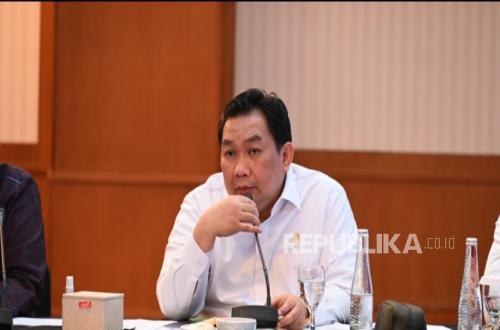
The increase in non-subsidised fuel prices by PT Pertamina, effective from 4 May 2026, has sparked public attention regarding the balance between energy policies, purchasing power protection, and the direction of low-emission development. DPR Commission XI member Erik Hermawan views this policy as needing to be placed within the framework of economic stability as well as long-term energy transition.
From the latest adjustment, the price of Pertamax Turbo (RON 98) has risen from Rp19,400 to Rp19,900 per litre, Dexlite from Rp23,600 to Rp26,000 per litre, and Pertamina Dex from Rp23,900 to Rp27,900 per litre, marking the highest increase of up to Rp4,000 per litre. Meanwhile, subsidised fuels such as Pertalite at Rp10,000 per litre, subsidised Solar at Rp6,800 per litre, and Pertamax at Rp12,300 per litre remain unchanged.
“This shows the government’s efforts to protect vulnerable groups,” said Erik in his statement on Monday (5/5/2026).
Erik assesses that the price adjustment is inseparable from global oil price fluctuations and international geopolitical dynamics. However, its impact on the real sector needs to be anticipated carefully to avoid pressuring domestic economic activities.
“This could trigger inflationary pressures and affect the prices of essential goods,” said Erik.
From the perspective of economic and environmental governance or ESG, the DPR RI Commission XI encourages the government to strengthen adaptive fiscal policies, maintain the effectiveness of energy subsidies, and ensure food price stability remains intact. Transparency in the pricing mechanism is also deemed important so that the public understands the factors shaping national energy prices.
“And increase transparency in the fuel price determination mechanism so that society understands the factors influencing the increase,” said Erik.
Erik emphasises that the momentum of energy price adjustments should be followed by accelerating the diversification of clean energy and fuel consumption efficiency. Cross-ministerial coordination, especially with the Ministry of Energy and Mineral Resources, is deemed important to reduce fossil fuel dependency while strengthening national economic resilience based on sustainability.
“Energy policy evaluation must be carried out continuously and data-based to maintain national economic resilience while improving public welfare,” said Erik.