
High Demand Prompts Jakarta East City Government to Strengthen Inthanon Melon Cultivation
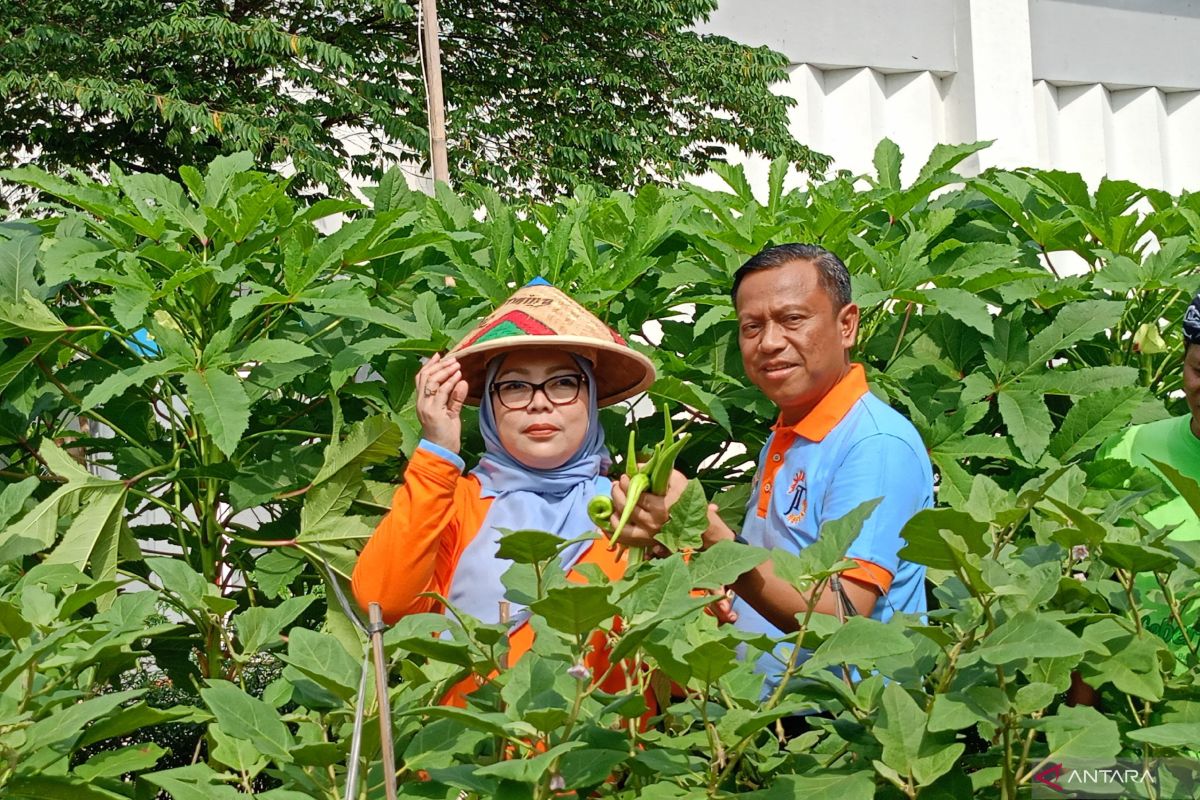
Jakarta (ANTARA) - The Jakarta East City Government (Pemkot Jaktim) is strengthening urban agriculture development, particularly for the Inthanon melon variety, which is increasingly sought after by the public.
“Support for farming groups is not only provided at the city level but also involves the Sub-District Office of Food Security, Maritime, and Agriculture (Sudin KPKP) as well as experienced farming motivators,” said Jakarta East Mayor Munjirin during the Inthanon melon harvest event in RW 012, Cipinang Melayu, Makasar, Jakarta East, on Friday.
According to him, the development provided so far has been running intensively and sustainably.
Experienced farmers are encouraged to pass on their knowledge to other farming groups, including communities new to urban agriculture.
“Development is plentiful, from the city level, then from Sudin KPKP, as well as from farming motivators who have experience to pass on to other farming groups,” Munjirin stated.
In addition, he explained that the Inthanon melon harvests have been directly marketed by the farming groups so that the profits obtained can be reinvested as business capital, allowing agricultural activities to continue developing independently.
“If the results are always sold so they can be reinvested later,” Munjirin remarked.
On the other hand, the high market interest in Inthanon melons poses a unique challenge for farmers.
“The demand is extraordinary, but the supply is limited. If there are orders, we often can’t fulfil them. Whatever is harvested will sell. So, don’t be afraid to plant,” said Amin.
He also emphasised that farmers’ concerns about marketing should not be an obstacle. As long as the harvest quality is maintained, the market will always be available.
Meanwhile, to increase production while empowering the community, the farming group is also collaborating with banking institutions through social programmes, one of which is support from Bank BRI via the Baitul Maal Foundation.
The plan is to utilise a plot of land measuring approximately 320x15 metres for agricultural development, particularly vegetable crops.
The programme is targeted to produce up to 10,000 vegetable plants, involving community groups, especially housewives and widows who need additional income.
“Later, the motivators will be housewives, especially those who need economic assistance. The harvest results will be shared among members,” Amin said.
The programme is currently awaiting permit processes before it can be fully implemented. Amin hopes that the collaboration will not only boost agricultural production in Jakarta East but also provide significant social impacts for the community.
With sustainable development and support from various parties, urban agriculture in Jakarta East is believed to have bright prospects, while also serving as a solution to strengthen food security and the local economy.