
Hidayat Nur Wahid Urges Government to Expedite Establishment of Directorate General for Islamic Boarding Schools
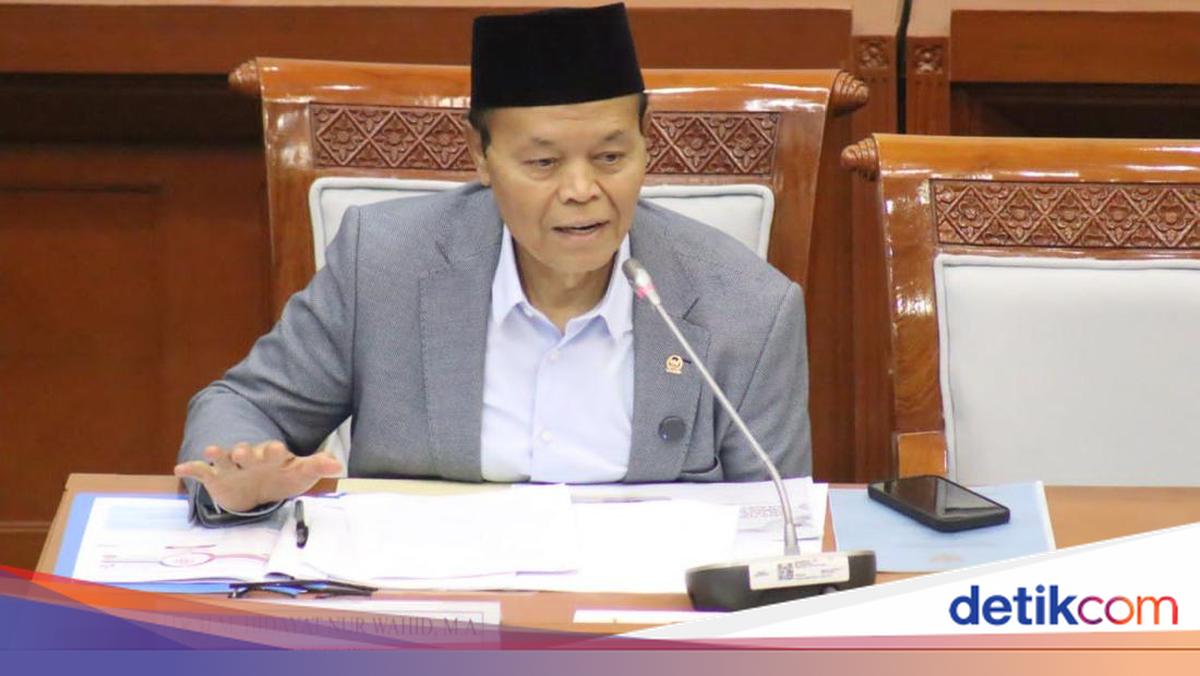
Hidayat Nur Wahid, Vice Chair of the People’s Consultative Assembly of the Republic of Indonesia and member of Commission VIII of the House of Representatives, has renewed pressure on the government to accelerate the realisation of the establishment of a Directorate General for Islamic Boarding Schools (Ditjen Pesantren) within the Ministry of Religious Affairs.
Known by his initials HNW, Wahid reminded that nearly five months have elapsed since President Prabowo announced approval for the formation of the Ditjen Pesantren. Despite some progress, no clear sign of finalisation has yet emerged.
“Within the context of the Ministry of Religious Affairs’ internal structure, the establishment of the Ditjen Pesantren is highly important for institutional transformation and the improvement of religious education quality, particularly for pesantren. This should also be a high priority for the Ministry of Religious Affairs following its transfer of hajj management responsibilities. Praise be to God, the Ministry of Administrative and Bureaucratic Reform has responded positively to this proposal because the establishment of the Ditjen Pesantren aligns with the President’s vision and mission, making it institutionally viable. The Minister of Administrative and Bureaucratic Reform has therefore stated that he will work together with the Ministry of Religious Affairs to intensify the drafting of the organisational structure for the Ditjen Pesantren,” Wahid stated in a written statement on Friday, 13 March 2025.
This was communicated following a working meeting of Commission VIII regarding the Ministry of Religious Affairs’ organisational structure with the Ministry of Administrative and Bureaucratic Reform on Thursday, 12 March.
The PKS faction member of the House of Representatives noted that beyond institutional transformation, the Ditjen Pesantren will have substantial responsibilities, including improving the quality of Islamic boarding schools and maximising the benefits of the Islamic Boarding School Endowment Fund by separating its management from the general Education Endowment Fund.
Under Presidential Regulation Number 111 of 2021 concerning the Education Endowment Fund, the Islamic Boarding School Endowment Fund remains part of the Education Endowment Fund and has not been separated. However, Islamic boarding schools have their own dedicated law—Law Number 18 of 2019 concerning Islamic Boarding Schools—which is already referenced in the regulation’s preamble.
By definition, Article 2 should explicitly state that the Islamic Boarding School Endowment Fund, as a category of education endowment fund, should have its management separated from the general Education Endowment Fund, similar to how management has already been separated for the Research Endowment Fund and the Higher Education and Culture Endowment Fund.
“As a result, out of approximately IDR 10 trillion generated from the development of the education endowment fund, Islamic boarding schools have received only around IDR 500 billion, a sum considered unjust and insufficient to support the increasingly growing number of pesantren in Indonesia,” he added.
Wahid explained that according to Ministry of Religious Affairs data, the Islamic boarding school ecosystem comprises 42,369 pesantren, 104,204 diniyah Islamic primary schools, 194,901 Qur’anic education institutions, and 91 Ma’had Aly advanced Islamic institutions, totalling 341,565 institutions. Additionally, there are 12.67 million students and 2.05 million teachers and instructors within this ecosystem.
Given the massive scale of the Islamic boarding school ecosystem that will be managed by the Ditjen Pesantren, he also urged that the budget for the Ditjen Pesantren should not merely represent a transfer from the existing Pesantren Directorate currently functioning as part of the Directorate General of Islamic Education.
“Clearly, when transitioning from directorate to directorate general status, its budget must also be increased and strengthened. This can come from optimising the separation of the Islamic Boarding School Endowment Fund, as well as direct support from the state budget as evidence of the state’s commitment to Islamic boarding school institutions that are deeply rooted in society and have made a significant contribution to Indonesian independence, whilst assisting the government in educating the nation and advancing Indonesia towards the Golden Indonesia 2045,” he concluded.