
Hetifah: AI use must not replace journalism jobs
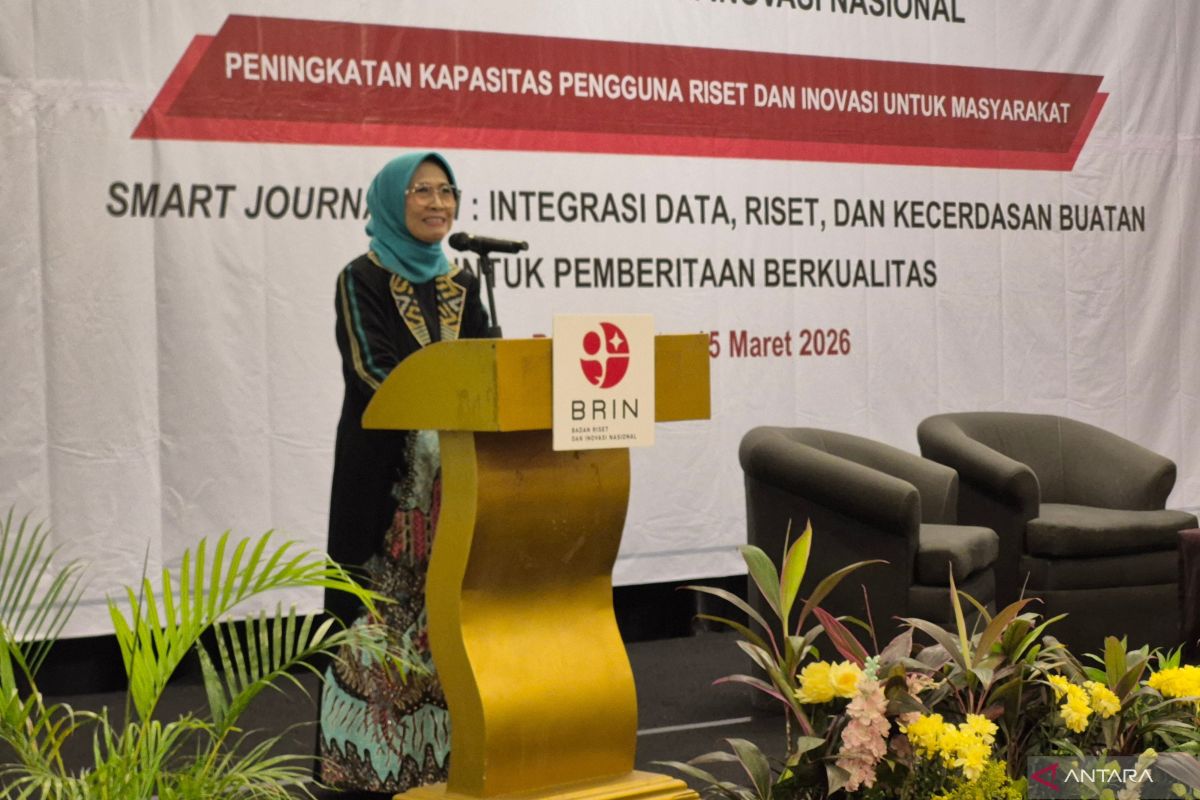
Jakarta (ANTARA) - Hetifah Sjaifudian, chairperson of Commission X of the House of Representatives, has emphasised that the use of artificial intelligence (AI) in journalism must not result in replacing journalists’ jobs.
“It must be clarified that the presence of AI in newsrooms is not to replace journalists. AI should serve as a co-pilot or tool to help us accelerate the journalistic workflow and assist the newsroom in various ways,” Hetifah said during a discussion titled Smart Journalism in Jakarta on Sunday.
Hetifah noted that AI is becoming a new gateway for the public to understand the world. Its use is also transforming nearly all levels of media operations, including how media is produced, how news is distributed, and how the public consumes news.
Facing this situation, she stated that editorial decisions, data verification, and ethical judgements must remain in human hands. Hetifah highlighted the emergence of a new phenomenon in the media industry known as synthetic media.
“In this system, algorithms can perform issue selection, information classification, news production, and content distribution. This phenomenon shows that automation in the media industry has reached a far more advanced stage,” she said.
Hetifah presented a survey of journalists in Indonesia and Southeast Asian countries such as Thailand, Vietnam, and the Philippines, which showed that familiarity with AI among journalists has reached a very high level of 95 per cent.
Furthermore, 75 per cent of respondents actually use AI in their journalistic work, and 84 per cent believe AI has a positive impact on their work.
Because of this, Hetifah highlighted that there are at least three areas journalists must master to avoid misusing AI. These include data literacy, AI literacy, and the ability to verify issues.
“Technology may change, platforms may shift, but the fundamental principles of good journalism must not change. Of course, accuracy and layered verification must still be possible, depth of analysis and context, data and evidence as the foundation, and finally, the public interest,” she said.
According to her, the purpose of journalism is to serve society, so it must be relevant to the public and help people understand the impacts of every policy and contribute to strengthening democratic life.