
Here It Is: Corporate Strategies to Tackle Indonesia's Waste Problem
Waste is one of the most serious issues that must be handled appropriately. Minister of Environment Hanif Faisol Nuroq stated that the national waste accumulation has reached 140,000 tonnes per day. If not managed properly, this situation can cause various problems, from environmental damage to health disruptions.
Addressing the national waste problem is no easy task—it requires strong strategies and collaboration from various parties, from government, private industry, communities, to all levels of society in realising sustainable waste management.
In this regard, various companies have taken initiatives to contribute to tackling the waste problem in Indonesia, one of which is Unilever Indonesia (UNVR).
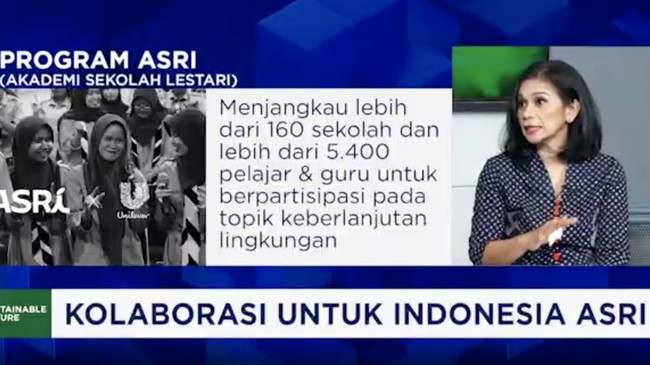
Director of Communications, Corporate Affairs & Sustainability at Unilever Indonesia, Nurdiana Darus, conveyed that Unilever Indonesia’s sustainability commitment has been running for more than two decades, particularly in efforts to manage plastic waste.
“As a manufacturer, plastic packaging plays an important role in ensuring Unilever products reach consumers safely. In the Indonesian context, product distribution still requires strong and durable packaging—that’s why plastic use is still necessary,” Nurdiana explained to CNBC Indonesia, quoted on Tuesday (17/3/2026).
“However, we also realise that if that plastic is not managed well, it will harm the environment and humans,” she continued.
Nurdiana added that UNVR continues to take concrete steps to manage plastic waste from upstream to downstream. Upstream, UNVR internally continues to innovate in developing packaging designs to reduce the amount of plastic or use environmentally friendly plastic.
Downstream, the waste handling carried out by Unilever Indonesia is done through various initiatives, such as Waste Banks, Refill Stations, and Reverse Vending Machines.
In 2025, UNVR has developed more than 5,000 Waste Banks in 50 cities/regencies spread across 11 provinces in Indonesia. Then, at some of those waste bank points, there are also Unilever product refill outlets (U-Refill) with a total of 2,900 outlets spread across the Jabodetabek and Surabaya areas. Through the Reverse Vending Machine (RVM) initiative, the company encourages consumers to bring and exchange their used plastic bottles, which can then be exchanged for money.
“In addition, we continue to strive to carry out education and socialisation regarding behavioural change, as well as strengthen collaboration with relevant stakeholders in addressing this waste problem,” Nurdiana added.
As of 2025, Unilever Indonesia has successfully collected and processed more than 80,000 tonnes of plastic waste, more than what the company uses in product packaging.
“Our commitment continues, and we hope that various initiatives and collaborations with stakeholders can be further strengthened. We also hope that we can all start to get into the habit of small steps at home and in the surrounding environment to preserve the environment,” Nurdiana concluded.