
Health Ministry Revises Intern Doctor Regulations in Response to Dr. Myta Case
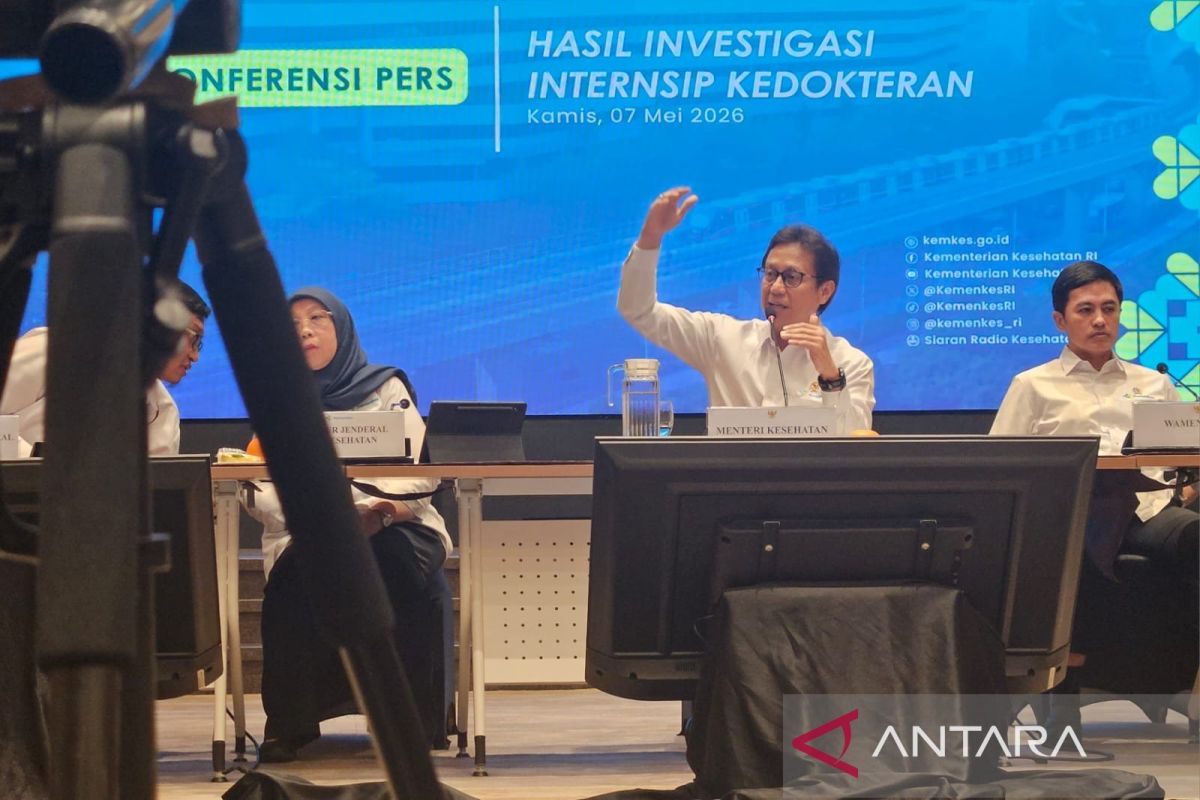
The internship programme has been running for 10 years. We also see that many behaviours, processes, and cultures need to be improved. And because this culture has been in place for quite some time, it is not easy to change. But we are confident that such incidents must not happen again.
Jakarta (ANTARA) - The Ministry of Health is revising the regulations for the intern doctor (internship) programme, covering working hours, welfare, and end-of-period evaluations, to enhance governance and follow up on the report of the death of Dr. Myta Aprilia Azmi, an intern doctor at RSUD KH Daud Arif.
“The internship programme has been running for 10 years. We also see that many behaviours, processes, and cultures need to be improved. And because this culture has been in place for quite some time, it is not easy to change. But we are confident that going forward, such incidents must not happen again,” said Health Minister Budi Gunadi Sadikin in Jakarta on Thursday.
President Prabowo Subianto, according to Budi, is very serious about improving the governance of medical education in Indonesia. The first aspect of these changes, he said, is the regulation of working hours, emphasising that the maximum is 40 hours per week, and they must not be condensed or crammed.
This means, he said, no arrangements that could be harmful, such as working 20 hours a day followed by a day off. He gave examples like 8 hours per day for 5 working days, or about 7 hours for 6 days.
“Then, secondly, we want to emphasise that intern doctors are not replacements for permanent doctors. The task of intern doctors is to train under the supervision of supervising doctors,” he said.
Thirdly, he said, they have decided to issue standards for remuneration. Budi mentioned that remuneration consists of three components: living cost assistance from the Ministry of Health ranging from Rp 3 million to Rp 6.5 million per month, regional government allowances, and service fees from the internship placement facility.
“The figures here vary greatly between regions; one area differs from another. We receive this input. So some regions are generous in providing it, others are not. This leads to envy,” he said.
Fourth, according to Budi, is the right to leave and permission. Initially, each internship participant was allowed 4 days of leave; now it is permitted for 10 days. He noted that during this leave, intern doctors do not need to make up their schedules on other days. Additionally, intern doctors may take sick leave and maternity leave beyond the 10 days of regular leave.
“But they still must meet the minimum competency requirements or the number of cases to graduate. Because the important thing is, for example, to graduate, they must handle, say, 5 deliveries,” he added.
This, he said, is to ensure that intern doctors are truly skilled, thereby maintaining patient safety.
“Then, finally, what we are doing is to ensure that all internship participants undergo the President’s Free Health Check,” he said.
The CKG is conducted twice a year.
The ministry expressed condolences for the death of Dr. Myta and three other intern doctors who died throughout 2026. He stressed that no more doctors should perish due to poor work cultures in hospitals, whether in the co-assistant, internship, or Specialist Doctor Education Programme (PPDS).