
Health Ministry: Free Health Screenings and Kidney Therapy Innovation Can Reduce Carbon Emissions from Dialysis
Jakarta — The Ministry of Health (Kemenkes) has stated that screenings such as Free Health Checks (CKG) and kidney therapy innovations can reduce the need for dialysis, thereby reducing dependence on environmental resources and lowering emissions from dialysis procedures.
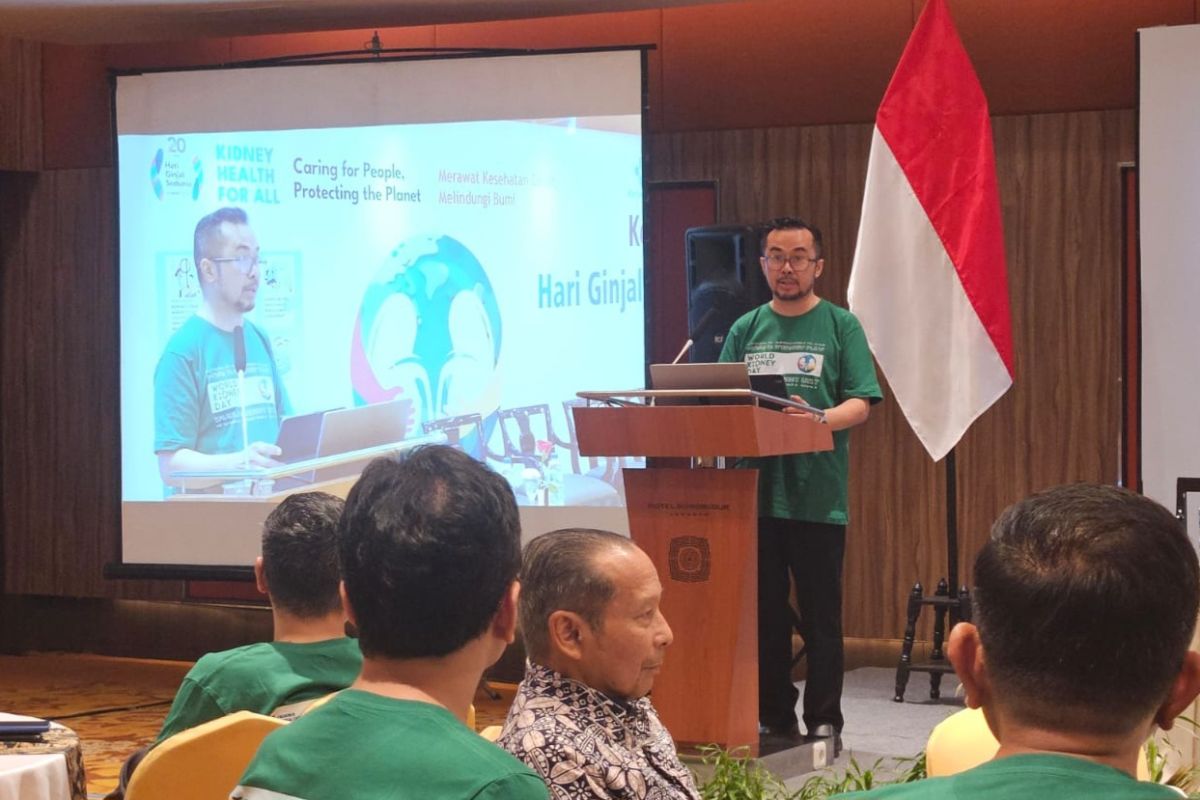
Acting Director General of Disease Control at Kemenkes, Andi Saguni, highlighted the theme for World Kidney Day 2026: “Caring for People, Protecting the Planet.”
According to the Indonesian Renal Registry, approximately 200,000 kidney failure patients require haemodialysis 2-3 times per week. Furthermore, data from the American Society of Nephrology (2020) shows that a single haemodialysis session produces the equivalent of 58.9 kilogrammes of CO₂.
“From these figures, it is clear that early detection at the primary level is very necessary to prevent the numbers I have mentioned,” said Andi in Jakarta on Wednesday.
Kidney failure, he noted, ranks second in terms of the largest financial burden on the National Health Insurance (JKN), after heart disease and followed by cancer and stroke.
“We must strengthen basic health services. When basic services are strengthened, patients do not reach late-stage disease, which means we can not only address the large financial burden in numerical terms, but also safeguard public health and longevity for the Indonesian population,” he said.
President Prabowo Subianto has therefore intensified the free health screening programme as a measure to prevent catastrophic diseases such as kidney failure. The CKG programme, conducted at health centres, aligns with the goal of strengthening basic health services.
The Ministry is also working to improve the equitable distribution of urology specialists, as currently these specialists are concentrated on the island of Java, to ensure more widespread access to services.
According to Saguni, collaboration among various stakeholders, including media, universities, experts, and communities, is crucial for educating the public about kidney health and how to maintain it.
“On the occasion of World Kidney Health Day, we are calling for commitment from various stakeholders — the government, global development partners, academics, industry, communities, and all parties — to work together in building a sustainable future for kidney health,” said Andi Saguni.