
Health Minister on BPJS Health Insurance Premium Increases: Only Upper-Middle Class Affected
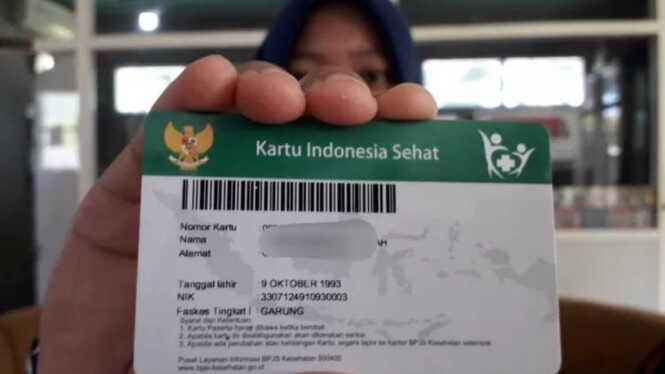
Jakarta – Health Minister Budi Gunadi Sadikin stated that the official increase in BPJS Health insurance premiums will only affect the upper-middle class population.
“The increase in BPJS premiums will have no impact whatsoever on the poor, because the poor are subsidised by the government,” Budi Gunadi said in Jakarta on Wednesday.
The Health Minister explained that BPJS Kesehatan currently faces a deficit of Rp 20-30 trillion. This deficit is managed by the government through an allocation of Rp 20 trillion. However, the minister cautioned that the deficit would recur annually.
“This will be felt through delayed payments to hospitals. Hospitals are experiencing difficulties with their operations. That is why structural changes are necessary,” Budi Gunadi said.
He stated that if tariffs were increased, there would be no impact on those classified as Deciles 1-5 in the National Single Data on Social and Economic Conditions (DTSEN), as they are covered by the government through the Health Insurance Premium Assistance Scheme for the Poor (PBI JKN).
Budi Gunadi noted that the social insurance concept behind BPJS Kesehatan works such that wealthier individuals subsidise the poor, similar to how tax systems function, where wealthier people pay more tax but have the same access to roads as poorer citizens.
“Those who need to pay Rp 42,000 per month—upper-middle class earners, such as journalists—should be able to manage it. After all, men spend more than that on cigarettes,” Budi Gunadi said.
In a separate statement, Agung Nugroho, Chairman of Indonesia’s Health Volunteers (Rekan), said that proposals to adjust BPJS Health insurance premiums could increase the number of inactive members.
“If premiums rise, many families will adjust their spending. The risk that emerges is an increase in outstanding payments and inactive membership. Ultimately, they could lose health coverage precisely when it is most needed,” he said.
The poor are relatively protected by the PBI JKN scheme, he noted, whilst high-income groups tend to absorb cost increases. However, the middle class, particularly informal sector workers and families with tight fixed expenses, are in a vulnerable position.
According to him, the proposal must be examined comprehensively, as the policy could potentially weaken the reach of the national health insurance system.