
Health and Energy Sectors Excluded from Work-from-Home Policy
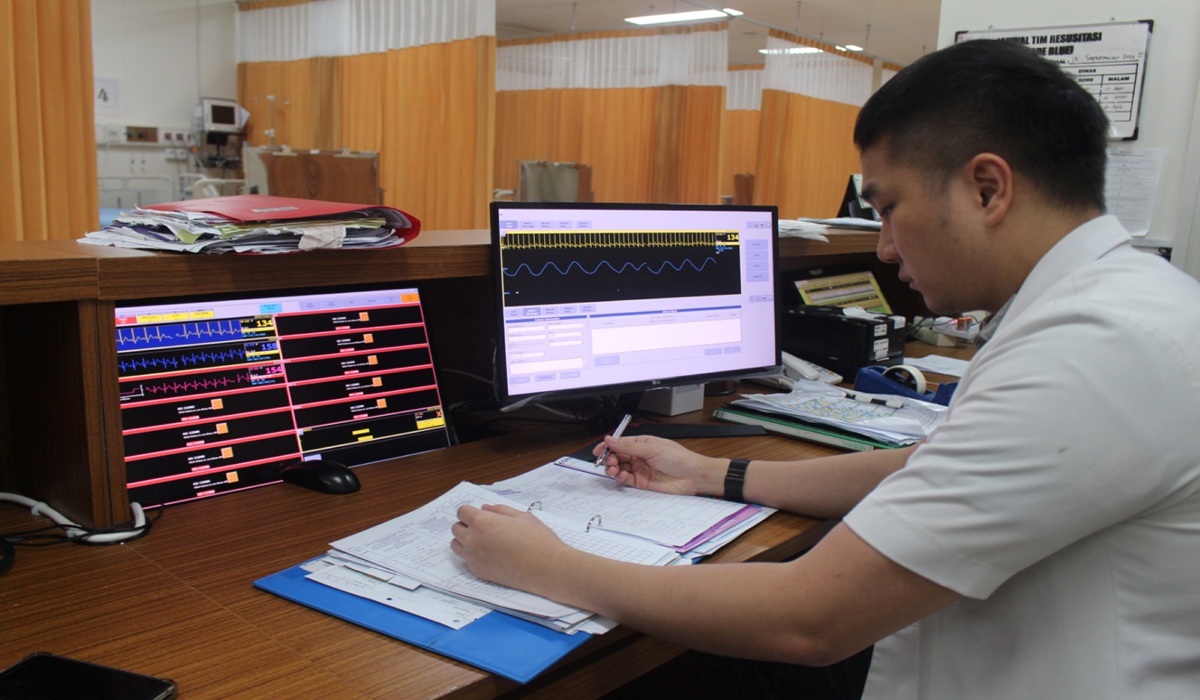
Coordinating Minister for the Economy, Airlangga Hartarto, has emphasised that several business sectors will not follow the government’s work-from-home (WFH) policy currently being regulated for the private sector. Sectors such as health, energy, and other public services are excluded and remain required to operate directly from offices or on-site.
“Several sectors excluded from WFH and still required to work from offices or on-site include public services such as health, security, cleanliness, and energy,” he stated during an online press conference on Tuesday (31/3).
Additionally, strategic sectors are also included in the exemptions, such as industry or production, water, basic necessities, food and beverages, trade, transportation, logistics, and finance.
For the education sector, teaching and learning activities will continue to be conducted in-person or offline as normal across all levels of primary to secondary education for five days a week.
Airlangga explained that the government has also confirmed there are no restrictions on sports events, whether competitive or extracurricular. Meanwhile, for higher education from the fourth semester onwards, implementation will adjust according to circulars from the relevant ministry.
The implementation of WFH for the private sector will be further regulated through a circular from the Minister of Manpower, while still considering the characteristics and needs of each business sector.
The WFH regulation also includes efforts to promote energy efficiency in the work environment.
Although civil servants (ASN) are permitted to work remotely, supervision will be conducted strictly through digital means to ensure productivity remains maintained.
Coordinating Minister for the Economy, Airlangga Hartarto, explained the scheme for implementing work-from-home (WFH) for ASN on Fridays for one day per week.
This step is socialised as an anticipatory measure against the impact of the global crisis to keep productivity intact even when working remotely.
In welcoming the one-day-per-week WFH initiative, readiness of digital infrastructure becomes key to maintaining productivity.
The policy is a follow-up to directives from the central government regarding efforts to efficiently use fuel amid the impacts of global conflicts.
The implementation of WFH is part of efficiency measures, particularly efforts to save on petroleum fuel (BBM) usage.
The Governor of West Java (Jabar), Dedi Mulyadi, commonly known as KDM, stated that his apparatus has already implemented work-from-home or WFH.
The work-from-home (WFH) system for civil servants (ASN) has been implemented in Cianjur Regency, West Java, for the past two months.
Agus Pambagio doubts the effectiveness of one day of work-from-home (WFH) per week in saving energy. He suspects WFH is merely a pretext for raising BBM prices.