
Head of BGN Affirms Rp268 Trillion Free Nutritious Meals Budget Does Not Disrupt Education, Health and Social Assistance
The Head of the National Nutrition Agency (BGN), Dadan Hindayana, has affirmed that the budget allocation for the Free Nutritious Meals (MBG) programme, totalling Rp268 trillion, does not disrupt budget allocations in the health sector, education sector, or social assistance (bansos).
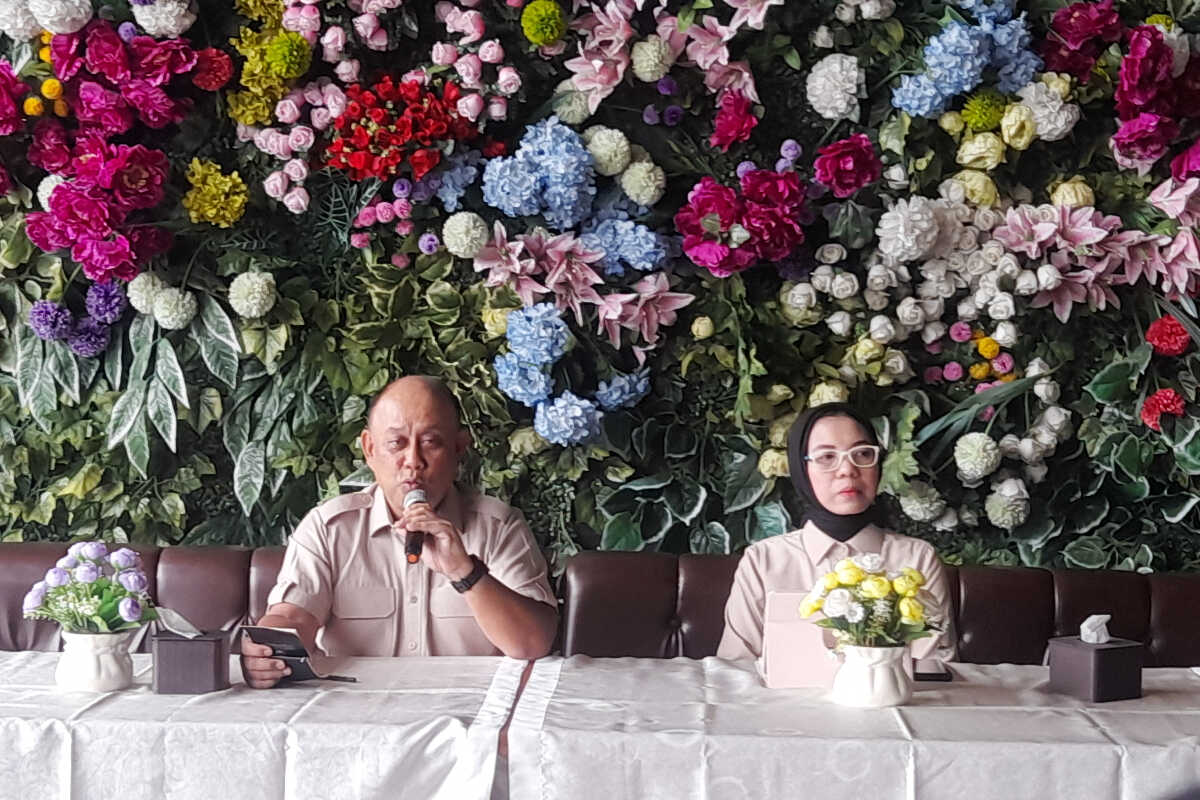
This statement was made by Dadan during a press conference on the MBG Programme held at the Nutritional Fulfilment Service Unit (SPPG) Cibuluh 1, Bogor City, West Java, on Saturday (28 February).
Dadan’s statement addressed a narrative suggesting that the substantial MBG budget was drawn from education, health, and government assistance allocations from other ministry institutions.
Dadan explained that in budget planning and execution, provisions for pregnant women, nursing mothers, childbirth, and young children are classified within the health function of the MBG. “Therefore, the BGN budget of Rp24 trillion is included within the health function. However, it does not disrupt the Ministry of Health’s budget. This is evidenced by the Health Ministry’s budget increasing year-on-year, despite the Rp24 trillion allocated to the health function performed by BGN in 2026,” Dadan stated.
Furthermore, school-aged children, including students from Islamic boarding schools and other religious educational institutions, are categorised within the education function output. Consequently, Rp223 trillion is allocated as part of the education function.
“However, it does not disrupt budgets from the Ministry of Basic and Secondary Education. Because from year to year this increases. It does not disrupt the Ministry of Higher Education, Science and Technology, because from last year and this year it has also increased,” he noted.
The MBG budget structure, he said, also does not affect transfers from the central government to regions for teacher welfare. This is because year-on-year budgets for this purpose have increased by nearly 10 per cent.
Additionally, there is another output classification at BGN related to management support and other matters classified under the economic function.
When the Ministry of Social Affairs discussed suspending social assistance programmes for the elderly, the ministry observed that the SPPG structure has expanded throughout Indonesia and BGN has already provided assistance to elderly citizens. “There is likely also a social output classification at BGN that does not disrupt the Ministry of Social Affairs’ budget. Because the targets and benefits relate to groups where these functions are typically provided,” Dadan explained.
Dadan also responded to claims linking the nutrition programme to declining Indonesia Smart Card (KIP) university scholarship allocations. “I want to clarify that university KIP scholarships have increased from the previous year. If any university experienced a reduction, it is because the mechanism has changed. Previously it was quota-based. Now it is based on shared data, where those eligible for university KIP scholarships come from income deciles 1 through 4.”
“If any university experiences reduced KIP scholarships, it demonstrates that the population within those deciles at that institution has decreased. Therefore, there is no connection to funds allocated for the MBG programme,” he explained.
Previously, the Deputy Chair of Commission X of the Indonesian House of Representatives from the PDIP Faction, MY Esti Wijayati, stated that based on the attachment to the 2026 State Budget Law, the MBG budget is listed under education allocations. At that time, Esti noted that of the total Rp769 trillion education budget, Rp223.5 trillion is allocated for MBG.
Research from the Institute of Socio-Economic Development Research (RISED) has shown that the majority of parents perceive improvements in their children’s consumption patterns following the MBG programme implementation. The programme has demonstrated impact not only on student nutrition but also in stimulating the economy of residents in programme implementation areas. Approximately Rp32.1 trillion has been disbursed for the 2026 Free Nutritious Meals Programme, with total government aid absorbed reaching Rp55.2 trillion.