
Hatta, Prabowo and the Board of Peace
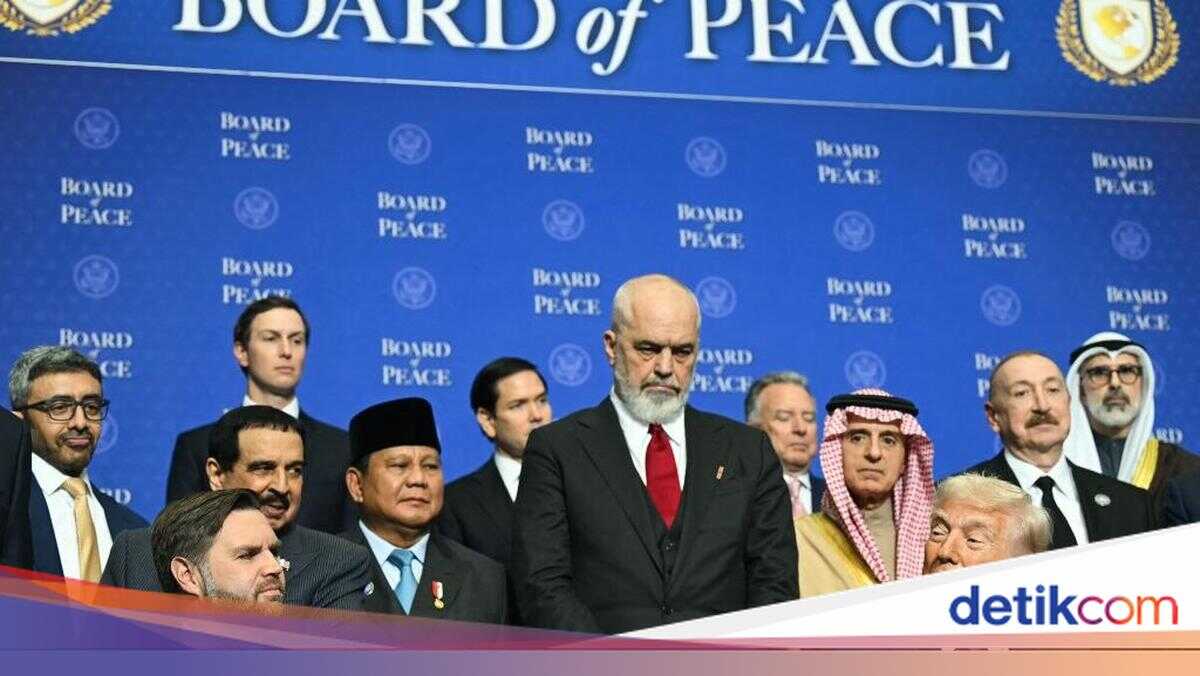
Indonesia’s decision to join the Board of Peace (BoP) in January 2026 has become one of the boldest diplomatic moves under the leadership of President Prabowo Subianto. By joining, Indonesia gains voting rights in determining the direction of Gaza’s reconstruction and transitional governance in Palestine. Had Indonesia remained outside, the concern was that the BoP would proceed with an agenda entirely biased towards US-Israeli interests without any counterbalance from a majority-Muslim nation.
This move represents geopolitical pragmatism. President Prabowo has affirmed that Indonesia is prepared to withdraw if the BoP fails to demonstrate concrete progress towards a two-state solution or if it ultimately undermines the Palestinian cause. At present, Indonesia’s position is one of “locking the corridor” to ensure the forum remains on the path of international law.
Analysing Indonesia’s move towards the Board of Peace requires a clear lens to examine the intersection between current political pragmatism and the ideological legacy of the nation’s founders.
Many parties consider the BoP potentially at odds with the constitutional mandate, as Indonesia must sit at the same table as Israel — particularly given the large membership fees within a forum whose legality falls outside the United Nations framework. There are concerns that Indonesia is merely being used for legitimacy laundering by the United States to validate an agenda that may not fully support complete Palestinian independence.
Navigating Between Two Reefs
At the Round Table Conference (RTC) of 1949, Mohammad Hatta was willing to negotiate with the Netherlands (the coloniser) and even agreed that Indonesia would assume the debts of the Dutch East Indies government amounting to 4.3 billion guilders in exchange for recognition of sovereignty. The founding fathers employed the logic that political sovereignty sometimes requires heavy economic or diplomatic concessions at the outset.
This is documented in Pramoedya Ananta Toer’s book Chronicle of the Indonesian Revolution: 1949. In his speech, Mohammad Hatta stated: “With the recognition of our independence, we shall bear all that we ought to bear according to our standing… all debts of the Indies before the Japanese surrender… we acknowledge as our debts.”
Through this account, Pramoedya illustrated the leadership dilemma of that era: Hatta chose to accept an enormously heavy economic burden so that bloodshed would end and Indonesia’s independence would be promptly recognised internationally.
Hatta’s logic was akin to “Navigating Between Two Reefs.” His address before the BP-KNIP on 2 September 1948, entitled Mendajung Antara Dua Karang (Rowing Between Two Reefs), encapsulated this approach. The logic of being a subject rather than an object lies at the heart of the Independent and Active foreign policy. Hatta emphasised that Indonesia must not become a “cog” in the political machinery of either the Western or Eastern blocs, but must remain a subject with the right to determine its own course.
Hatta stressed that Indonesia must not be an object in international contests, but a subject that determines its own fate. In the context of the BoP, if Indonesia had not joined, it would merely be an “object” affected by BoP decisions without the ability to provide input from within.
The Financial Calculus
One of the most sensitive points is the contribution obligation of US$1 billion (approximately Rp16.8–17 trillion). The government views these funds as a “diplomatic investment” for humanitarian aid and the reconstruction of Gaza (hospitals, schools, clean water), over which Indonesia holds oversight rights — whilst simultaneously securing Indonesia’s bargaining position on the issue of reciprocal trade tariffs with the United States.
From the outset, Indonesia had already read the direction of the BoP. Without participation, Trump’s “Peace through Strength” doctrine would proceed unchecked, whereby economic access to the American market is directly linked to partner nations’ contributions to the US security agenda — in this case, the BoP. In essence, Donald Trump ties regional security to economic prosperity (US market access).
The US has even threatened to impose reciprocal tariffs of 32 per cent on Indonesian export products. This can be verified in the White House Fact Sheet (19 February 2026) and Reuters reports. The Fact Sheet details the list of nations that have agreed to the “Shared Prosperity and Security Framework,” stating that nations serving as strategic partners in the BoP will receive priority market access.
A sober calculation reveals why the US$1 billion BoP fee is considered “affordable” — enabling Indonesia to simultaneously champion Palestinian independence and avoid the risk of 32 per cent tariffs. Indonesia’s exports to the US average approximately US$25–28 billion per year. Were the 32 per cent tariff applied, Indonesian product prices in the US market would surge dramatically, rendering Indonesian SME exports uncompetitive against other nations such as Vietnam or Mexico.
The potential loss in foreign exchange could reach US$8–10 billion. Spending US$1 billion on BoP membership to secure Palestinian independence and market access (obtaining tariffs of 0–19 per cent) represents a rational economic rescue measure, even though the tariff outcome is not the political objective of joining the BoP.
In the past, Hatta paid 4.3 billion guilders not because Indonesia had lost, but to purchase the space to be sovereign. Today, the BoP fee is the cost of buying a seat at the Gaza negotiating table whilst simultaneously protecting the livelihoods behind millions of SME export products from Trump’s tariff war. Thus, Indonesia’s entry into the BoP not only advances Palestinian independence but also safeguards national economic resilience, preventing Indonesia from being isolated from the world’s largest economic market.
A Bridge for Palestine
Resolution 2803 serves as the legal umbrella (enabling clause) for the BoP. With the adoption of Resolution 2803 on 17 November 2025, the BoP received its mandate from the UN Security Council. This means the BoP holds the legal right to enter Gaza, manage international aid funds, and coordinate security.
Objectively, Indonesia’s legal basis is the fourth paragraph of the Preamble to the 1945 Constitution: “…to participate in the establishment of a world order based on freedom, lasting peace and social justice.”