
Hasan Piker and the Always-Online Politics
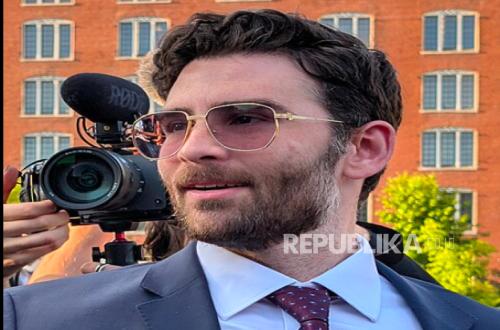
Hasan Piker has approximately 3.1 million followers on Twitch and 1.8 million subscribers on YouTube. He plays video games for hours while discussing war, popular culture, and various viewer-submitted comments. Now, politicians seeking to reach young voters are dropping by his broadcasts.
Hasan Doğan Piker was born in New Jersey in 1991 to Turkish parents, later growing up in Istanbul and Ankara. His father is a political scientist and his mother is an architectural historian. After graduating cum laude from Rutgers University in political science and communication, he joined The Young Turks (TYT), a progressive news network founded by his uncle, Cenk Uygur. He started as an intern, working in advertising sales and production, before eventually becoming a host. His Facebook series, The Breakdown, garnered tens of millions of views.
In 2020, Piker left TYT to begin broadcasting on Twitch. He observed that interactive online spaces were heavily dominated by far-right voices, while the left had yet to establish a comparable presence. He appears in live broadcasts every day, speaking without a script and becoming a part of his viewers’ lives. Politics, entertainment, humour, and community coexist within the same space.
His persona also differs from the typical stereotype of a leftist figure. Piker discusses socialism, labour rights, and imperialism, yet remains comfortable within fitness culture, fashion, video games, and ‘bro’ culture. This combination grants him access to young men who are far removed from institutional politics. His supporters view him as an alternative pathway away from toxic masculinity and conspiracy theories. His presence provides a home for left-wing politics within digital culture.
Piker describes himself as a cultural Muslim, rather than a strict practitioner of rituals. However, his Turkish name, his childhood in a Muslim-majority country, and his advocacy for Muslim citizens mean he continues to be read as a Muslim figure in American politics. He connects domestic Islamophobia to the rhetoric used to justify American intervention: societies portrayed as dangerous abroad are more easily suspected at airports, borders, and within political arenas.
This connection became concrete in May 2025, when Piker was interrogated for over two hours at Chicago Airport after returning from abroad. According to his account, officers questioned him regarding his views on Trump, Hamas, and the Houthi group. Piker viewed the screening as an attempt to create a chilling effect on freedom of speech. The US Department of Homeland Security denied the allegations, stating that the screening was routine and lawful, without providing a specific reason for his inspection.
This experience intersects with a long-standing theme in Piker’s commentary: the relationship between American foreign policy, state violence, and the violence of non-state actors.