
Has the Military Junta Won the Civil War in Myanmar?
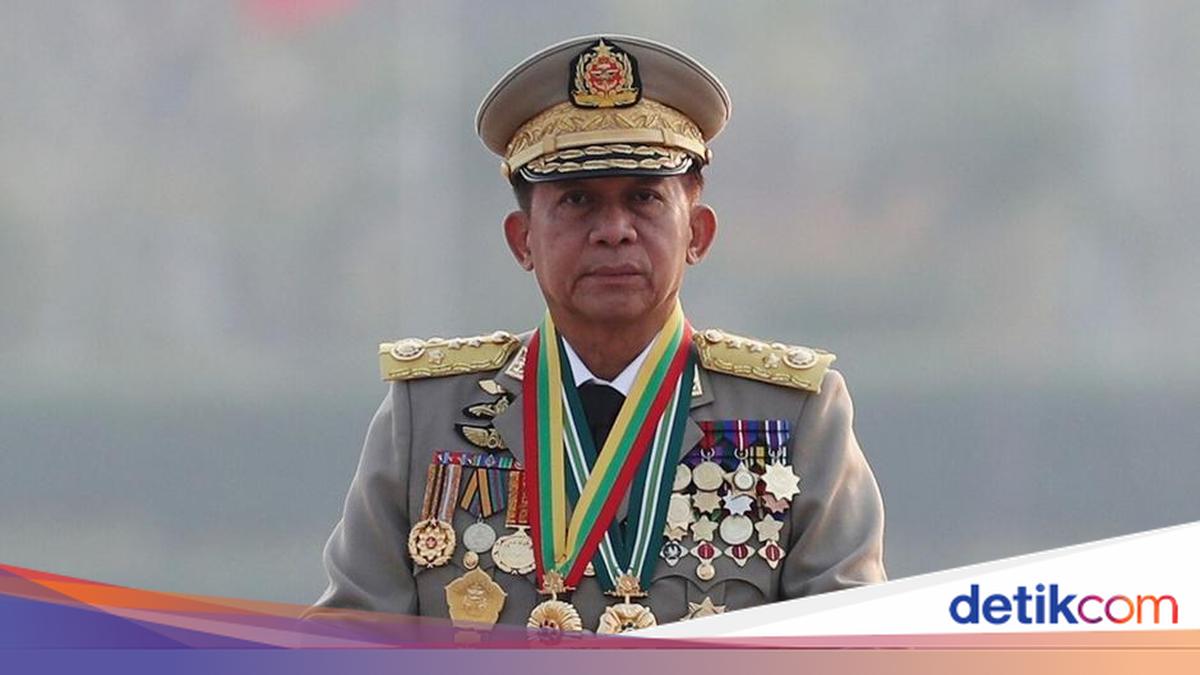
However, over the past year and a half, the Myanmar military has succeeded in recapturing portions of its territory. The Tatmadaw, or armed forces, has launched fresh offensives in several fronts, supported by thousands of drones and additional troops from the mandatory military service programme.
Alongside territorial successes, the military regime has also begun implementing measured political steps.
Transfer of Aung San Suu Kyi as house arrest
On Thursday (30/4), Myanmar authorities announced the transfer of Aung San Suu Kyi from prison to house arrest. The Myanmar democracy figure has been detained since February 2021, when the military seized power from her elected government.
UN Secretary-General António Guterres described the military’s action as “a meaningful step towards creating conditions conducive to a credible political process,” according to his spokesperson.
However, Mark Farmaner, Director of Burma Campaign UK, viewed Suu Kyi’s transfer as “not for change or reform, but merely an image-building manoeuvre to maintain the generals’ power.” He emphasised, “No one should be fooled.”
Claims of political legitimacy
Myanmar’s latest election—which is widely regarded as rigged—has opened opportunities for the military regime to gradually return to the international stage.
“It’s hard to say they won the election,” said Steve Ross, a senior researcher at the Stimson Center, a US-based think tank. But he assessed that “the momentum has clearly shifted towards the military over the past 18 months.”
Dozens of parties were banned from participating in the election, including the National League for Democracy (NLD) led by Suu Kyi before her ousting in 2021.
In the voting held in December and January, the military-backed Union Solidarity and Development Party (USDP) was announced as the winner. The new parliament then elected the coup leader, Min Aung Hlaing—who has just stepped down from his position as military commander—as president, fulfilling the former general’s long-held ambition.
However, many Western countries have rejected the election results and view the new government in Naypyidaw as little more than the same military regime under a different name. They assess that there is no sincerity in bringing Myanmar back to the democratic path as before the coup.
Nevertheless, several countries are beginning to open doors to the new Myanmar government.
“The election allows Min Aung Hlaing and his regime to slowly walk back onto the international arena—something that would not have been possible one and a half or two years ago,” said Ross.
Thailand’s and China’s foreign ministers have even made official visits to meet President Min Aung Hlaing. Ross described this as a “slippery slope” that could encourage more countries to resume relations.
Thailand has also actively lobbied the Association of Southeast Asian Nations (ASEAN) to restore Myanmar’s full rights in high-level meetings in Malaysia last year.
Battlefield dynamics
On the battlefield, armed resistance groups still control or contest much of the territory they seized since the coup.
However, the Myanmar military is slowly recapturing several key areas, including strategic trade routes with China and Thailand that were previously severed.
China is also playing a role by pressuring some of the largest rebel groups to return portions of the territory they control and to halt fighting against the Tatmadaw or arms sales to other groups.
Another factor aiding the military, according to Amara Thiha from the Peace Research Institute Oslo, is the “accelerated collapse” of the People’s Defense Forces (PDF).
The PDF emerged in hundreds of communities after the coup and took up arms against the regime. They form the backbone of the resistance and often fight alongside ethnic rebel forces.
However, Amara Thiha’s field research shows that the number of defections from the PDF in recent months exceeds those of the previous several years combined. Some units are now “too small to conduct coordinated operations.”
Even two ethnic forces that previously recorded major advances against the military—the Arakan Army and the Kachin Independence Army—are beginning to face difficulties, he added.
Weakening of the resistance movement
Overall, Amara Thiha assesses that Myanmar’s resistance is in a “structural setback,” while the military regime is starting to “stabilise itself,” particularly in the central regions dominated by the Bamar ethnic group—the military’s traditional power base.
“This conflict is not over, and the regime also has structural vulnerabilities, including elite tensions with the USDP, weak governance outside core cities, and an economy that has not yet recovered,” he said. “But the military is no longer merely surviving. For now, they are slowly gaining the upper hand.”
A differing view was expressed by Htet Shein Lynn from the Institute for Strategy and Policy-Myanmar. According to him, the military has not truly won—they are simply no longer continuously losing.
He emphasised that the territory recaptured represents only a small portion of losses over the past five years, and on some fronts, the military is still on the defensive.
“The Myanmar military has not won,” he said. “But they have reached a point where they are no longer in a streak of consecutive defeats.”
What next?
In a major rebel operation, Operation 1027 from late 2023 to early 2024, the Myanmar military lost two regional command headquarters and hundreds of battalion bases—the heaviest string of defeats in the civil war.
“With China’s help, they have now succeeded in preventing further losses and are beginning to stabilise their position,” said Htet Shein Lynn.
He and Ross assess that Myanmar’s resistance groups are too fragmented to pose a fatal threat to the military. At the same time, they are unlikely to suffer total defeat in the near term.
“The seeds of a long-term counter-insurgency war in Mya