
Has MBG Already Boosted Indonesia's Economy? Here Are the Facts and Data
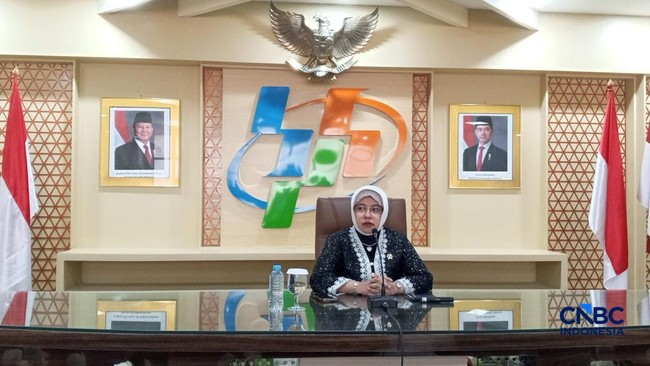
Jakarta, CNBC Indonesia - The Central Statistics Agency (BPS) reported that Indonesia’s economy grew solidly in the first quarter of 2026. Indonesia’s Gross Domestic Product (GDP) was recorded to grow by 5.61% year-on-year (yoy). This figure is higher than the same period last year, which was 4.87%. However, on a quarter-to-quarter (qoq) basis, Indonesia’s economy contracted by 0.77%. In the first quarter of 2026, GDP at current market prices (ADHB) was recorded at Rp6,187.2 trillion, while GDP at constant prices (ADHK) reached Rp3,447.7 trillion. BPS stated that economic growth in the early part of this year was mainly supported by domestic economic activity. From the expenditure side, household consumption remains the largest source of GDP growth. This component contributed 2.94% to the total economic growth of 5.61%. The next source of growth comes from Gross Fixed Capital Formation (PMTB) with a contribution of 1.79%, government consumption of 1.26%, and other components of 0.77%. Meanwhile, net exports became a drag on economic growth, contributing negatively by 1.15%, in line with import growth that was higher than exports. The large contribution of PMTB is partly related to the construction of infrastructure supporting the Free Nutritious Meals (MBG) programme, particularly Nutritional Fulfilment Service Units (SPPG). BPS Chief Amalia Adininggar Widyasanti explained that the addition of the number of SPPG has a positive impact on PMTB because it involves physical construction activities. “The growth in the number of SPPG has a positive impact on gross fixed capital formation because there is physical construction involved. In the first quarter of 2026, up to March 2026 compared to December 2025, there was an addition of 6,737 new SPPG units,” said Amalia during the BPS press conference on Monday (5/5/2026). Amalia added that the investment in SPPG is recorded by BPS as part of capital expenditure, both for building kitchens and providing supporting equipment. “We record the investment in SPPG as capital expenditure, both for building kitchens and providing kitchen equipment as well as other capital goods expenditure. So, what enters into PMTB includes not only the kitchen buildings but also kitchen equipment and other capital goods,” said Amalia. In addition, a major highlight comes from government consumption. This component recorded the highest growth compared to other expenditure components. In the first quarter of 2026, government consumption surged by 21.81% yoy. Although, government expenditure only contributed about 6.72% to GDP growth. This increase far exceeds household consumption which grew by 5.52%, PMTB by 5.96%, exports by 0.90%, non-profit institution consumption by 6.28%, and imports by 7.18%. The surge in government spending is inseparable from the acceleration of state spending in the early part of the year. BPS explained that this increase was driven by the realisation of employee expenditure, particularly the payment of the 14th salary or Holiday Allowance (THR) during the Ramadan and Eid period. In addition, the boost also comes from goods and services expenditure, particularly goods expenditure handed over to the public through the Free Nutritious Meals (MBG) programme. Data from the Ministry of Finance reinforces this picture. State expenditure realisation in the first quarter of 2026 reached Rp815 trillion, surging by 31.4% compared to the same period last year of Rp620.3 trillion. One of the main drivers of this surge is spending for the MBG programme. The realisation of goods expenditure for this programme soared from around Rp700 billion in the first quarter of 2025 to Rp54.4 trillion in the first quarter of 2026. Furthermore, BPS Chief Amalia Adininggar Widyasanti explained that the impact of MBG is starting to be seen in several business sectors. One of them is the accommodation and food and beverage provision sector, which grew high in the first quarter of 2026. “Accommodation and food and beverage provision grew by 13.14% due to MBG and national holidays,” said Amalia during the BPS press conference on Monday (5/5/2026). The impact of the MBG programme is also evident from the construction side, particularly related to the development of supporting infrastructure for the programme. “Construction grew in line with the increase in the realisation of the government capital expenditure budget, increased private construction activities, one of which is due to SPPG and village cooperatives, as well as increased construction raw materials,” said Amalia.