
Harvesting Crystals on the Indramayu Coast
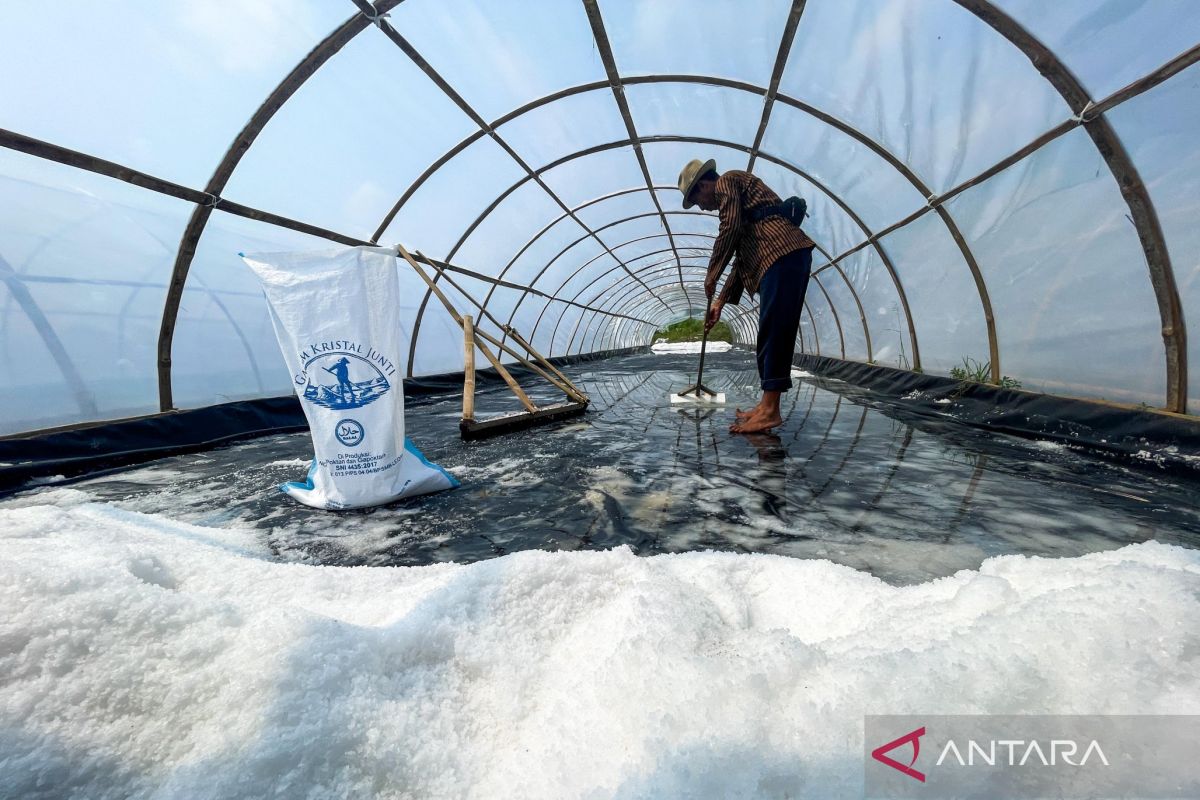
The scorching sun on the coast of Juntinyuat Village, Indramayu, West Java, on Thursday morning (7/5) felt fierce, with the heat too intense for anyone to linger for long.
Nevertheless, a different atmosphere prevailed inside the salt tunnel in the area, where farmers were busily scooping up white crystals, a commodity they had long desired.
The expanse of black geomembrane made the salt appear even whiter, almost free of the usual brownish tinge seen in traditional pond salt.
Tiny glints reflected everywhere as sunlight filtered through gaps in the plastic, transforming the tunnel into a field of crystals.
In the area, Sujitno stood pointing to the salt deposits beginning to harden at the base of the production plot.
Beads of sweat trickled down his temples. His face appeared calm, even though the venture he was undertaking was still very new.
A few months earlier, the man had spent most of his time as a rice farmer and livestock breeder.
The idea of producing salt emerged after he received encouragement from several colleagues who saw the potential in the coastal region.
“The Juntinyuat area is good. There are rice fields, the sea, and opportunities for livestock breeding too,” said Sujitno in conversation with ANTARA.
He then built the tunnel with his friends gradually. The construction was not done all at once because they had to tend to their rice fields.
One tunnel takes about three months to complete, at a cost of around Rp40 million.
He views the salt business as a long-term investment, as the production system can be used continuously once built.
Their first production has been running for about half a month, with the salt harvest reaching around five quintals, or the equivalent of 10 sacks.
The harvested salt crystals will be sun-dried again before being packaged for marketing.
Sujitno said the salt from the location is starting to attract interest for consumption needs, because it is whiter and cleaner than ordinary salt.
In fact, he noted, there are requests from rice anchovy processors in the Dadap area of Indramayu, as the salt’s quality is considered capable of keeping the fish’s colour bright.
He believes that amid increasingly unpredictable weather changes and rising farming costs, salt production provides coastal residents with a new option to earn a living.