
Harmonisation of Tobacco Regulations Must Be Proportional
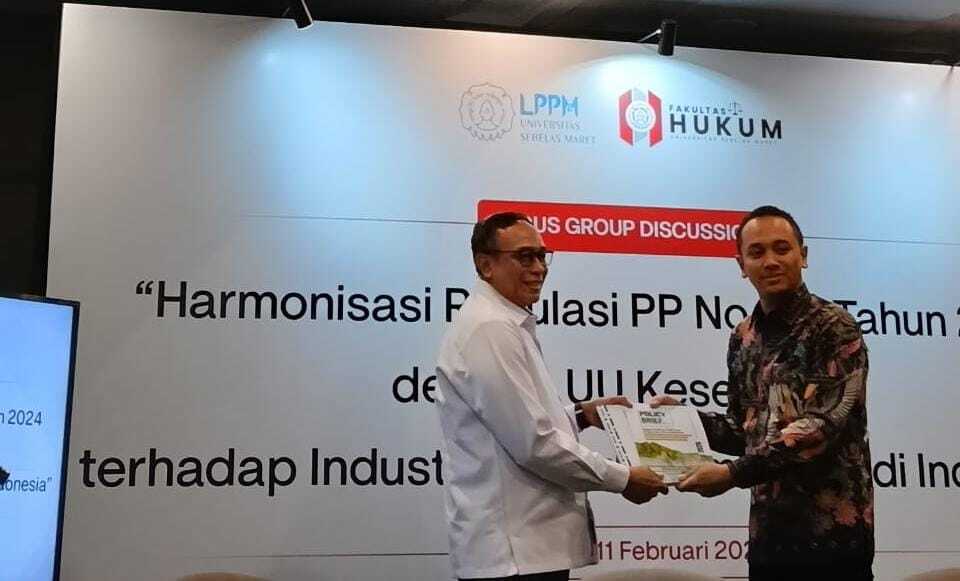
The Ministry of Law and Human Rights (Kemenkum) has reminded that the drafting of implementing regulations for Government Regulation (PP) No. 28 of 2024 on Health should not be done unilaterally or in a fragmented manner. Kemenkum emphasised the importance of balancing health protection with economic sustainability to avoid destructive impacts on the tobacco industry.
Director of Harmonisation of Legislation II at Kemenkum, Muhammad Waliyadin, affirmed that the tobacco industry is a complex industry that makes a significant contribution to state revenue, employment, and the MSME sector.
“It must be proportional and fair. Disharmonisation of regulations has the potential to create destructive implications. Tobacco control must consistently protect health, but also maintain national economic stability in a fair and scientific manner,” said Waliyadin in a statement on Thursday (26/2/2026).
Although the polemic regarding plain packaging and restrictions on tar and nicotine levels continues, Kemenkum claims that it has not yet been involved in the technical harmonisation process.
Deputy Expert Legislative Drafter at Kemenkum, Arif Susandi, revealed that the draft related to the policy has not yet reached his desk. He assured that, during the harmonisation stage, his team will open a space for dialogue, especially regarding intellectual property rights (IPR).
“In the discussion on packaging standardisation, it is necessary to re-examine intellectual property with the Directorate of IPR, to find a middle ground. So, in the harmonisation stage, a space for dialogue will be reopened,” said Arif.
On the other hand, the Coordinating Ministry for Human Development and Culture (PMK) remains committed to supporting the tightening of regulations. Head of Health Services at the Coordinating Ministry for PMK, Nani Rohani, stated that the main focus of the implementing regulations for PP 28/2024 is to reduce the number of smokers under the age of 21.
Nani argued that current cigarette packaging is still too attractive to children. In addition to plain packaging, restrictions on advertising and nicotine levels are also key instruments for the government.
“The drafting of regulations regarding tar and nicotine levels must refer to other countries to protect children. Similarly, packaging standardisation is being made plain because cigarette advertising has attracted interest from those under 21,” said Nani.
This draft regulation has previously faced massive rejection from tobacco farmers and workers. Stakeholders believe that the proposed maximum limits on nicotine and tar levels could “kill” about 97 percent of tobacco products currently on the market in Indonesia. (H-2)
The Pamekasan Regency Government held a coordination meeting with elements of the Regional Leadership Coordination Forum (Forkopimda) and local cigarette industry players to discuss excise policies.
The national tobacco industry is increasingly under pressure due to the massive wave of various regulations on control.
The UNS Institute for Research and Community Service highlighted the tension between health and economic protection aspects in tobacco regulations.
The tobacco industry is believed to play an important role in national economic resilience, especially for Prabowo’s economic policies, known as Prabowonomics.
Farmers are urging the government to prioritise the principle of protecting local commodities and national economic sovereignty in formulating policies.