
Harita Nickel Drives Coastal Community Economy on Obi Island
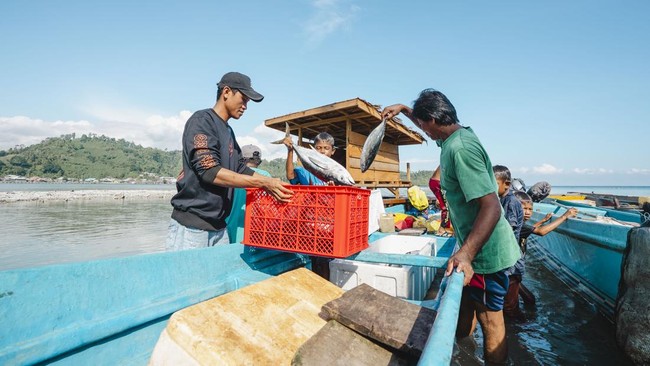
Harita Nickel is committed to supporting the government’s plan to strengthen the maritime sector through integrated development of fishing villages. The government is targeting the development of 1,000 fishing villages by 2026 as part of a broader target of 5,000 fishing villages by 2029, which will be equipped with facilities such as ice factories, cold storage, docks, and vessels managed through cooperative-based systems.
In support of this initiative, Harita Nickel has established a corporate social responsibility programme focused on empowering coastal communities around its mining operations on Obi Island, North Maluku, through a scheme known as Kelompok Sentra Usaha Tani Nelayan (SUTAN). Through this programme, Harita supports local fishers by providing fish processing facilities and cold storage, enabling catches to be preserved in fresh condition before marketing and achieving better selling prices.
SUTAN also provides fish storage facilities and a fishermen’s activity centre, strengthening the fishing supply chain and improving the welfare of coastal communities. According to Broto Suwarso, Community Development Manager at Harita Nickel, throughout 2024, the SUTAN fishing group in Soligi distributed more than 24 tonnes of fish to Harita Nickel employee canteens.
“This scheme strengthens the supply chain for employee food requirements whilst creating access to a more structured market for fishers. The programme is designed to increase the value of catches and strengthen the economic capacity of fishing groups. We want to ensure fishers have better and more sustainable management systems,” Suwarso said in an official statement on Wednesday (11 March 2026).
Suwarso further explained that community economic development forms part of the company’s long-term commitment. “We recognise that sustainability is not just about operations, but about how surrounding communities experience real economic benefits. Through strengthening the fishing sector like SUTAN, we want industrial growth to proceed alongside improved capacity and economic self-reliance of communities,” he added.
From the fishers’ perspective, Ibrahim, the SUTAN group leader, noted that consumption fish prices in the local market range from Rp 30,000 per kilogramme for grouper and snapper, whilst tuna costs around Rp 22,000 per kilogramme. Amid weather challenges and price fluctuations, fishers now have access to a more stable market through SUTAN.
“The SUTAN group’s catches are not just for household needs. Fishers can supply more than 1–2 tonnes monthly to catering kitchens at Harita Nickel,” he said.
Ibrahim further noted that the SUTAN programme supports fishers through fish processing facilities and cold storage, as well as training in quality management and group financial record-keeping. These facilities help maintain catch quality and enable fishers to time their sales for stable prices.
“With cold storage, we don’t have to sell all our fish on the same day. If the catch is large, we can store it first. The quality of fish freshness lasts longer, making the price competitive,” Ibrahim concluded.
In addition to infrastructure support, Harita Nickel provides capacity-building training, business management mentoring, and assistance with fishing equipment and marketing. This approach allows fishers in Kawasi Village to access markets directly and become part of an efficient distribution chain.
The mentoring provided focuses not only on increasing production but also on strengthening the financial governance and administration of the groups. Fishers are trained in planning, management, record-keeping, and financial reporting to ensure business activities operate transparently and sustainably.
The SUTAN group comprises 14 active members responsible for managing operations. Through their dedication, fish deliveries are made routinely every month.
Beyond strengthening the fishing sector, the company and communities have also undertaken mangrove rehabilitation, with over 23 hectares of coastal areas restored by 2024. This effort aims to protect coastal ecosystems from erosion and support the sustainability of marine resources.
Other social support includes healthcare services through the Soligi Primary Health Centre with medical staff and regular medicine supplies, as well as the development of infrastructure supporting community social activities.