
Halal Products from the United States Do Not Require Re-Testing in Indonesia
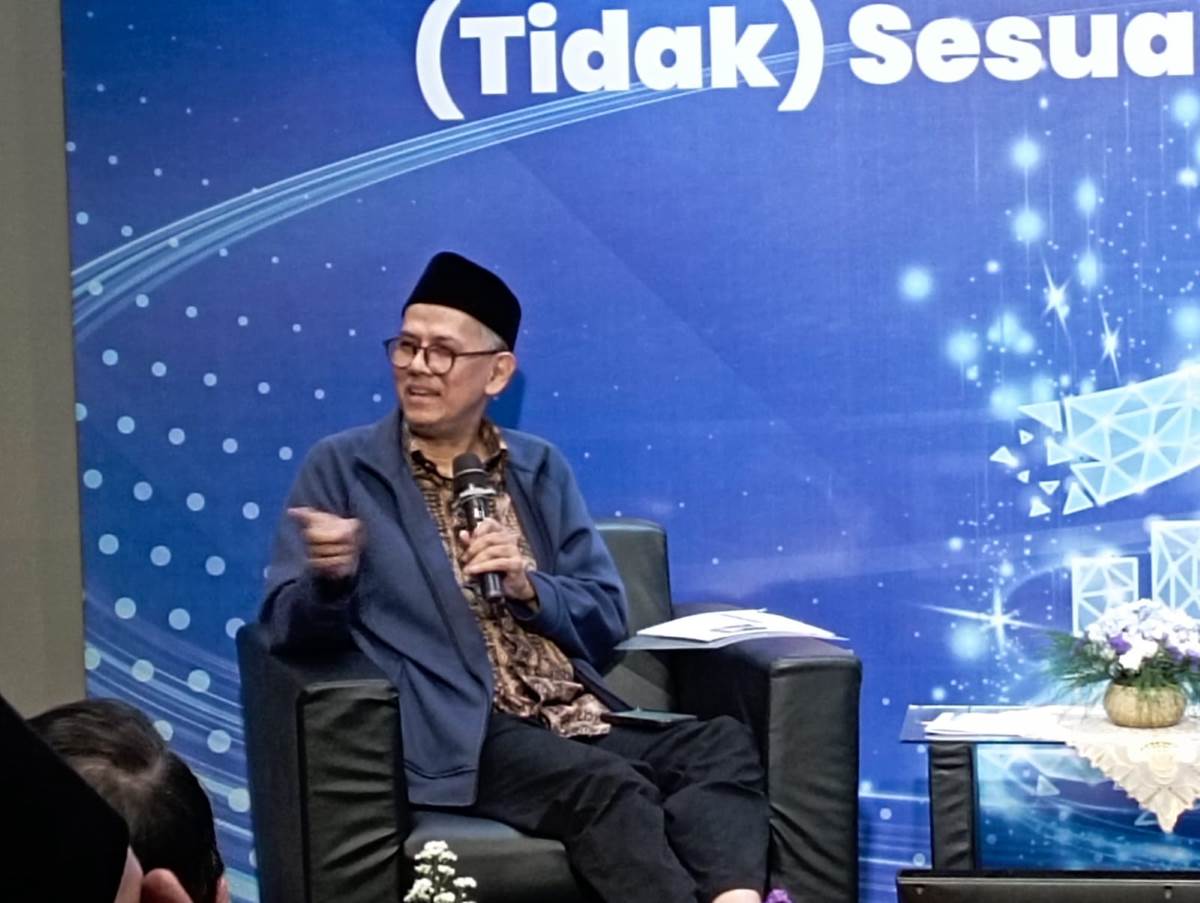
An economist now serving as Chairman of the Board of Commissioners of the Indonesia Deposit Insurance Corporation (LPS), Anggito Abimanyu, has emphasised that various halal-certified products from the United States entering Indonesia will no longer be required to undergo halal testing in the country.
Speaking at the Jagongan Navigation Economics Symposium on Sharia (In)Efficiency and (In)Compliance with Sharia Principles held by ISEI Yogyakarta at GIK UGM on Saturday (28 February), Anggito explained that Indonesia and the United States have signed the Reciprocal Trade Agreement, which was signed by President Prabowo Subianto and President Donald Trump.
This agreement has the potential to eliminate halal certification requirements. Anggito stressed that this only applies to imported products from the United States that have already passed halal testing in their country of origin. “This is not for products that did not undergo halal testing in their country of origin,” he said.
Anggito further stated that halal certification inspection is the same wherever it is conducted, as it uses rules consistent with religious requirements. Therefore, he explained, when a product passes testing in another country, it already complies with the halal standards applicable in our country. “If it then has to undergo halal certification in Indonesia, it will add cost and time,” he asserted.
Regarding the national Islamic banking sector, Anggito affirmed that the industry has demonstrated increasingly solid expansion direction and is on the right growth trajectory. “After being held back at around 5% for quite some time, Islamic banking market share jumped to 9% since 2022 and has become an important foundation towards the ideal target of 20%,” Anggito said.
He noted that in the growth of Islamic banking in Indonesia, two Islamic banks serve as the main locomotives of growth: BSN (Bank Syariah Nasional) and BSI (Bank Syariah Indonesia). Both, he said, have successfully strengthened the structure of the national Islamic banking industry.
BSI was formed through a merger of several state-owned Islamic banks, whilst BSN is a new entity resulting from the spin-off of BTN’s Islamic Business Unit combined with Bank Victoria Syariah.
This consolidation strategy is considered effective in addressing the classic problems of Islamic banking, namely limited capital in serving large-scale financing needs. With increased capitalisation, the public is deemed no longer hesitant to use Islamic banking services, as their capacity and competitiveness are improving.
Anggito further stated that Islamic banking growth in Indonesia cannot rely solely on market mechanisms, but requires other measures to accelerate the increase in service supply. According to him, if relying only on natural market mechanisms, growth will remain slow. He believes that inorganic measures are needed to accelerate the expansion of service supply. “If left to the market, it won’t be quick. The main constraint is supply,” he said.
He added that Islamic bank capital is relatively small, so its services to the public cannot be large and are only limited. Therefore, corporate actions such as the formation of BSN and the BSI merger become important and strategic. Another matter, he said, is that the development of Islamic banking business is deemed necessary to be directed at accelerating digital transformation. The limitation of physical branch networks compared to conventional banks makes digitalisation key to expanding service reach whilst reducing financing costs, which have been relatively higher in the past.