
Halal Bihalal Tradition Initiated by Indonesia's First President, Soekarno
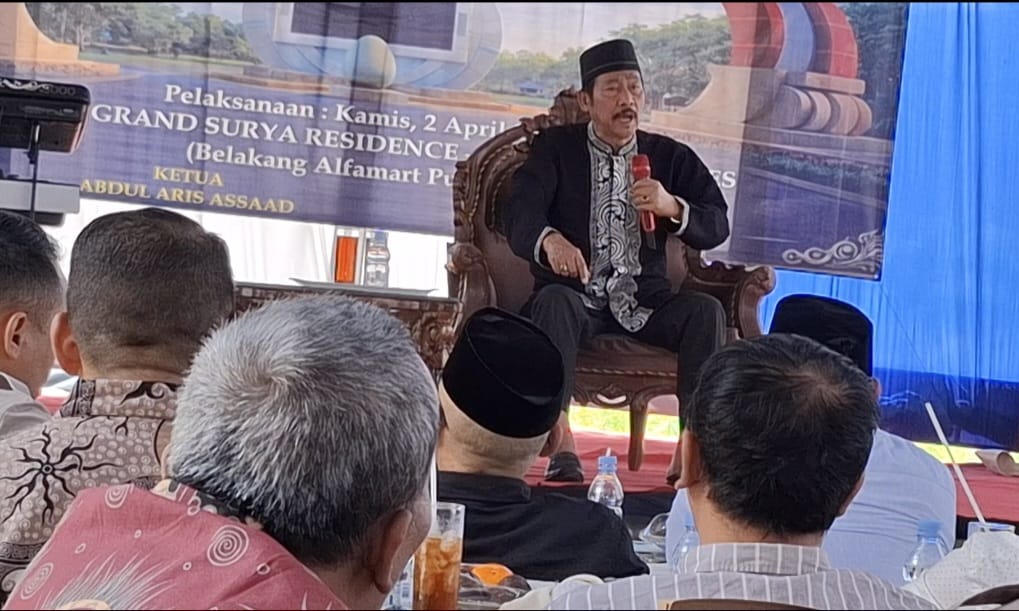
The halal bihalal tradition was initiated by Indonesia’s first president, Soekarno. At that time, the idea of a socialising event emerged, which later developed into halal bihalal and has been preserved to this day.
This was stated by a prominent figure from Brebes Regency and CEO of Dedy Jaya Group, Muhadi Setiabudi, during his religious lecture at the combined halal bihalal event for NGO activists and journalists held at Grand Surya Resident, Pulosari Village, Brebes, on Thursday (2/4).
“When Indonesia was experiencing political conflict, President Soekarno sought advice from KH Abdul Wahab Chasbullah. The cleric suggested an Eid al-Fitr socialising meeting called halal bihalal so that leaders could sit together,” said Muhadi.
Muhadi mentioned that the event occurred in 1948, when Indonesia’s first president, Soekarno, invited all political figures to the State Palace for a socialising session to discuss the chaotic state of the country.
“To this day, the halal bihalal tradition remains popular in Indonesia. Uniquely, other countries, even Arab nations, do not know the halal bihalal tradition,” explained Muhadi.
Brebes Regent Paramitha Widya Kusuma, in a speech delivered by Deputy Regent Wurja, stated that this opportunity is a very good moment to strengthen synergy between activists, NGOs, and the press.
“NGO activists and the press are our partners. We hope that the good relations that have been established can be strengthened for a better Brebes,” said Paramitha.
According to Paramitha, her administration is open to suggestions and criticism. “Because we believe suggestions and criticism serve as navigation in implementing policies,” explained Paramitha, who briefly attended the event with her husband, Ahmad Seful Ansori (Asep), and Brebes Secretary Tahroni.
The organising committee chairman, Abdul Aris Hada Asa’ad, conveyed that this event is not merely an annual ceremonial. “This is a space to break down barriers. Through this socialising, we aim to build healthier communication between social control (NGOs and the press) and state organisers for the nation’s progress,” said Abdul Aris Hada.