
Hajj Queues, the "War Ticket" and the Financial Traps of Hajj
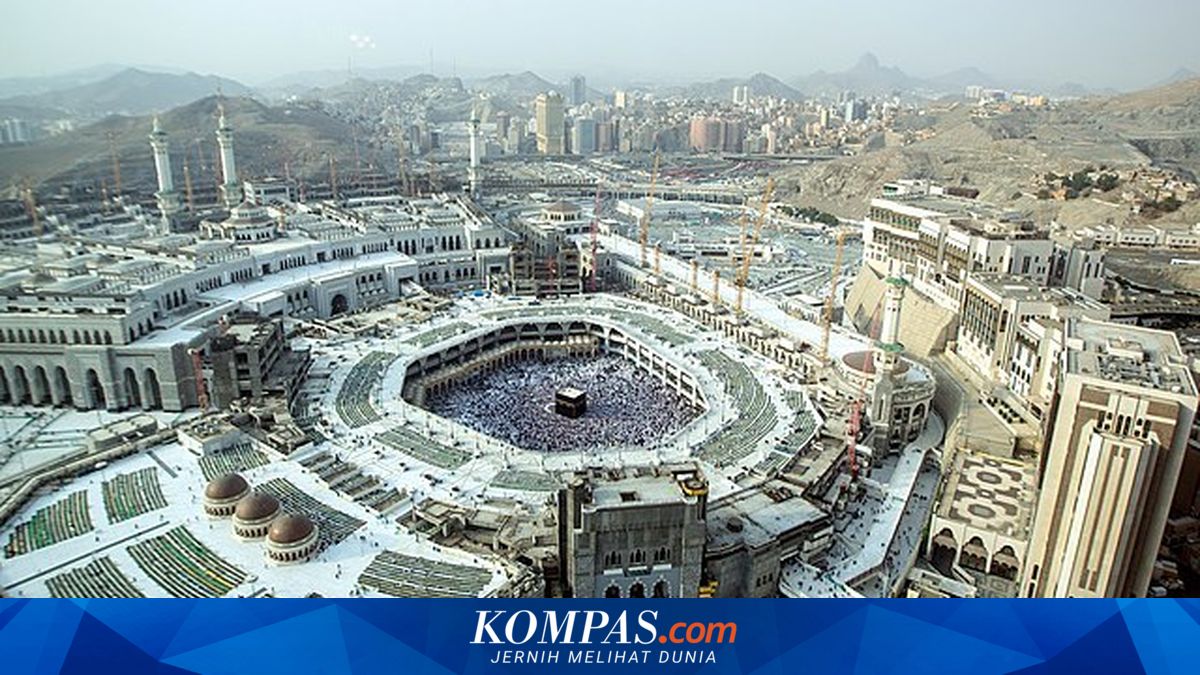
There is one thing that we have considered normal for far too long in the organisation of Hajj in Indonesia, even though it is actually not normal, related to waiting lists that stretch for decades. With more than 5.7 million people on the waiting list, we seem to accept that someone can register today and only depart two or even three decades later. This means that a young person who registers today might only set off when their hair has turned white. Even after President Prabowo Subianto established the Ministry of Hajj and Umrah and pushed for transformative policies, namely equalising waiting times across all of Indonesia to an average of 26 years. That 26-year queue still feels excessively long, even though it has successfully been shortened from an average of around 35 years up to the longest of 49 years. Through President Prabowo’s taklimat on Wednesday (8/4/2026), in which he conveyed that Hajj organisation must continue to be improved, including efforts to find ways to shorten queues, improve governance, and ensure fairness for all pilgrims. We call it “certainty”. But if we are honest, it is not certainty, but a delay that is legitimised by the system. And at that point, the question becomes very fundamental: can this still be called fair? For a long time, we have used simple logic: first to register, first to depart. However, we forget that Hajj is not an ordinary public service. It is an act of worship. The requirements are clear, namely istitha’ah or ability. And istitha’ah is actual in nature. Able today does not mean still able in 20 years. Healthy today does not mean still strong enough to walk from Mina to Jamarat in 20 years. In fact, many of our pilgrims end up departing in conditions far from ideal. Why? Because of fear. Fear of losing the turn that has been waited for decades. In relation to this, we must dare to admit that the long queue system has shifted the meaning of istitha’ah from readiness to merely an administrative formality. In fiqh, istitha’ah is complete, namely ability in terms of finances, health, safety, and mental readiness. However, in our practice, it is reduced to one entry point, namely the initial deposit to obtain a portion number. Once that number is obtained, it is as if the obligation has been “secured”. Just wait for the turn, when that is precisely where the problem lies. The excessively long time makes istitha’ah irrelevant at the time of departure. We have no choice but to create a system where readiness is not the main requirement; instead, the main thing is entering the queue. In the end, we seem trapped in the logic of “the important thing is to register first, whether ready or not, that’s later”. This is certainly not just a technical issue. It already touches on how we interpret worship. As conveyed by the Minister of Hajj and Umrah of Indonesia, Mochamad Irfan Yusuf, in the opening of the National Working Meeting of the Ministry of Hajj and Umrah, referring to President Prabowo’s directives on efforts to shorten queues, he presented an important reflection: Is such a long queue necessary? Should we rethink how Hajj was organised in the era before the existence of BPKH, where there were no long queues, and pilgrims who were ready in terms of istitha’ah could depart directly? It is in that context that analogies like the “war ticket” emerge as a depiction of readiness that is directly converted into departure.