
Hajj Pilgrimage Cancelled, Pilgrims Asked to Return from Mecca
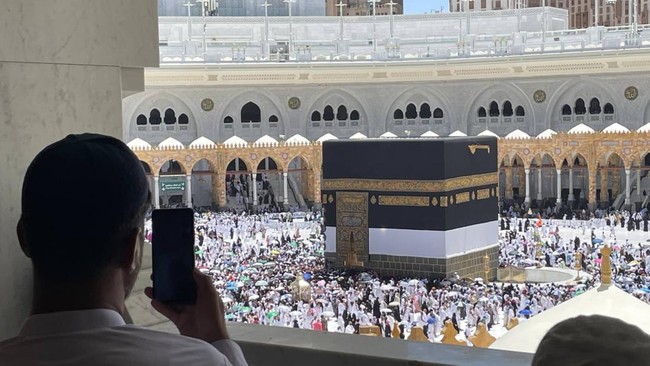
Geopolitical turmoil has previously impacted the Hajj pilgrimage. In history, the Dutch East Indies government once halted the organisation of Hajj when the world was engulfed by World War I (1914-1918). Even pilgrims already in Mecca were asked to return home.
This event occurred in 1915. At that time, the global conflict spread to the Middle East.
The Hijaz region, including Mecca, was still under the rule of the Ottoman Sultanate, which was directly involved in the war. This situation made the Hajj journey deemed extremely dangerous.
“Do not go to Mecca! The government cannot bear any responsibility for the transportation of Hajj pilgrims,” stated the colonial government, quoted from the newspaper Het nieuws van den dag voor Nederlandsch-Indië (14 August 1915).
Under those conditions, the colonial government officially declared that the Hajj pilgrimage could not be conducted that year. In addition to security reasons, economic pressures exacerbated the situation.
According to the newspaper Het nieuws van den dag voor Nederlandsch-Indië (12 April 1915), conditions in Mecca were highly unfavourable. Food prices soared sharply, while the value of Dutch paper currency plummeted to 50 guilders. At the same time, shortages of raw materials also occurred.
This situation directly impacted transportation. Dutch shipping companies halted Hajj ship operations due to the war, effectively severing access to Jeddah.
In the book Historiografi Haji Indonesia (2007), it is mentioned that the colonial government not only stopped departures but also considered the fate of pilgrims from the Nusantara who were already in the Holy Land. They, known as the Javanese colony or Ashhab al-Jawiyyin, were planned to be repatriated from Jeddah in large numbers.
According to Het nieuws van den dag voor Nederlandsch-Indië (12 April 1915), there was once a debate regarding the method of rescue. Two options were considered: sending aid or evacuating them with warships. In the end, the second option was chosen.
“The government sent ships to Jeddah to transport home around 5,000 pilgrims (residents) there,” the book reveals.
However, limited ship availability made the evacuation process slow. Many of them were forced to wait a long time in Jeddah with rising living costs.
Some even had to survive by signing work contracts, including becoming labourers on plantations. However, the most difficult conditions were faced by pilgrims who did not have return tickets or had long settled in Hijaz.
Nevertheless, amid those difficult circumstances, there were still prospective pilgrims from the homeland who dared to depart. However, their journeys were generally halted midway due to the lack of ships to Jeddah. And in the end, their fates were left hanging in foreign lands.