
Haji Agus Salim: The Grand Old Man, Intellectual, and National Sovereignty
A photograph of Haji Agus Salim (1884–1954) engaged in discussion behind the table of international diplomacy whilst championing independence holds a renowned place in the annals of Indonesia’s national struggle. The image shows him in discussion with his nephew Sutan Syahrir during a meeting of the United Nations Security Council in 1947, alongside fellow delegation members Charles Tambu, Sumitro Djojohadikusumo, and Soedjatmoko. At that time, Indonesia was fighting for complete independence—both de facto and de jure—from Dutch colonialism.
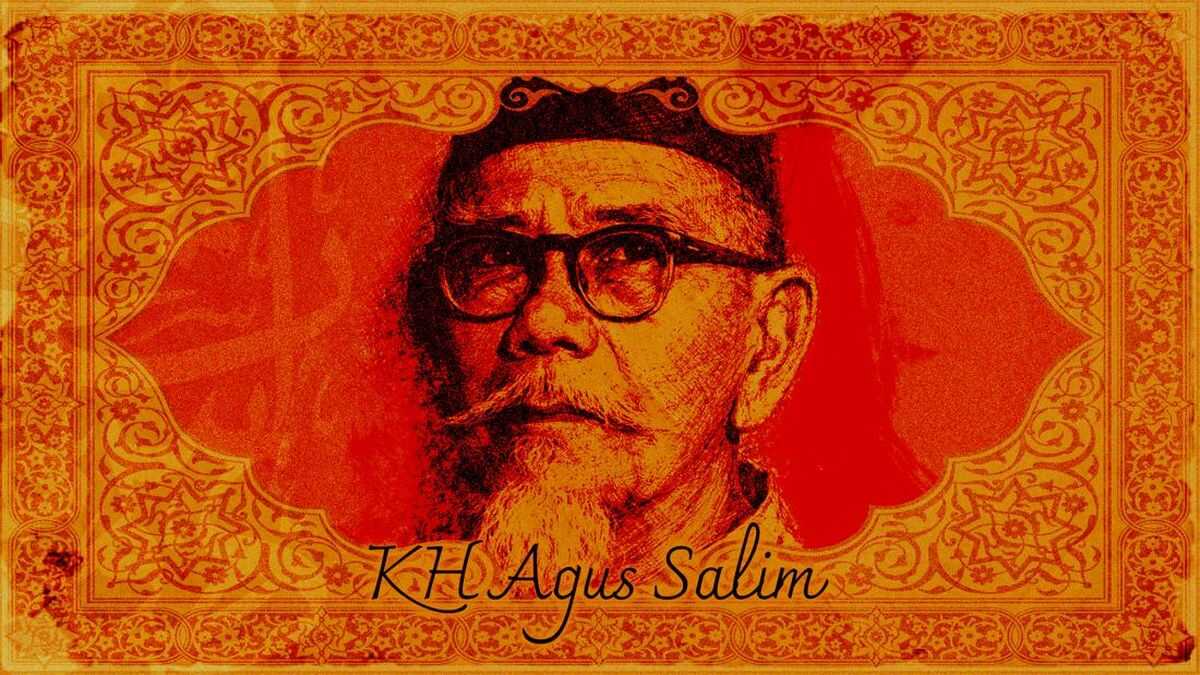
Within the grand tapestry of Indonesia’s national struggle, the man born Masyhudul Haq Salim, better known as Haji Agus Salim, became like a sprawling tree whose roots gripped the soil of the nationalist movement whilst its branches extended far into the realm of international diplomacy. Beyond his diplomatic acuity, Haji Agus Salim exemplified the simplicity of a state official unwilling to exploit his position for personal enrichment. Lauded as “The Grand Old Man,” he served as Indonesia’s third Foreign Minister and was designated a National Hero on 27 December 1961 under Presidential Decree No. 657 of 1961—a decision that simultaneously elevated Dr. Sutomo and KH Ahmad Dahlan to the same status.
Hailing from Kotogadang in Agam, like Syahrir and pioneer women’s journalist Ruhana Kudus, Agus Salim was a figure of exceptional standing. Following completion of his studies at HBS (the Dutch colonial equivalent of secondary school), he worked as a translator. When he declined a scholarship to the Netherlands offered by RA Kartini, Agus Salim secured employment as a staff member at the Dutch consulate in Jeddah, Saudi Arabia. In the land of Mecca, he deepened his Islamic learning directly under Shaikh Ahmad Khatib al-Minangkabawi, a renowned Islamic scholar at al-Masjid al-Haram.
Upon his return to the archipelago in 1915, Agus Salim joined the Sarekat Islam under HOS Tjokroaminoto’s leadership, becoming an important figure in journalism and political activism. In 1923, when ideological division emerged within Sarekat Islam due to communist influence introduced by Semaun, he and Tjokroaminoto preserved the organisation’s ideological direction, subsequently leading to the formation of SI Putih (White Islamic Union). As a journalist, Salim led various publications including Hindia Baroe, Fajar Asia, and Moestika, his sharp prose articulating the people’s voice and yearnings for liberation from Dutch colonial rule.
He also served as technical adviser to the Delegation of the International Labour Organisation at the Geneva International Labour Conference in Switzerland in 1929. Meanwhile in the archipelago, Sarekat Islam was renamed the Indonesian Islamic Union Party (PSII) in 1929. In 1934, following Tjokroaminoto’s death, Agus Salim was appointed Chairman of PSII.
Agus Salim was amongst the members of both the Preparatory Committee for Indonesian Independence (BPUPKI) and the Preparatory Committee for the Constitution of the Republic of Indonesia (PPKI), two pivotal institutions that charted Indonesia’s course towards the 1945 Proclamation of Independence. There, he contributed to the formulation of the state’s foundation and national language of the Republic of Indonesia. The culmination of his diplomatic efforts came in 1947 when he was part of the delegation that secured a treaty of friendship with Egypt—the first de jure recognition of Indonesian independence.
Haji Agus Salim passed away in Jakarta on 4 November 1954 and was buried at the Kalibata Heroes’ Cemetery in Jakarta.