
Hainan Eyes Markets Beyond ASEAN After Implementing Its Free Trade Port
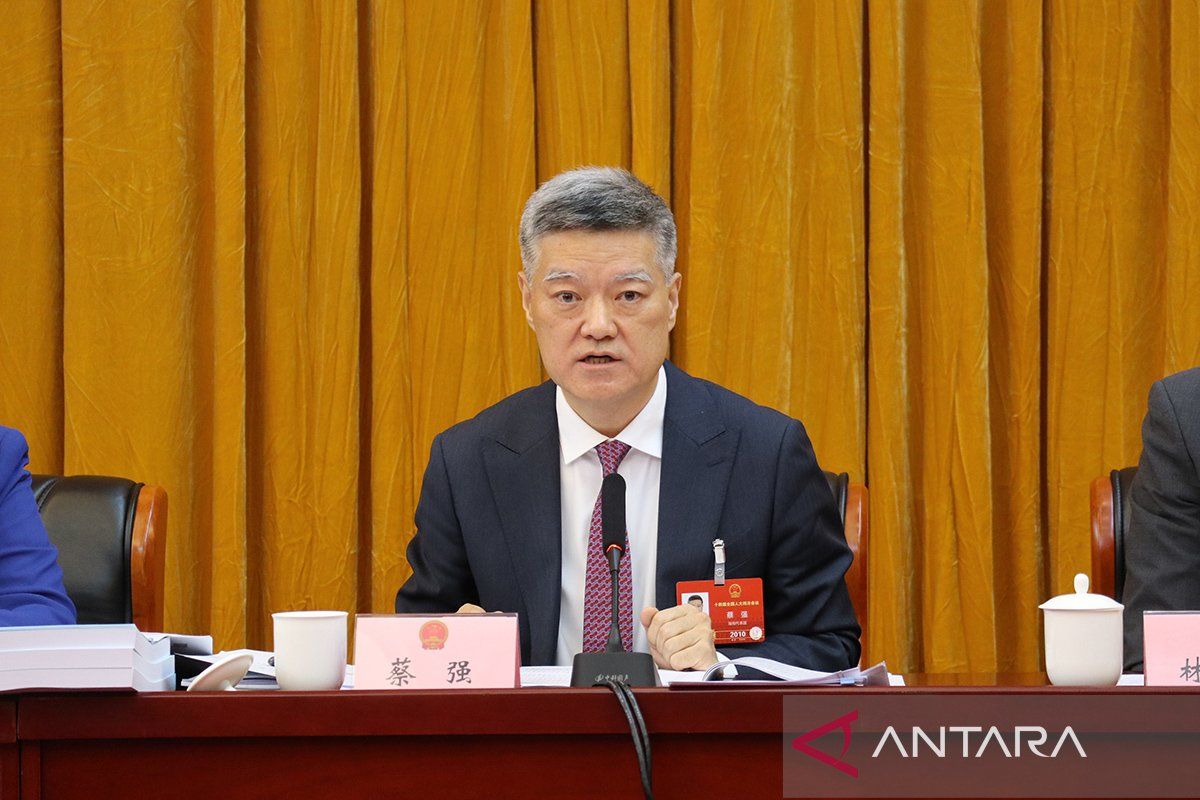
Beijing (ANTARA) - The southernmost province of China, Hainan, says it is aiming at markets outside ASEAN after the implementation of its special customs zone, the Hainan Free Trade Port (FTP), on 18 December 2025.
‘Hainan Free Trade Port is a unilateral opening step aimed at countries around the world without a specific target, but because ASEAN is the region closest to us and currently also our largest trading partner, we very much hope to deepen cooperation with ASEAN,’ said Cai Qiang, the Secretary General of the Hainan provincial government, in Beijing on Saturday (7/3).
Cai delivered these remarks at the ‘Hainan Open Day’ event, which is part of China’s National People’s Congress ‘Two Sessions’ sessions from 4-12 March 2026. At the Open Day, NPC delegates from each province voiced aspirations in line with directives from the Central Committee of the Communist Party of China (CPC) led by General Secretary Xi Jinping.
Hainan is China’s youngest province. As of 18 December 2025, it implemented the special customs regime known as the ‘Hainan Free Trade Port’ (FTP), which differs from the customs system on the Chinese mainland.
‘Many of my friends have companies in Singapore and Malaysia. Previously, meetings in Beijing required staff from Singapore or Malaysia to fly about eight hours and obtain visas, but now, if meetings are held in Hainan, staff based at the Beijing headquarters only need to fly about 3-4 hours; staff from Malaysia and Singapore also require only 3-4 hours and can enter without visas,’ Cai said.
Thus, Cai noted, residents from Southeast Asia can come to Hainan for meetings or other activities with shorter travel times and lower travel costs.
‘Therefore we very much look forward to cooperation with ASEAN, including in the areas of green trade and the digital economy,’ he added.
ASEAN is indeed the largest trading partner for Hainan, with exports to and imports from ASEAN countries reaching 57.91 billion RMB in 2024, cementing ASEAN as Hainan’s largest trading partner for six consecutive years.
The FTP policy regulates goods exiting Hainan and entering mainland China as if they were imports. The objective of this system is to create a more open and flexible trading environment for global investment.
The goods flow system in Hainan follows three principles: ‘first line freer access’ meaning goods from abroad entering Hainan are freer; ‘second line controlled access’ meaning goods from Hainan to the mainland are more strictly monitored; and ‘free circulation inside the island’ meaning goods can move freely within the island of Hainan.
Since the system has been in effect, many imported goods no longer incur import duties, import VAT, or luxury taxes.
‘The system is already in place; what remains is how to implement policy and supervision because the state provides a zero tariff for goods entering through the ’first line’, so at the ‘second line’ we must conduct tight supervision. If not, Hainan could become a smuggling route,’ Cai added.
This is why Hainan prioritised zero tariffs for equipment and raw materials used by enterprises.
‘These goods are relatively easier to supervise because companies usually import them in large quantities. As long as we can supervise the companies and the logistics flow, supervision can be effectively carried out. Conversely, consumer goods aimed directly at the general public must be tested and the zero tariff implemented gradually,’ Cai explained.
There are 6,637 types of goods (74 percent) out of a total of 8,960 goods with tariff codes in China that enjoy zero import tariffs, while some goods remain taxed for the sake of domestic industry protection.
Another policy under the FTP is that goods produced in Hainan using imported inputs but with at least 30 percent local value-added can enter mainland China without import duties. This rule is designed to encourage manufacturing and processing industries in Hainan.
The Hainan FTP also offers a range of tax incentives, such as corporate income tax around 15 percent for certain industries compared with the national rate of 25 percent, and a maximum personal income tax (PIT) of 15 percent for qualifying workers. These rates are significantly lower than the national tax rates.
For companies, these incentives can substantially reduce the cost of importing raw materials, capital goods, and components, thereby reducing overall production costs.
For residents of Hainan who hold a local ID card, residence permit, or social security card, there is also an annual duty-free shopping quota of 10,000 RMB for items listed on the positive list. This policy enables residents to purchase imported goods at prices about 8-20 percent cheaper than on the Chinese mainland.
Meanwhile, tourists visiting Hainan can shop in duty-free stores with more benefits such as a wider range of duty-free items and the immediate buy-and-take scheme (buy and pick-up immediately).
Hainan itself welcomed 1.5 million foreign tourists in 2025, up 35.2 percent, with around 500,000 (one-third) from Russia.
These visitors benefited from visa-free policies for residents of 86 countries, including a Hainan-specific visa-free regime for 59 countries, which is also applied to residents of 10 ASEAN countries for a 30-day stay.