
Haedar Nashir Urges Muslims to Make Fasting a Force for Social Cohesion
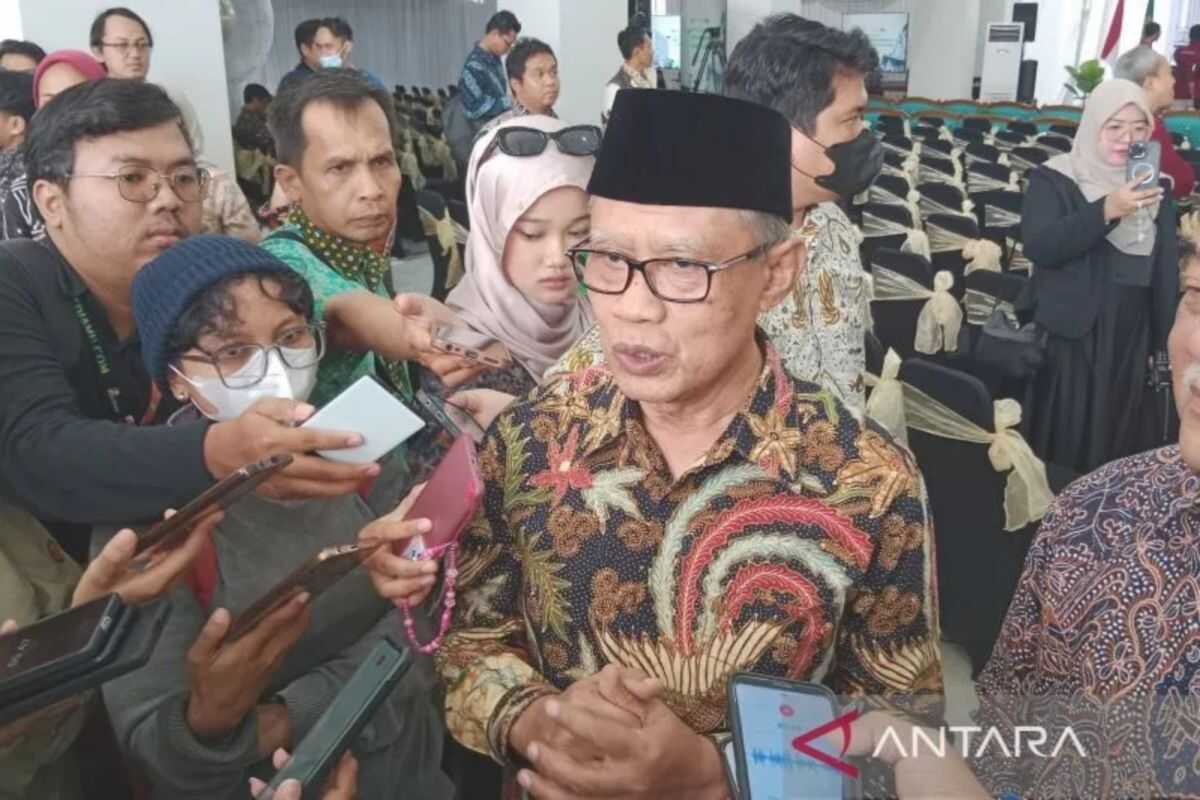
Haedar Nashir has urged Muslims to respond to differences with intelligence and tolerance (tasamuh).
“This is a space for ijtihad [independent reasoning], so there is no need to blame one another, and no one should feel that they alone are right,” Haedar said in a statement issued in Yogyakarta on Tuesday.
According to Haedar, as long as the Muslim community lacks a single unified calendar, differences in determining major Islamic observances will very likely continue to occur.
He stressed that such differences must be approached with prudence and wisdom.
The primary purpose of fasting, he said, is to enhance taqwa (God-consciousness) both individually and collectively, and Muslims therefore need to focus on the substance of worship.
Through deepening taqwa towards Allah, Haedar expressed hope that social relations within the community would improve, spreading goodness to fellow human beings and the wider environment.
He cautioned that various matters should not be allowed to interfere with the fundamental objective of fasting, which is to attain piety.
Haedar also urged that Ramadan fasting be observed with calm, peace, maturity, and without being disturbed by the noise of daily life, including disagreements over the start of Ramadan.
“In a broader context, Ramadan should make us the best community — excellent in spirituality through constant faith and devotion to Allah, as well as in ever-advancing knowledge and the widest possible spread of goodness,” he said.
He added that Ramadan fasting should serve as a means of maintaining and improving both personal and public morality, as well as a vehicle for character development so that Muslims can elevate themselves to become the finest community.
In the social context, Haedar emphasised the importance of fasting as a binding force in community life.
Fasting, he said, trains the faithful to exercise restraint, including when faced with provocations towards conflict or quarrels.
“With all manner of information and social media posts that tend to inflame our national social life, fasting must become our social canopy,” he said.
Every Muslim who observes the fast, according to Haedar, ought to position themselves as an agent of peace and goodness in society, whilst simultaneously serving as a role model in social life.
He called on Muslims to make Ramadan a moment for achieving progress in life, in harmony with the essence of taqwa, which ultimately leads to the elevation of human dignity across all spheres of life.
“The pinnacle of taqwa is the highest improvement of human dignity. Therefore, Muslims must become a community that advances in all aspects of life — spiritual, moral, social, economic, political, and all other dimensions — towards a supreme civilisation,” Haedar said.