
Habiburokhman Denies Prosecutor's Allegations of DPR Interference in Sea Dragon Crew Case
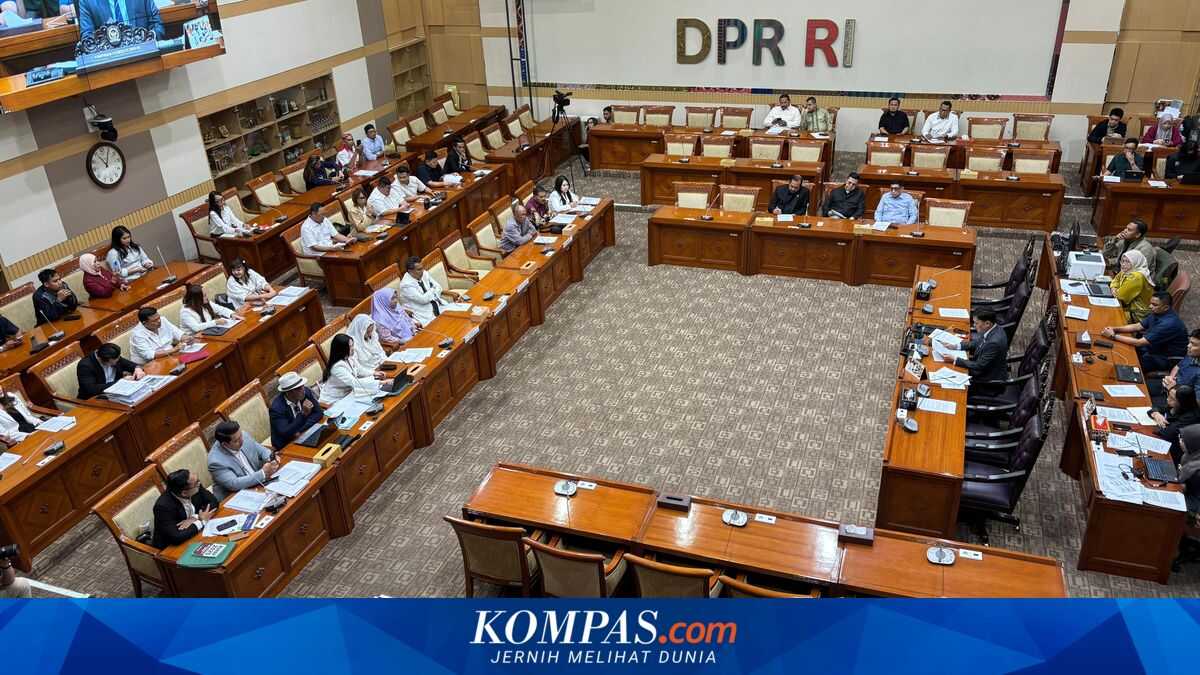
JAKARTA, KOMPAS.com - Chairman of Commission III of the DPR RI, Habiburokhman, has denied allegations of DPR interference in the narcotics smuggling case involving a Sea Dragon crew member, Fandi Ramadhan. He affirmed that the stance taken by his institution is part of its oversight function over law enforcement agencies. Commission III also does not interfere with the technical processes of the case currently underway in court. “Commission III clearly does not intervene technically in cases being handled by law enforcement officials,” he said at the DPR RI building on Thursday (February 27, 2026). “Our obligation is to ensure that the duties of our partners, law enforcement officials, are carried out in accordance with applicable laws and regulations,” he said. In carrying out the duties mandated by the constitution, Habiburokhman said, Commission III not only assesses the implementation of policies in general, but also responds to cases that touch on the public’s sense of justice. “In carrying out the oversight duties mandated by Article 20A paragraph 1 of the 1945 Constitution, Commission III of the DPR RI not only assesses the implementation of policies in general, but also responds to cases that touch on the public’s sense of justice,” said Habiburokhman. “We request that the Deputy Attorney General for Supervision reprimand the Public Prosecutor, Muhammad Arfian, at the Batam District Court yesterday, who implicitly but very clearly stated that the public and the DPR RI were interfering in the case of the death penalty demand against Fandi Ramadhan,” he said. The reason, he added, is that the expression of views by the DPR and the public in the judicial process is permitted by law, including through the mechanism of amicus curiae or friend of the court. “It should be emphasized that it is not only the DPR as the law-making body and supervisor of law enforcement that can express its views to the court. The public can also express its views to the court, including in the form of amicus curiae or friend of the court. This is an implementation of what is regulated in Article 5 paragraph 1 of Law Number 48 of 2009 concerning Judicial Power, which stipulates that judges are obliged to seek justice in society,” said Habiburokhman. “For the case of Fandi Ramadhan, we reiterate that the death penalty is an alternative punishment as a last resort that should be applied very selectively as regulated in the Criminal Code,” he concluded. Habiburokhman’s statement was made in response to the prosecutor’s response to the defendant’s plea in a hearing at the Batam District Court on Wednesday (February 26, 2026).