
Habermas, Tan Malaka, and the High Price of Critique
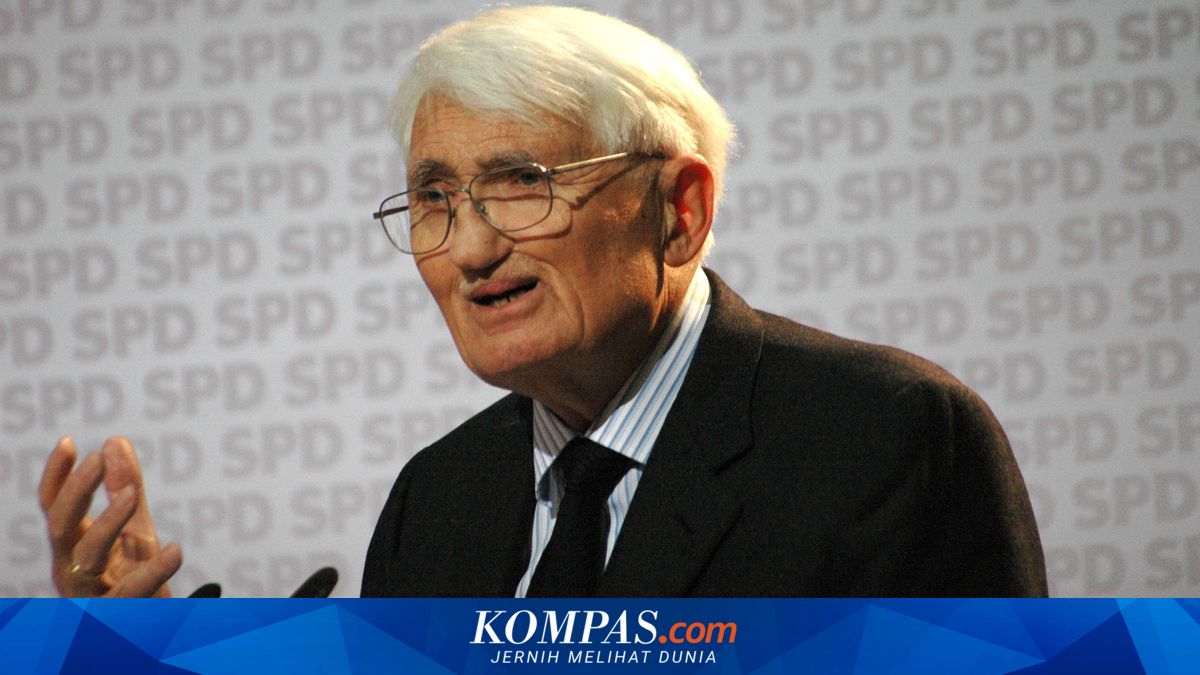
The world of intellectual thought has recently lost one of its principal pillars. Jürgen Habermas’s passing in mid-March 2026, at age 96, was not merely the loss of a German modern philosopher, but a reminder to us all of a grand unfinished project called “modernity”.
Throughout his 96 years, Habermas consistently reminded us that the noblest aspect of human identity lies not in our capacity to master technology, but in our courage to communicate honestly.
In Indonesia, long before Habermas reached the pinnacle of his thinking, we knew Tan Malaka, a figure who through his magnum opus Madilog (Materialism, Dialectics, and Logic) sought to dissect reality with the sharp blade of logic.
Habermas was born on 18 June 1929 whilst Tan Malaka was in political exile across Asia. When Tan Malaka was executed in Kediri on 21 February 1949, Habermas was only 20 years old and had just begun his university studies in Göttingen, Germany.
Tan Malaka spent his struggle as a senior revolutionary, moving between countries (the Philippines, China, and back to Indonesia) to fight for independence. Meanwhile, Habermas spent that same period as a teenager under the Nazi regime (he was briefly a member of Hitler Youth due to the mandatory requirement at the time) and witnessed Germany’s collapse at the end of the Second World War, which would profoundly influence his thinking about democracy.
Yet if we were to bring the two together at an imaginary discussion table, we would find a beautiful thread connecting them: the endeavour to uphold rationality and critical thinking, which remains open to sharp and dynamic debate, but conducted dialogically and courteously.
Madilog is an invitation to view the world through a clear, logical, scientific, and coherent lens. Through Madilog, Tan Malaka reminded us that a great nation is one brave enough to dissect reality dialectically. “Independence cannot be given as a gift from anyone, but must be seized through struggle,” he wrote. Such struggle begins with critical thinking.
Habermas similarly offered the concept of “communicative action”. He envisioned a world in which every individual could sit together in an equal “public sphere”. There, there is no coercion. There, sovereignty belongs not to the strongest or the wealthiest, but to the most reasonable argument.
His subtle sarcasm cuts deep: amid today’s abundance of information, we often feel that we are engaging in dialogue, when in fact we are merely conducting “concurrent monologues”.
We speak, but do not listen. We listen, but only to find gaps to attack, not to understand.