
Gus Ipul visits Nganjuk to champion the poorest and support data operators
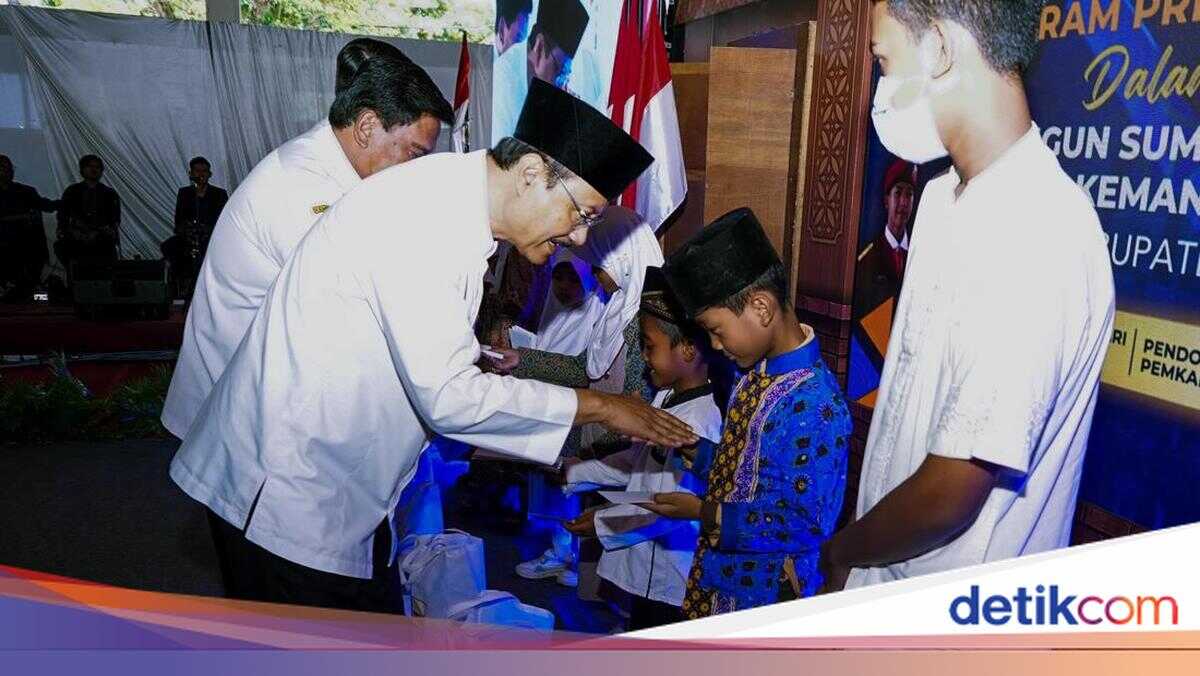
The Minister of Social Affairs, Saifullah Yusuf, commonly known as Gus Ipul, reaffirmed that the policy direction of President Prabowo Subianto’s administration is to champion the most disadvantaged members of society. These are marginalised groups who have been excluded from the development process and remain disadvantaged—referred to as “the invisible people”.
Speaking before social workers, village heads, data operators, village social workers, and volunteers in Nganjuk Regency, Gus Ipul emphasised the importance of working, mobilising, and making an impact for the most vulnerable. He stressed that PKH (Programme Keluarga Harapan) facilitators, alongside other social pillars, represent the state’s hand in assisting and championing those left behind in the development process. “This is the President’s policy: those at the top are protected, those in the middle are facilitated, and those at the bottom are championed,” Gus Ipul stated.
A total of 820 participants attended the event titled “Collaboration of Presidential Priority Programmes in Building Human Resources Towards Economic Independence” at the KRT Sosrokoesoemo Hall in Nganjuk Regency, East Java. Gus Ipul arrived at 11:50 WIB and opened the programme by presenting assistance to 10 orphaned children. The event was enlivened by performances from social pillars, with participants maintaining their enthusiasm despite the Ramadan fasting period.
Gus Ipul outlined the critical role of social pillars and village data operators in updating data to ensure social assistance reaches eligible beneficiaries. “Remember this well: all operators must champion the most disadvantaged. Do not champion those in the middle—champion the poorest. The poorest must be championed. Operators, input data for the poorest first,” he said.
Pursuant to Presidential Instruction Number 4 of 2025, the National Unified Social and Economic Data (DTSEN) serves as the primary reference for distributing social assistance and programmes from both central and regional governments. Consequently, data must be continuously updated as it is dynamic and changes constantly.
“Every day people die, every day people are born, every day people relocate, every day people marry, every day people move up in status, every day people move down,” he explained.
Gus Ipul emphasised that managing dynamic data requires collaboration and involvement from all parties—central government, regional government, and social pillars—in the data update process. “Therefore, with such dynamic data, we have no choice but to collaborate together to update it,” he said.
DTSEN is managed by the Central Statistics Agency (BPS), with the Ministry of Social Affairs and regional governments assisting in its updating. “I am here today to invite collaboration to update our data,” Gus Ipul stated.
Two pathways exist for data updating. The first is the formal pathway, which begins from neighbourhood associations through village deliberations, proceeds to the Social Services and local BPS office, and is finalised by the regent or mayor. “This first pathway is highly strategic,” he noted.
The second pathway is the community participation pathway, accessible to anyone. The Ministry of Social Affairs has established several channels for participation: the Cek Bansos application, a call centre, or WhatsApp. “Anyone can access these channels to improve our data,” he affirmed.
Nganjuk Regent Marhaen Djumadi expressed appreciation for Gus Ipul’s visit to the regency, noting that numerous central government programmes have been collaborated with local government. “The Ministry of Social Affairs’ tagline aligns with the President’s speech—his spirit is that of a common person, deeply concerned for ordinary people,” Djumadi said.
The event was also attended by Deputy Regent Trihandy Cahyo Saputro, the Director General of Social Rehabilitation at the Ministry of Social Affairs Supomo, senior officials from the ministry, the Nganjuk Regency leadership forum, and other relevant officials.