
Gus Ipul: DTSEN Deciles Compiled by BPS Using Statistical Measurement, Not Estimates
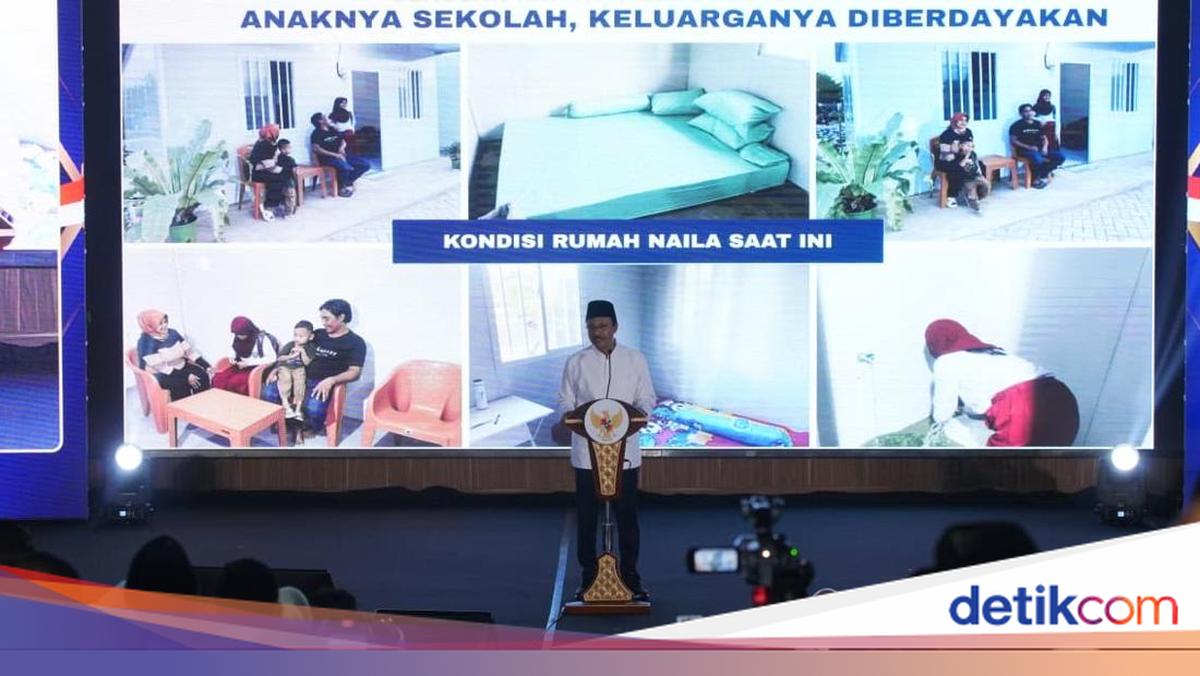
Social Affairs Minister Saifullah Yusuf (Gus Ipul) stated that the decile ranking process within Indonesia’s National Socioeconomic Data (DTSEN) is conducted entirely by the Central Bureau of Statistics (BPS) using a scientific statistical approach.
“The ranking is done by BPS. Not by facilitators, not by village heads, not by regents, not by mayors, not by the Social Affairs Minister,” Gus Ipul said in a statement on Saturday (14 March 2026).
He made these remarks at an event on Presidential Priority Programme Collaboration regarding DTSEN Updates and Building Human Resources Towards Economic Resilience at Bale Sawala Yudistira, Purwakarta District, West Java, on Saturday (14 March 2026).
He explained that the BPS methodology is based on statistical science conducted by experts. Therefore, the government has asked all parties to entrust the assessment process to BPS.
“Not an arbitrary approach but rather using statistical science by those who are experts. Do not debate criteria and suchlike. Have faith in BPS. If we want to debate, it will never end,” Gus Ipul said.
According to him, the role of local government, facilitators, village operators, and the community is to assist in updating data according to actual ground conditions. The data is then processed by BPS using integrated technology and systems connected with various databases of ministries and institutions.
Gus Ipul also invited the public to help identify poor residents who have not yet received social assistance because they are not recorded in government data. President Prabowo Subianto has referred to this group as “The Invisible People.”
“Those who should receive affirmation from the state are instead left behind. They do not receive social protection because they are not recorded in official government data,” Gus Ipul said.
To support this effort, President Prabowo issued Presidential Instruction Number 4 of 2025, which tasked ministries, institutions, and regional governments with updating DTSEN and eliminating sectoral ego in data management. Nevertheless, Gus Ipul acknowledged that DTSEN data continues to be refined.
“Is our data perfect? Not yet. But if we work together to continuously update it in a structured manner using measurements established by BPS, I believe our data (DTSEN) will become increasingly accurate,” he explained.
Similarly, BPS Head Amalia Adininggar Widyasanti emphasised that BPS is responsible for ensuring DTSEN quality as the foundation for policy formulation.
“Our task is to ensure DTSEN truly becomes unified data whose accuracy can be guaranteed. Essentially, DTSEN will continue to be updated and its accuracy improved so it becomes a strong basis for more accurately targeted policy interventions,” Amalia said.
Meanwhile, Purwakarta Regent Saepul Bahri Binzein (Om Zein) reminded the public to be honest during the field survey process to ensure data accuracy.
“So that we can progress, please tell our people to be honest when surveyed and there is an opportunity for updates every three months,” he said.
The event also featured speeches in four languages by students from Sekolah Rakyat, including M. Kiendra (SRMA 13 Bekasi) in English, Verlina Dara (SRMA 13 Bekasi) in Japanese, Nur Aisah (SRMA 10 Jakarta) in Mandarin, and Alma Razkia (SRMA 13 Bekasi) in Arabic.
The event was further enlivened by poetry recitation by Zahwa Anindita (SRMA 16 Jakarta) and a choir performance by Sekolah Rakyat students together with social pillars from Purwakarta District.
Also present were the Head of Village and Disadvantaged Region Development and Information Agency of the Ministry of Villages Mulyadin Malik, West Java Provincial Regional Secretary Herman Suryatman, and senior officials from the Ministry of Social Affairs, Ministry of Villages, and BPS. Also attending were subdistrict heads, village heads, village operators, village facilitators, and hundreds of social pillars from Purwakarta District.
As access to updates, the Ministry of Social Affairs has opened space for public participation in DTSEN updates through two channels: the formal channel and the participatory channel. Through the formal channel, the public can coordinate with neighbourhood associations to submit data updates through the Operator of the Next Generation Social Welfare Information System (SIKS-NG) at the village, subdistrict, or social services office.
These proposals are discussed in village or subdistrict meetings, then verified through ground checks by Family Hope Programme facilitators and the Social Services Office. Subsequently, data is set by the regional head.
Meanwhile, the participatory channel allows the public to participate directly through the Cek Bansos application, reporting to Family Hope Programme facilitators, the Command Centre service at 021-171, and the WhatsApp service at 08877-171-171. All proposals from both channels will be verified by BPS for re-ranking and periodic updates every three months.
As of 23 January 2026, DTSEN had recorded approximately 289 million individuals and more than 95 million households matched nationally. This data has become the foundation for determining targets of various government programmes and has been utilised by more than 24 ministries and institutions.
Updates continue to be made. To date, 56.228.037 individuals in 17.762.228 households have been updated. From this process, 529.577 households experienced decile changes, either up or down, as part of efforts to ensure data increasingly reflects the socioeconomic conditions of the community.