
Gus Ipul and NTB Governor Synchronise National Single Social Data Update and People's School Initiative
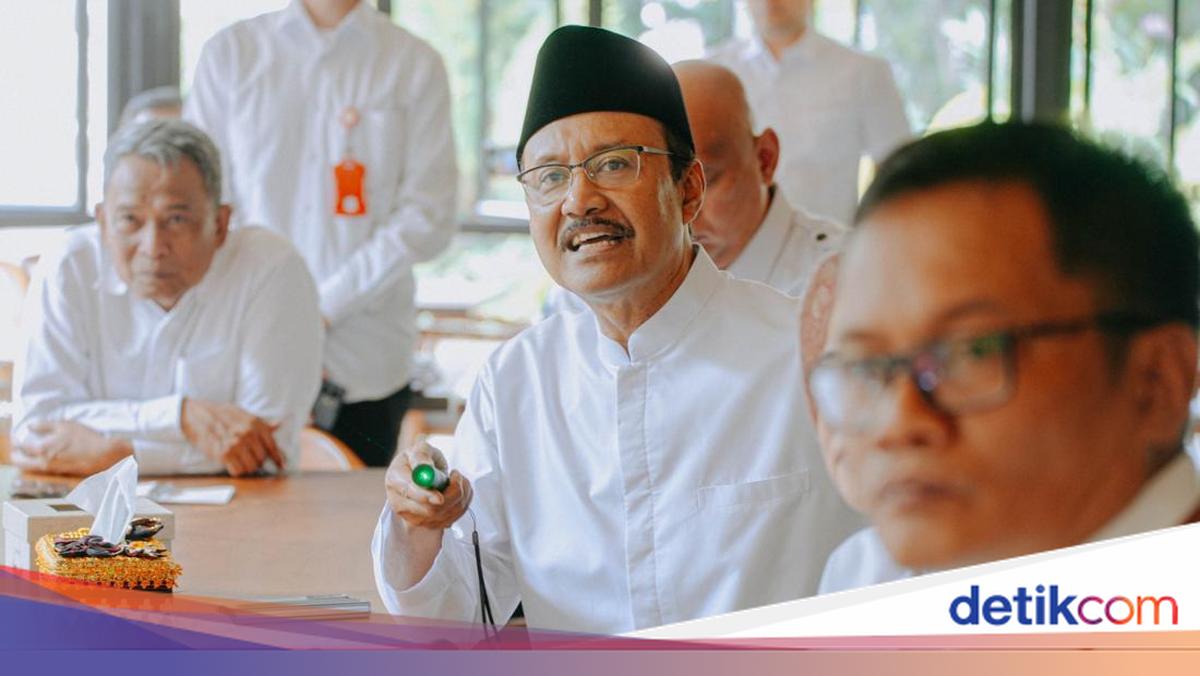
Indonesia’s Social Minister, Saifullah Yusuf, received a delegation from West Nusa Tenggara (NTB) Governor Lalu Muhamad Iqbal at the Ministry of Social Affairs office in Jakarta on Monday, 9 March 2026. The meeting focused on strengthening social data quality through the National Single Social Economic Data (DTSEN) system and preparing for the implementation of the People’s School programme in NTB Province.
During the meeting, the Social Minister, commonly known as Gus Ipul, explained that the government continues to improve DTSEN data quality through various channels of public participation. He emphasised that social data is dynamic in nature, and the update process must be conducted continuously.
“Data quality improvements are carried out through various channels, ranging from the Integrated Social Welfare Information System (SIKS-NG), the Social Assistance Check platform, ground verification, the 021-171 call centre, to the WhatsApp Report Social Assistance service at 08877 171 171,” Gus Ipul stated.
According to him, these diverse channels are provided so that communities can participate directly in the data update process. “For people unfamiliar with using applications, we provide call centre and WhatsApp services so they can still report or request data corrections,” he added.
Gus Ipul emphasised that this data improvement is part of the national target directed through Presidential Instruction Number 4 of 2025 on National Single Social and Economic Data. Through this policy, the government aims to ensure that social assistance is genuinely given to those who need it most.
In his presentation, Gus Ipul also explained that data collection instruments have been standardised by the Central Bureau of Statistics, with dozens of welfare variables serving as the basis for measurement. The data is then validated and monitored regularly to continuously improve its accuracy.
He acknowledged that the data improvement process is still ongoing. Based on initial DTSEN mapping, some residents in the lowest welfare decile have yet to receive health insurance contribution assistance (PBI-JK), whilst some assistance recipients actually come from higher welfare groups.
“This is not anyone’s fault. This is a consequence of dynamic data that we must continue to improve. The principle is that state assistance must be given to those who need it most, not to those who were registered first,” he stressed.
The meeting also covered developments in mechanisms for reactivating Health Insurance Contribution Assistance (PBI-JK) participants. Of approximately 11 million participants previously deactivated, around 869,000 have been reactivated through various schemes, including PBI-JK reactivation, transfer to local government financing schemes, corporate schemes, and independent participant schemes.
Meanwhile, Governor Iqbal welcomed the government’s digitalisation and data integration efforts. “This digitalisation is important so that data can be integrated with various other systems. Previously there was no integration, so each system operated independently,” he said.
He explained that the NTB Provincial Government also routinely conducts verification and validation of poverty data annually through field facilitators. “We orchestrate so that all parties, whether government agencies or institutions like universities, use the same data in the matching process,” Iqbal stated.
Beyond data improvement, the NTB Provincial Government is also strengthening extreme poverty alleviation interventions through family economic empowerment programmes. Assistance is provided in the form of productive business capital such as laying hens and household-scale agricultural ventures. “Each village is allocated approximately 500 million rupiah for village-level interventions. We are also encouraging the central government and corporate social responsibility initiatives to intervene in families categorised as extremely poor,” he explained.
During the meeting, both parties also discussed the readiness for developing permanent People’s Schools in NTB Province as part of efforts to expand educational access for poor and vulnerable families.
The delegation was accompanied by officials from the Ministry of Social Affairs, including the Director General of Social Empowerment and the Director of Social Empowerment for Disadvantaged Regions, as well as representatives from the NTB Provincial Government comprising the Head of the Regional Development Planning Agency Baiq Nelly Yuniarti, the Head of Communication and Information Services Akhsanul Khalik, the Head of Regional Liaison Agency Lalu Achmad Sukarman, and the Head of Monitoring and Evaluation Division of the Regional Development Planning Agency Herry Agustiadi.