
Gus Dur: A Leadership Built on Pluralism and the Path to a National Hero Title
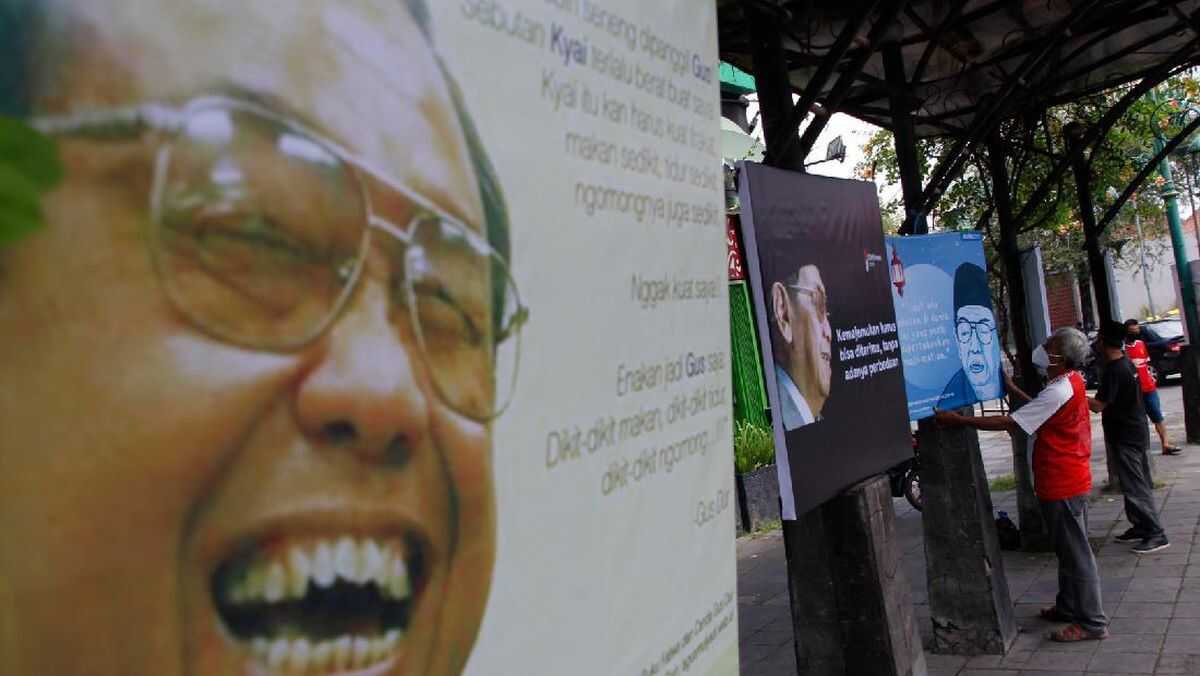
Abdurrahman Wahid, known as Gus Dur, was the fourth President of the Republic of Indonesia and one of the most prominent Islamic intellectuals in the country. A grandson of Nahdlatul Ulama’s founder KH Hasyim Asy’ari, he was proclaimed a National Hero on 10 November 2025. In life and during his brief presidency, Gus Dur left fond memories for the Indonesian nation. Like his predecessor, the third President BJ Habibie, Gus Dur continued the Reformasi 1998 mandate that toppled the New Order regime (Orde Baru) under President Soeharto for 32 years. Among his actions, Gus Dur dissolved the Department of Information, which under the New Order had become a ‘silencer’ of press freedom, abolished the Dwifungsi ABRI (now TNI), and separated the TNI and the Polri. In addition, he initiated the establishment of the Corruption Eradication Commission (KPK), which was later approved by the fifth President, Megawati Soekarnoputri. Gus Dur also revoked the Inpres directive formed by Orba rulers that discriminated against the Chinese ethnic community, and pursued a humanitarian approach to Papua. On the basis of these actions, Gus Dur was subsequently nicknamed the Father of Indonesian Pluralism. The doctrine that emphasizes human rights and pluralism from Gus Dur has persisted to the present and has been passed down through generations with the term Gusdurian.
Biography and Leadership of Gus Dur
Gus Dur was born in Jombang on 7 September 1940 and grew up in a pesantren environment deeply rooted in the scholarly Islamic tradition. His grandfather, Hasyim Asy’ari, founded NU. Meanwhile, his father, Wahid Hasyim, another nationalist movement figure and a minister of religious affairs in the Old Order era (Orde Lama), died when Gus Dur was a child. Following the footsteps of his grandfather and father—who died when he was a child—Gus Dur rose to lead NU from 1984 to 1999. He became one of the voices considered influential for his sharp stance against the Orba regime. In 1998, he was one of four national figures who drafted the Ciganjur Declaration. Together with Megawati, Sri Sultan Hamengkubuwono X, and Amien Rais in the Ciganjur Declaration on 10 November 1998, they produced eight points demanding total reform. Some of them included holding fair elections, the abolition of the Dwifungsi ABRI, the pursuit of Korupsi Kolusi Nepotisme (KKN), and the implementation of regional autonomy through decentralisation. In the 1999 elections, the National Awakening Party (PKB), led by Gus Dur, secured significant seats in the MPR/DPR behind PDIP led by Megawati. Then, in the indirect elections conducted at that time in the MPR, Gus Dur was elected President and Megawati became Vice President. But Gus Dur’s presidency did not run smoothly until its end. After 21 months in office, on 23 July 2001, Gus Dur was impeached by the MPR. At that time the president had still been chosen by the MPR and was referred to as the holder of a mandate or mandataris. The impeachment in the MPR’s Special Session on that Monday evening declared that Gus Dur had deviated from the nation’s course. His position as head of state and head of government was transferred by the MPR to Megawati, who was then Vice President. That impeachment represented the peak of the ‘confrontation’ between Gus Dur and the majority of political parties in Senayan who had helped elect him president in 1999. There was no single cause that could explain the political crisis between Parliament and Gus Dur at the time. The crisis was the product of issue after issue piling up without resolution, involving Parliament and the president. In the anthology titled Pengawasan DPR Era Reformasi: Realitas Penggunaan Hak Interpelasi, Angket, dan Menyatakan Pendapat, published by LIPI Press in 2014, it was written that the legislature used the interpellation right against Gus Dur over the Buloggate and Bruneigate corruption allegations in September 2000. The two cases alleged against Gus Dur have never been proven in a court of law to date. Additionally, Gus Dur’s moves to reform the TNI/Polri are regarded as a spark for the political crisis. At that time the TNI/Polri were still a political force represented in parliament under the name Fraksi TNI/Polri. Gus Dur made a significant leap compared with his predecessor, President BJ Habibie, in the effort to demilitarise politics. He continued to push for the separation of the TNI and Polri, a substantive policy that affirmed the separation of the armed forces from civilians. The demilitarisation of politics pursued by Gus Dur did not go smoothly. Some of his policies replaced senior officers in the police and the TNI, sparking controversy that eventually involved Parliament and the MPR which impeached him on 23 July 2001. Gus Dur initially claimed he wanted to remain in the palace as a sign of resistance, while thousands, even tens of millions of supporters, especially from Nahdliyin, were ready to back him. But, the morning after the impeachment announcement, he said he would leave the palace and lead the reform agenda from outside. The decision was taken after a conversation with his wife, Sinta Nuriyah. “…I am ready,” he said to his wife, “to stay here whatever they do—let them stop the flow of water or electricity. Let them come in and cut me to pieces. I will not move.” Nuriyah replied wisely: “Good, indeed good, and while you are in this palace you cannot help those waiting for you outside the palace.” Gus Dur replied: “Well, since you say so, let us go out. Let us leave the palace…” such is a snippet of the exchange between him and his wife before leaving the palace, as cited from Gus Dur’s Biography (2003) by Greg Barton. After he ceased to be president, the man known for the quip ‘Gitu Saja Kok Repot’ became a teacher of the nation and died on 30 December 2009 at the age of 69. The late statesman was buried in kamp