
Gunung Kidul Native Rice Can Cure Diabetes and Be Transformed into Bread
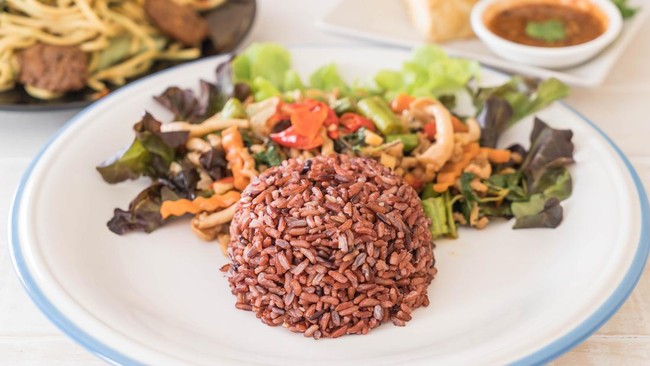
The National Research and Innovation Agency (BRIN) continues to promote the development of local food based on research through innovative approaches. This was emphasised by Dyah Ayu Puspitasari, First Expert Engineer at the BRIN Centre for Food Technology and Processing Research (PRTPP), in her study on sourdough technology using the local Gunung Kidul rice ‘Segreng Handayani’.
Dyah revealed the potential of Segreng Handayani red rice from Gunung Kidul as a base for sourdough. According to her, this rice has unique characteristics because it grows in dry and challenging land, making it rich in starch, fibre, and bioactive compounds such as phenolics, flavonoids, and gamma-oryzanol.
“Through the fermentation process, these compounds become more easily absorbed by the body or their bioavailability increases. This fermentation process will produce aroma compounds like 4-vinyl guaiacol, which gives a distinctive character to the final product,” said Dyah, quoted on Sunday (26/4/2026).
She added that rice-based sourdough not only offers a different taste but also better functional value, such as being easier to digest and helping maintain blood sugar stability.
From the research results, Segreng Handayani red rice contains higher anthocyanins and fibre, as well as a low glycaemic index. This low glycaemic index is quite good for diabetes sufferers.
In addition, Dyah explained that sourdough is not just bread but a natural fermentation system involving complex interactions between yeast and lactic acid bacteria (LAB).
“This fermentation process produces gas and acid that play a role in forming texture, taste, and naturally increasing the shelf life of the product,” she said.
Dyah also explained that sourdough is a microbial ecosystem. “It’s not just about the ingredients, but how microbial life develops and interacts in the dough,” she said.
Unlike commercial bread that uses instant yeast and a fast process, sourdough relies on slow fermentation. This process allows changes in starch and protein, resulting in a more complex flavour, distinctive aroma, and richer texture.
However, according to her, developing non-wheat-based sourdough also faces challenges, particularly due to the absence of gluten which functions as the bread’s structural framework. This makes the texture tend to be denser and moister compared to wheat bread.
Dyah also revealed that natural fermentation is greatly influenced by environmental factors such as temperature, time, and local microflora, so product consistency becomes a challenge in large-scale production. Nevertheless, the opportunities for its development remain wide open.
She added that this innovation also opens up creative economy opportunities, from developing micro-enterprises, organising village-based workshops, to integration with the local tourism sector.
“Our local food has extraordinary richness in taste, texture, and nutritional value. Through a natural fermentation approach, we not only preserve traditions but also present healthier and more sustainable food solutions,” she explained.
Through this research and innovation, BRIN seeks to bridge local wisdom with modern science to strengthen food security while improving community welfare.