
Gunfire Exchange in the Strait of Hormuz: 6 New Developments in the US-Iran War
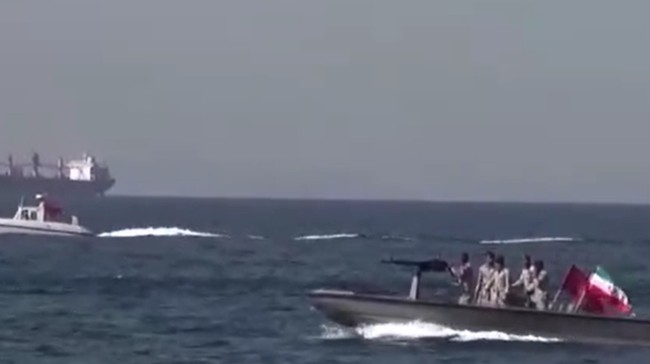
Tensions in the war between the United States (US) and Iran have reignited with a series of latest escalations shaking the Middle East region, particularly in the world’s vital energy route, the Strait of Hormuz.
Here are six latest developments summarising the heat of the conflict, as compiled by CNBC Indonesia on Tuesday (5/5/2026).
- US Shoots Down Iranian Missiles, 6 Ships Destroyed
The US stated it had shot down several Iranian missiles and drones heading towards warships and commercial vessels in the Strait of Hormuz area on Monday. In that operation, the US military also claimed to have destroyed six small ships belonging to Tehran.
Head of US Central Command, Brad Cooper, said the attack occurred while the US was carrying out a shipping security mission titled “Operation Freedom”. That operation was related to escorting ships through the Strait of Hormuz, announced by President Donald Trump on Sunday.
“Apache and Seahawk helicopters struck six small Iranian ships threatening commercial shipping,” he said, quoted by AFP.
He added that US forces also “effectively countered all missiles and drones fired at us and commercial ships”. According to Cooper, some cruise missiles were indeed directed at the US Navy ships, but the majority and several drones targeted commercial vessels.
“We are defending ourselves and, as per our commitment, we are also protecting all commercial ships,” he emphasised.
Meanwhile, Trump in a post on the Truth platform mentioned a total of seven Iranian ships affected by the attack. He stressed that there has been no major damage in the Strait of Hormuz except for one South Korean (SK) ship that was impacted.
On the other hand, Iranian state media quoted its military officials denying the claim. Tehran officials said “the US claim that they sank several Iranian warships is false”.
Tensions in this vital global energy route have increased since the open conflict between the US and Israel with Iran at the end of February. Although the US is not directly escorting ships, Cooper stated that they are implementing a “layered defence umbrella” from warships, helicopters, aircraft, to early warning systems and electronic warfare to ensure safe shipping in the area.
- Oil Surges, US Exchanges Dragged by Hormuz Tensions
Global oil prices have surged sharply amid the heating situation in the Strait of Hormuz. The rise was triggered by drone attacks causing fires at energy facilities in the United Arab Emirates (UAE), while also worsening the fragile ceasefire between the US and Iran.
The global benchmark Brent crude contract for July delivery was recorded to have jumped more than 5% following the attack in Fujairah. The UAE Defence Ministry stated that the attack involved drones and missiles directed from Iran.
In the stock market, Wall Street’s rally is starting to lose momentum. The S&P 500 and Nasdaq Composite indices, which previously hit all-time highs, have reversed to weaken as investors take profits.
“Tensions in the Middle East are a very good reason to pull some money out,” said Briefing.com analyst Patrick O’Hare.
Nevertheless, market participants are deemed not to have fully anticipated the worst-case scenario. He said that at this point, the market is not worried about a full escalation of the Iran war.
Sentiment remains supported by the solid performance of tech giants like Apple, Google, Microsoft, and Samsung. Those stocks are driving optimism towards the artificial intelligence sector.
In Asia, the Seoul and Taipei exchanges surged to all-time highs, led by jumps in chip stocks like SK hynix and TSMC. Meanwhile, European exchanges like Paris and Frankfurt closed down more than 1%, reflecting investor concerns over increasingly heated geopolitical impacts.
- UAE Furious, New Attack Triggers Escalation in Strait of Hormuz
Tensions in the Middle East have heated up again after the United Arab Emirates (UAE) condemned a “dangerous escalation” following a new attack attributed to Iran. This incident occurred alongside US military actions claiming to have destroyed several Iranian ships in the Strait of Hormuz, worsening the situation after the fragile ceasefire since 8 April.
Trump described Iran as having “fired several shots” without causing major damage, except to the South Korean ship. He added that the US military had “shot down” seven small Iranian ships, though this claim was denied by Tehran.
“The US claim that they sank several Iranian warships is false,” said a senior Iranian military official, quoted by state television.
On the other side, the UAE reported an attack targeting energy facilities in Fujairah and injuring three Indian nationals. The UAE Defence Ministry stated that four cruise missiles were launched from Iran, with three successfully intercepted.
“This is a dangerous escalation and we have the right to respond,” emphasised UAE authorities. However, Iran denied the accusation and instead blamed US military operations in the area. “The US military must be held responsible for this,” said an Iranian official.
The situation also directly impacts regional security. Two people were reported injured due to an attack in Bukha, Oman, while the Israeli military stated it remains on high alert. CENTCOM stated that guided-missile destroyers are now operating in the Gulf as part of the maritime “Operation Freedom” to escort merchant ships out of the area.
The heating conflict has also driven a surge in global oil prices, amid disruptions to the world’s energy distribution routes. Spokesperson for the Iranian Foreign Ministry, Esmaeil Baqaei, emphasised that his country wants to end the war but blames the US for the stalled negotiations.
“The other side must commit to a reasonable approach and abandon excessive demands,” he said.
- Iran Denies Plans to Attack UAE, Accuses US of Involvement
The Iranian government has affirmed that it had no prior plans to attack oil facilities in the United Arab Emirates.