
Gulf War and Alarm for Indonesia's Fisheries Resilience
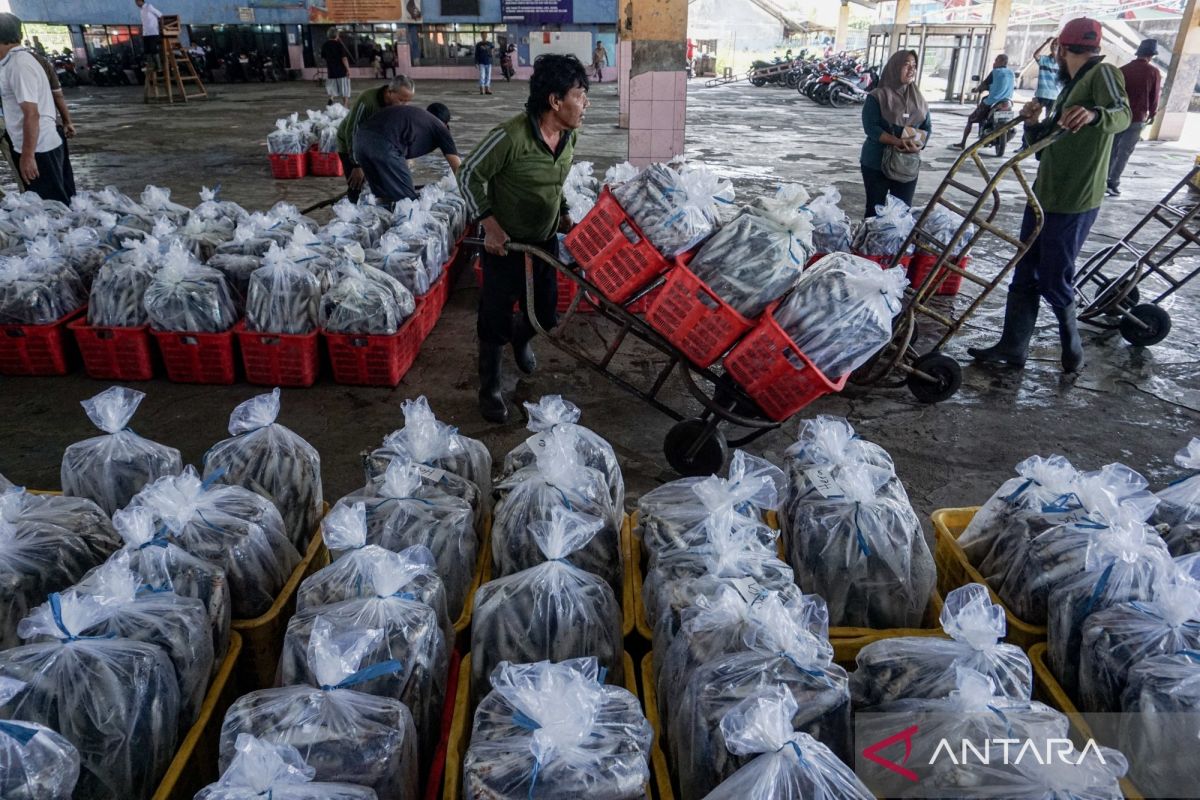
Threats to Indonesia’s fisheries are not merely from conflicts occurring far beyond our national borders, but from domestic weaknesses that make our system easily shaken by such conflicts. Jakarta (ANTARA) - The conflict in the Gulf region should not be viewed by Indonesia solely as a war taking place far from national borders. In an interconnected world, every geopolitical shock in one area can quickly spread, transforming into economic pressures felt in other parts of the world. For Indonesia, an archipelagic nation reliant on sea logistics, inter-island distribution, and a fisheries-based food system, the war in the Middle East is truly an alarm. What is being tested is not only the stability of the global market, but also the resilience of our national fisheries system. When conflict drives up energy prices, the impact does not stop at macroeconomic figures. The pressure immediately enters production costs, distribution costs, and costs for maintaining commodity quality. In the fisheries sector, this influence is felt very tangibly. Catching vessels depend on fuel. Ports require electricity, ice, and loading/unloading facilities. The processing industry needs stable cold storage. Inter-regional fish distribution requires fast transportation to maintain quality. Therefore, as soon as energy prices rise, the entire fisheries system comes under pressure. At the fisherman level, the issue is simple but heavy. The cost of going to sea increases, while the selling price of catches does not always rise at the same speed. In such situations, small fishermen become the most vulnerable group. They have limited capital room, thin cash resilience, and weak bargaining power when facing a long trade chain. As a result, external turbulence can turn into very concrete daily pressures: whether it is still worth going to sea today or risking a loss instead? In the aquaculture subsector, the pressure is no less serious. Production input costs, seed distribution, feed transportation, and harvested product mobility are heavily influenced by logistics and energy. In practice, cost increases cannot always be immediately passed on to selling prices. Small and medium-scale aquaculture operators ultimately have to absorb part of that pressure. If it persists, their ability to survive will decline, and at a certain point, supply could be disrupted. This is where the fundamental problem lies: Indonesia’s fisheries system is still very sensitive to cost shocks. We do have a large production base, vast sea areas, and a network of ports and fisheries centres spread across the country. However, a large system is not necessarily a resilient one. True resilience is not determined solely by the amount of fish caught or farmed, but by the ability to keep that fish flowing efficiently, with quality, and affordably from production centres to consumers.