
Gulf States Reportedly to Join US in War Against Iran
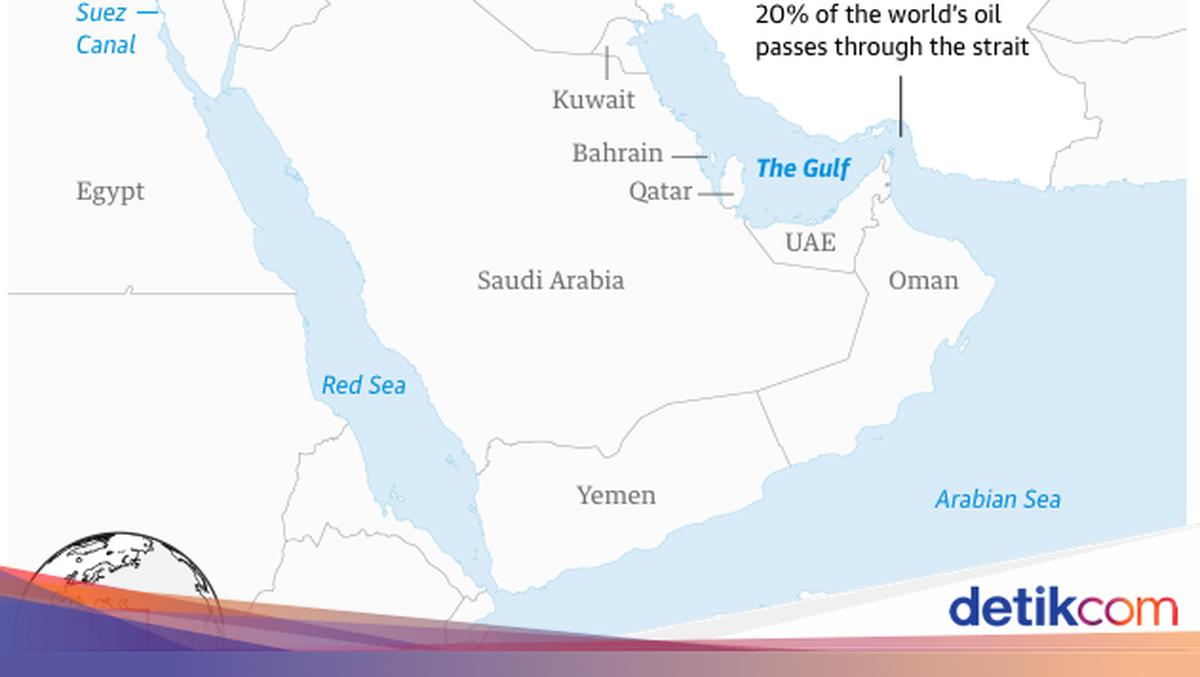
Saudi Arabia and the United Arab Emirates (UAE) are drawing closer to cooperation with United States (US) and Israeli forces for war against Iran. The report follows continuous attacks by Iran that have disrupted the economies of Gulf states and risk giving Tehran long-term influence over the Strait of Hormuz.
According to a report by The Wall Street Journal (WSJ), cited by Anadolu Agency on Tuesday (24/3/2026), the latest steps taken by Middle Eastern allies support America’s capability to conduct air strikes and open new avenues of attack against Tehran’s finances. However, they have not yet deployed their militaries openly in the conflict.
Although Gulf states have stated that they do not wish to cross the line into direct war with Iran, pressure is mounting because Tehran is threatening to exert greater authority over the energy-rich region.
Saudi Arabia recently agreed to allow US forces to use King Fahd airbase on the western side of the Arabian Peninsula, according to the report. Previously, the kingdom had said it would not permit its facilities or airspace to be used for attacks on Iran, but that may soon change as Iran continues to bombard the capital Riyadh with missiles and drone strikes on Saudi energy facilities.
“Saudi Arabia’s patience with Iranian attacks is not unlimited,” Saudi Foreign Minister Faisal bin Farhan told reporters last week after a series of Iranian attacks on Gulf energy infrastructure. “The belief that Gulf states are incapable of responding is a miscalculation.”
According to the WSJ report, Crown Prince Mohammed bin Salman now seeks to rebuild deterrence and is close to deciding to join the attacks. A source told the Journal that “it is only a matter of time before the kingdom enters the war.”
Approaching one month of war, the UAE has begun targeting Iranian assets, threatening vital lifelines for the rulers in Tehran, while considering whether to send their military to the battlefield and lobbying against a ceasefire that would leave much of Iran’s military capability intact, according to the report.
The UAE recently closed the Iranian Hospital and Iranian Club in Dubai, according to sources familiar with the closures. The hospital’s phone number, WhatsApp channel, and website were inactive on Monday (23/3), and Dubai health authorities said the facility is no longer operational.
“Certain institutions directly linked to the Iranian regime and the IRGC will be closed based on targeted actions after being found to have been misused to advance agendas that do not serve the Iranian people and violate UAE law,” a government official said in a statement.
The UAE, which has long been a financial hub for Iranian business, has warned Tehran that after suffering heavy attacks at the start of the war, they could freeze Iranian assets worth billions of dollars. Such steps could significantly limit Iran’s access to foreign currency and global trade networks, which could contribute to the collapse of its economy, already suffering from inflation and sanctions.
With recent attacks on energy facilities in Saudi Arabia, Kuwait, the UAE, and Qatar, Gulf states are increasingly united in their hatred of Iran. Qatar condemned the attacks as a dangerous escalation and a direct threat to its national security.
Middle Eastern allies continue to communicate with the Trump administration about next steps in the war with Iran. However, if Iran continues attacks on Gulf states, experts say those countries will likely have no choice but to become involved in the war.