
Gulf States Hit by 'Missile Rain' After Iranian President Apologises, Why?
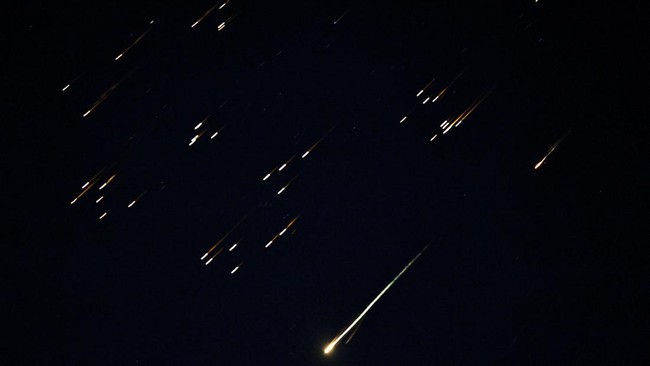
Jakarta, CNBC Indonesia - The war involving Iran has widened into the Gulf region. Missile and drone strikes were again reported to hit several countries on Saturday (7 March 2026), as the conflict enters its second week and regional tensions escalate. Explosions were heard in several major cities in the region, including Dubai in the United Arab Emirates (UAE), Doha in Qatar, and Manama in Bahrain. Attacks were also reported in Saudi Arabia and Kuwait. In the face of rising security threats, Kuwait’s national oil company even announced a production cut as a precautionary measure. These latest attacks occurred soon after Iranian President Masoud Pezeshkian had previously offered an apology to Gulf states for earlier attacks. He had stated that Iran would no longer target the territories of those countries unless attacks against Iran were launched from their territory. However a few hours later, Iran said it would continue strikes against targets in Gulf states it deemed supportive of its enemies. The government of Iran emphasised that the operations would continue against facilities that it regards as used by the opposing side. UAE Says It Is in a ‘Period of War’ In a rare televised address, UAE President Sheikh Mohammed bin Zayed Al Nahyan said the UAE was now in a period of war. He said the United Arab Emirates was going through a very difficult time but expressed confidence that the country would endure. In his remarks, he said the UAE is in a ‘period of war’ and that it would emerge stronger from the situation. In Dubai, local authorities reported one death due to shrapnel from the air defence interception. The victim was reportedly a Pakistani national. Earlier in the day, Dubai’s main airport — the world’s busiest international airport — was briefly closed after authorities reported an unidentified object intercepted near the area. A witness told AFP that he heard loud explosions around the airport area followed by a plume of smoke. Verified AFP video footage also captured the sound of a drone followed by a loud blast and a plume of smoke near the terminal area. The government subsequently said there had been a ‘minor incident caused by debris from the interception’, without directly naming the airport. It also stated that there were no injuries. Flightradar24 previously showed several aircraft circling in the air above Dubai airport, seemingly awaiting landing instructions. Emirates, the largest carrier in the Middle East, had briefly announced suspending all flights to and from Dubai in a statement on X. The announcement was later removed, and the airline said flight operations had resumed. The UAE has so far been the Gulf state most frequently targeted in the ongoing war. The UAE Ministry of Defence said that of 16 ballistic missiles fired at the country on Saturday, all were intercepted except one that fell into the sea. Of 121 drones detected, 119 were shot down, while two fell within UAE territory. Overall, the ministry said, since the war began last Saturday, the UAE has detected 221 ballistic missiles fired at its territory. The number of detected drones has exceeded 1,300. Attacks on Other Gulf States Iran’s strikes have not only targeted the UAE. In other Gulf states, authorities also reported interceptions of missiles and drones. Qatar’s Ministry of Defence said its forces intercepted two missile strikes targeting the country. Kuwait reported intercepting seven drones since dawn on Saturday. The government said the attacks caused only material damage from falling debris. Bahrain also reported intercepting 92 missiles and 151 drones since the start of what they called Iran’s ‘brutal aggression’. Military bases in Saudi Arabia Targeted In Saudi Arabia, the Defence Ministry said it had destroyed three ballistic missiles aimed at Prince Sultan Air Base, which is known to host American troops. Additionally, the Saudi military shot down 17 drones over the Shaybah oil field in the southeast of the country. Kuwait also reported intercepting a drone, while the state-owned oil company announced a reduction in crude oil production as a precaution. The move comes amid rising Iranian attacks and threats to the Hormuz Strait, a vital shipping lane that forms the main transit point for energy exports from the Gulf. Iran Accused of Attacking Jordan Tensions were not limited to Gulf states. In the northern part of the region, Jordan also accused Iran of directly targeting its territory. Jordan’s military said Iran had fired 119 missiles and drones at the Hashemite Kingdom over the past week. Military spokesperson Brigadier General Mustafa Hayari said the strikes were not merely transiting Jordan. ‘The missiles and drones are targeting vital installations inside Jordan and do not cross our territory,’ Hayari said.